 Pin It
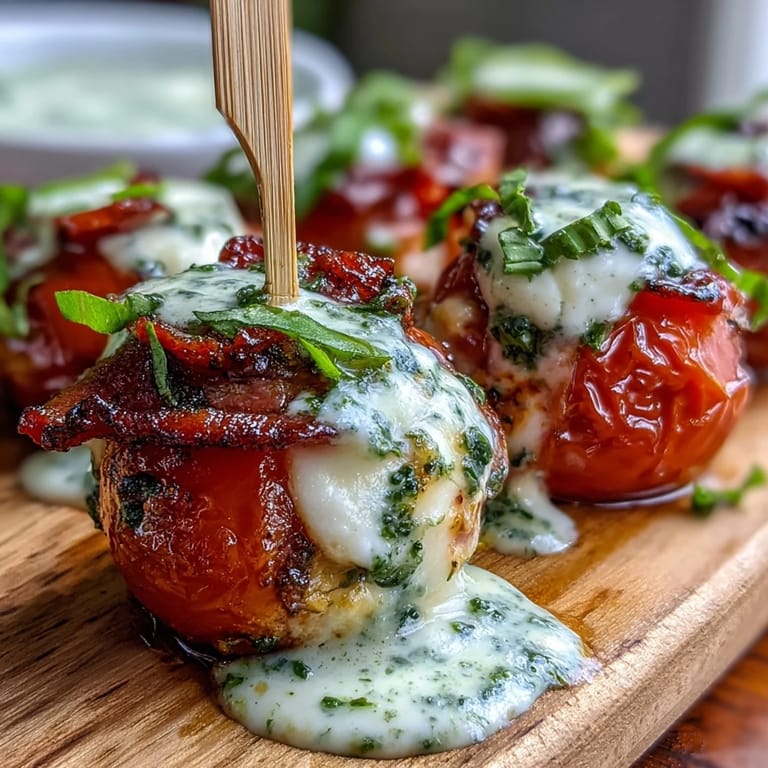
 Last summer, my neighbor showed up with a platter of these skewers at a garden potluck, and I watched them disappear faster than the ice in my drink. The way the cherry tomato burst between my teeth, followed by creamy mozzarella and that hit of basil, felt like eating sunshine. I asked for the recipe that night, and she laughed, saying it was almost too easy to take credit for. Now I make them constantly because they taste like summer itself, no matter what month it is.
I once made these for a small afternoon gathering where my mom was meeting my boyfriend's family for the first time, and somehow these skewers became the conversation starter nobody expected. People kept coming back for more, commenting on how the simplicity made each flavor stand out. It turned out to be exactly the kind of dish that brought everyone together without demanding much attention from me, which honestly saved my sanity that day.
Ingredients
- Cherry tomatoes: Choose ones that are ripe but still firm enough to skewer cleanly; the quality really matters here since they're eating raw and front-and-center.
- Mini mozzarella balls (bocconcini): These creamy little treasures are essential—they should be cool and tender, almost melting on your tongue the moment you bite them.
- Fresh basil leaves: Pick the younger, more delicate leaves if you can; they're less bitter and their aroma is what makes people stop eating and pause.
- Wooden or bamboo skewers: Soak them in water for 30 minutes before use so they don't split, and the slightly damp wood makes threading easier.
- Fresh basil leaves for pesto: Use the same basil as above; this is where the herb really shines in concentrated form.
- Pine nuts: These add a buttery richness, though they can be pricey—toast them lightly first if you have a few minutes, which deepens their flavor.
- Garlic clove: Just one small one keeps the pesto from becoming overwhelming; you want basil as the star, not garlic.
- Grated Parmesan cheese: Freshly grated makes all the difference in texture and taste; the pre-grated stuff never quite has the same character.
- Extra virgin olive oil: Don't skip the quality here since it's one of only a few ingredients; it's the backbone of your pesto.
- Salt and freshly ground black pepper: Taste as you go because the pesto's seasoning will make or break the whole thing.
Tired of Takeout? 🥡
Get 10 meals you can make faster than delivery arrives. Seriously.
One email. No spam. Unsubscribe anytime.
Instructions
- Soak your skewers:
- Drop your wooden skewers into a bowl of water for 30 minutes so they won't char or split when you're threading them. This simple step prevents splintering and makes the whole process smoother.
- Thread with intention:
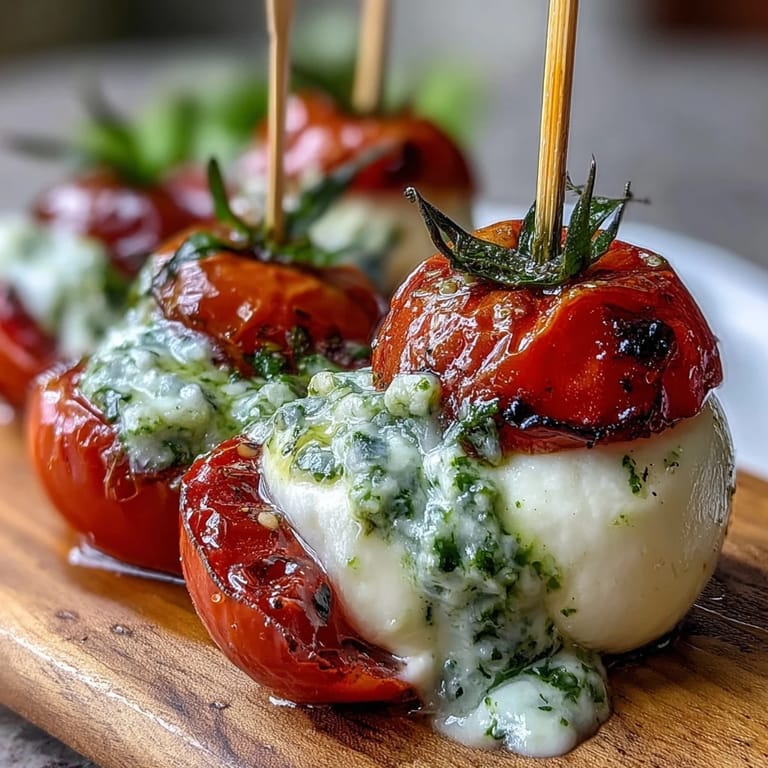
- Take one skewer and gently push the cherry tomato onto it first, then the mozzarella ball, then tuck a basil leaf against the mozzarella so it nestles there beautifully. Repeat until all 12 are lined up on your serving platter like little edible jewels.
- Build your pesto:
- Pour your basil leaves, pine nuts, garlic, and Parmesan into a food processor and pulse a few times until everything looks finely chopped but not yet smooth. You want texture here, not a paste.
- Stream in the olive oil:
- Turn on the processor and pour the olive oil very slowly while it runs, watching the mixture transform into something silky and cohesive. This takes maybe 30 seconds and makes all the difference in texture.
- Season and taste:
- Pulse in a pinch of salt and a few grinds of pepper, then taste it with a clean spoon. If it feels flat, add a tiny bit more salt; if it's too sharp, add more oil to round it out.
- Drizzle just before serving:
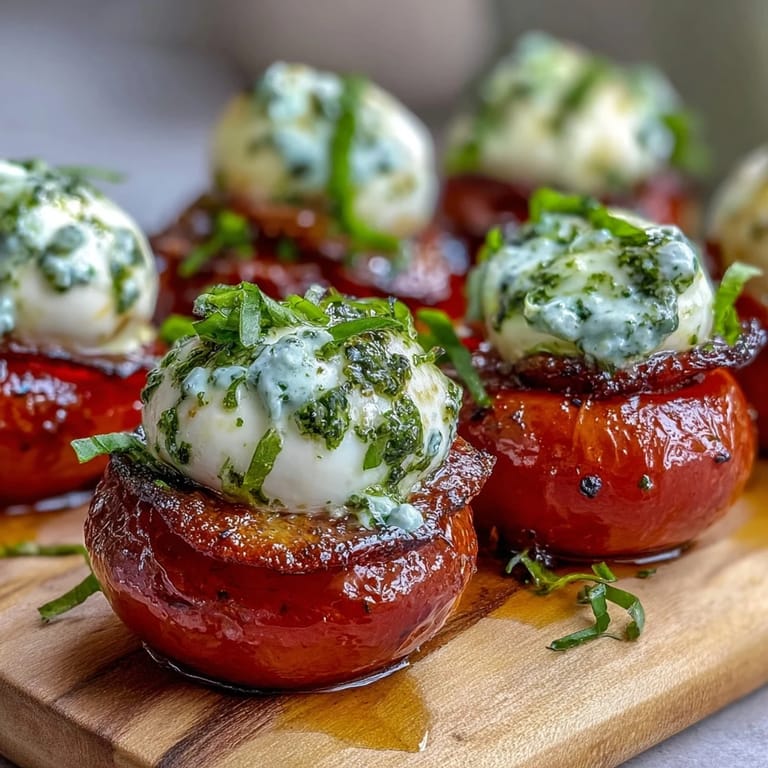
- Spoon the pesto over your skewers right before guests arrive, letting it pool slightly around each one. This keeps the basil leaves bright green and the whole thing looking fresh.
 Pin It
 There was an afternoon when my daughter helped me assemble these, and she insisted on arranging them in a specific pattern on the platter, making it her project. Watching her take pride in something so simple reminded me why I love cooking with others—it becomes about more than just eating, it becomes about connection.
Making Your Pesto Sing
The pesto is honestly where your personality enters this recipe. I've learned that the moment your ingredients go into the food processor, you're in control of the outcome—too much garlic makes it aggressive, too little makes it feel one-dimensional. Some evenings I add a squeeze of lemon juice because it brightens everything, while other times I leave it pure. The point is, this isn't a rigid formula; it's a conversation between you and your ingredients.
Timing and Temperature Matter
These skewers taste their absolute best when the mozzarella is cool but not ice-cold straight from the fridge, and the tomato is at room temperature so you actually taste it. I've found that pulling everything together about 20 minutes before serving gives the flavors a chance to know each other without anything getting warm or wilted. The basil leaves stay bright and fragrant this way, and the overall effect feels intentional rather than rushed.
Variations and Swaps You Can Trust
Once you understand how these work, you can start playing. I've swapped regular mozzarella for smoked mozzarella on days when I wanted something deeper, and I've even tried adding a paper-thin slice of prosciutto curled around the mozzarella. Some people I know drizzle with aged balsamic at the very end, which adds a sweet-tart complexity. The skeleton of this dish is flexible enough to adapt to whatever you have on hand or whatever your mood demands.
- Try sun-dried tomato pesto if fresh basil isn't available or if you want something more savory and concentrated.
- Swap pine nuts for walnuts, sunflower seeds, or even toasted breadcrumbs for a nut-free version that still has texture.
- Add a tiny pinch of red pepper flakes to the pesto if you want a whisper of heat running underneath everything.
 Pin It
 These skewers have become my go-to answer when someone asks me to bring something to a gathering, because they're foolproof and they always get eaten. More than that, they remind me that the best dishes don't need to be complicated to be loved.
Recipe FAQs
- → What type of mozzarella is best for skewers?
Mini mozzarella balls, known as bocconcini, work best as they fit perfectly on skewers and offer creamy texture.
- → Can I make the pesto without pine nuts?
Yes, sunflower seeds or walnuts can replace pine nuts to make a nut-free pesto variation.
- → How long can the skewers stay assembled before serving?
You can assemble the skewers up to 4 hours ahead and refrigerate them; add the pesto just before serving for freshness.
- → Is it necessary to use a food processor for the pesto?
While a food processor makes preparation easier and smoother, you can also finely chop ingredients by hand and whisk them together.
- → Can I add extra flavor to the dish?
A drizzle of aged balsamic vinegar before serving enhances the sweet and tangy notes of the skewers.