 Pin It
 The first time I served these crispy rice salmon stacks at a dinner party, I watched my guests pause mid-bite, eyes widening at that perfect contrast between the shatteringly golden rice and the silky salmon underneath. It was such a small moment, but something about the way the textures played against each other felt like a little culinary revelation happening on their plates. I'd been experimenting with sushi rice in unexpected ways for months, and this dish finally felt like the one that brought it all together. There's something deeply satisfying about building something architectural and delicious at the same time, layer by intentional layer.
I remember my neighbor stopping by while I was testing this recipe on a random Tuesday afternoon, and the smell of sushi rice vinegar mixed with frying oil completely stopped her in the kitchen doorway. She ended up staying for an hour, and we assembled these stacks together while catching up, each of us having strong opinions about whether the mayo-sriracha ratio was right. That's when I realized this dish had something special—it invited people in, made them want to be part of the making, not just the eating.
Ingredients
- Sushi Rice: Use actual sushi rice if you can find it; the starch content is what gives you that cohesive texture that actually holds together when you fry it, unlike long-grain rice which would just scatter in the oil.
- Sushi-Grade Salmon: This needs to be impeccably fresh since it's raw; ask your fishmonger directly if it's suitable for eating raw, and buy it the same day you plan to use it.
- Rice Vinegar: The mild, slightly sweet vinegar is essential—regular white vinegar will make your rice taste aggressively sharp and ruin the whole delicate balance.
- Vegetable Oil: High smoke point is your friend here; you want something like canola or peanut oil so your rice crisps without burning.
- Avocado: Pick one that yields gently to pressure but isn't mushy; you want it to slice cleanly and stay intact on top of each stack.
- Sesame Seeds: Toast them yourself if you have time; the toasted ones have exponentially more flavor than raw, and they add a subtle nuttiness that ties everything together.
Tired of Takeout? 🥡
Get 10 meals you can make faster than delivery arrives. Seriously.
One email. No spam. Unsubscribe anytime.
Instructions
- Prepare Your Rice Foundation:
- Rinse the sushi rice thoroughly until the water runs clear—this removes excess starch so your cooked rice won't be gluey. Cook it gently in a covered pot, then let it rest; the steam finishing the job is just as important as the heat itself.
- Season with Intention:
- Dissolve the sugar and salt completely in your rice vinegar before folding it in, and do this while the rice is still warm so it absorbs the flavors properly. This is where patience pays off; rushing this step leads to vinegary pockets instead of evenly seasoned rice.
- Chill and Set:
- Press your seasoned rice into a parchment-lined pan and let it chill for 20 minutes; the cold helps it hold together when you cut it into squares. You want it firm enough to hold its shape but not so cold it's difficult to cut.
- Season Your Salmon:
- Combine your diced salmon with soy sauce, sesame oil, lime juice, and sriracha, then let it sit in the cold so the flavors meld. The soy and sesame will deepen as it sits, and the lime keeps everything bright.
- Build Your Spicy Mayo:
- Whisk equal parts mayo and sriracha together; this is your secret condiment that brings heat and richness without overpowering anything else on the plate.
- Achieve the Crisp:
- Cut your chilled rice into 2-inch squares and fry them in medium-high heat for about 2-3 minutes per side until they turn golden and sound crispy when you tap them. Don't overcrowd the skillet, and let them drain on paper towels so they stay crunchy.
- Assemble with Care:
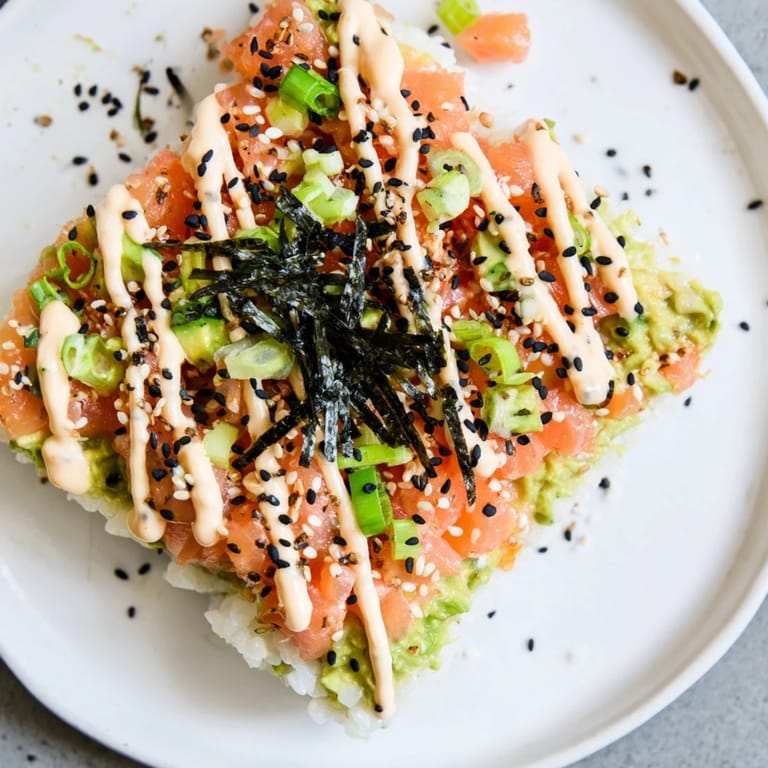
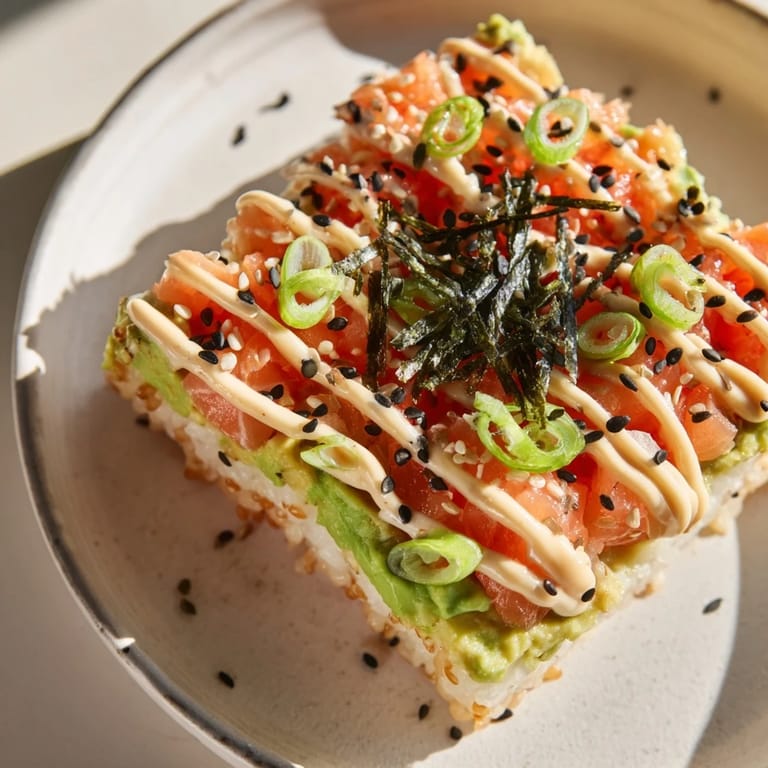
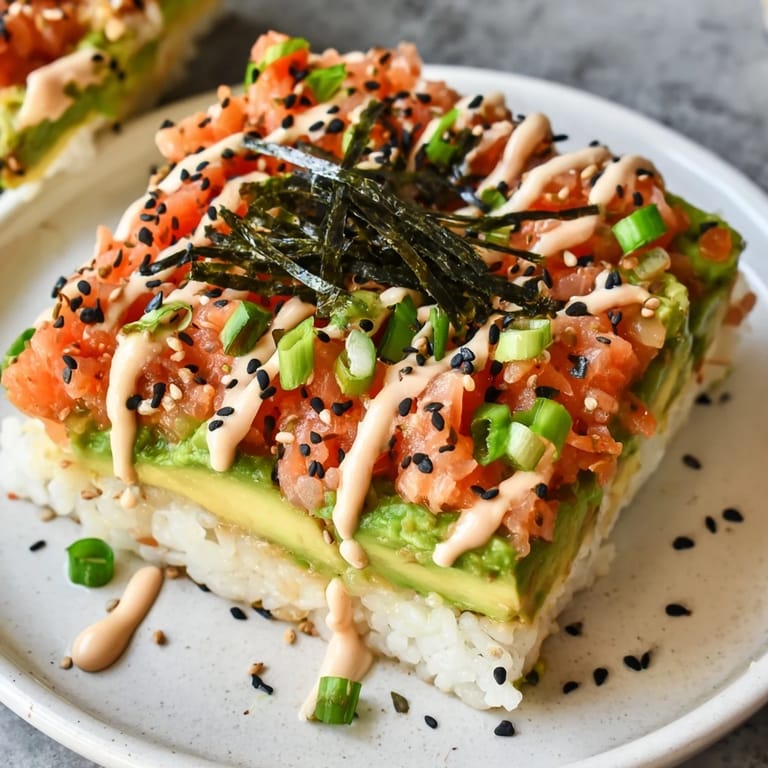
- Layer each crispy rice square with avocado, a spoonful of seasoned salmon, a small drizzle of spicy mayo, then finish with sesame seeds and chives. Work quickly so the rice is still warm when you serve it, because that warmth against the cold salmon is part of the magic.
 Pin It
 There was a moment during a work lunch where I brought these stacks and one of my colleagues, who'd been pretty quiet all morning, actually lit up while eating one. He talked about how the different elements reminded him of sushi but felt more textural and less precious, something he could actually relax into. That's when I understood that this dish does something unexpected—it takes fine dining elements and makes them feel approachable, almost playful.
The Rice is Everything
The crispy rice is honestly the star here, and it's worth getting it right because the texture contrast is what makes people remember this dish. The cold, seasoned rice needs to be pressed firmly into the pan so every grain is packed together, creating a cohesive cake rather than loose grains. When it hits the hot oil, you want to hear it sizzle immediately, and you'll know it's done when the edges turn golden and the whole thing sounds hollow when you tap it. If your rice isn't sticking together well, it usually means you didn't use enough seasoned vinegar mixture, or you didn't let it chill long enough to set properly.
Salmon Seasoning Strategy
The salmon mixture is deliberately light and briny rather than heavy, which is the whole point of keeping it separate from the rice until the very last second. Soy sauce and sesame oil are your anchors here, providing umami and depth, while lime juice cuts through and keeps everything from feeling oily. Sriracha is entirely optional, but it adds a gentle heat that wakes up your palate and makes you want another bite immediately. If you're nervous about raw fish, absolutely use cooked salmon or even high-quality canned salmon mixed with a bit of mayo—it won't be quite the same, but it'll still be genuinely delicious.
Assembly and Serving Tips
Timing is everything with this dish, and the window between frying and serving is surprisingly narrow. You want to assemble these stacks right before your guests sit down so the rice is still warm, the avocado is still firm, and everything feels fresh and intentional on the plate. The spicy mayo should go on sparingly, just enough to taste it; too much and it drowns out everything else. The sesame seeds, chives, and nori strips are your garnish moment, and they should look scattered and genuine rather than perfectly placed.
- If you're feeding a crowd, you can prep all your components ahead and assemble on the spot—it only takes a minute or two per stack.
- A very sharp knife makes slicing the avocado and nori infinitely easier and less messy than struggling with a dull one.
- Serve these on a chilled plate if you can manage it; the warmth of the rice against the cold plate keeps everything at the perfect temperature.
 Pin It
 These crispy rice salmon stacks became one of those dishes I make when I want to feel like I've cooked something special without spending all day in the kitchen. Every time I make them, I remember that Tuesday with my neighbor, and I'm grateful for recipes that bring people together.
Recipe FAQs
- → How do I make the rice crispy?
After cooking and seasoning, press the rice into a pan and chill it. Cut into squares and fry each side in hot vegetable oil until golden and crisp.
- → Can I use cooked salmon instead of raw?
Yes, canned or cooked salmon can be used as a substitute to suit your preference or dietary needs.
- → What adds the spicy flavor to this dish?
A combination of sriracha mixed into the salmon and a spicy mayo drizzle provides a subtle heat to the stack.
- → How do I keep the rice from becoming soggy?
Pressing and chilling the rice before frying helps it hold its shape and crispiness, preventing sogginess when assembled.
- → What toppings complement the stack well?
Sesame seeds, chopped chives, and thin nori strips add both flavor and texture to each stack layer.