 Pin It
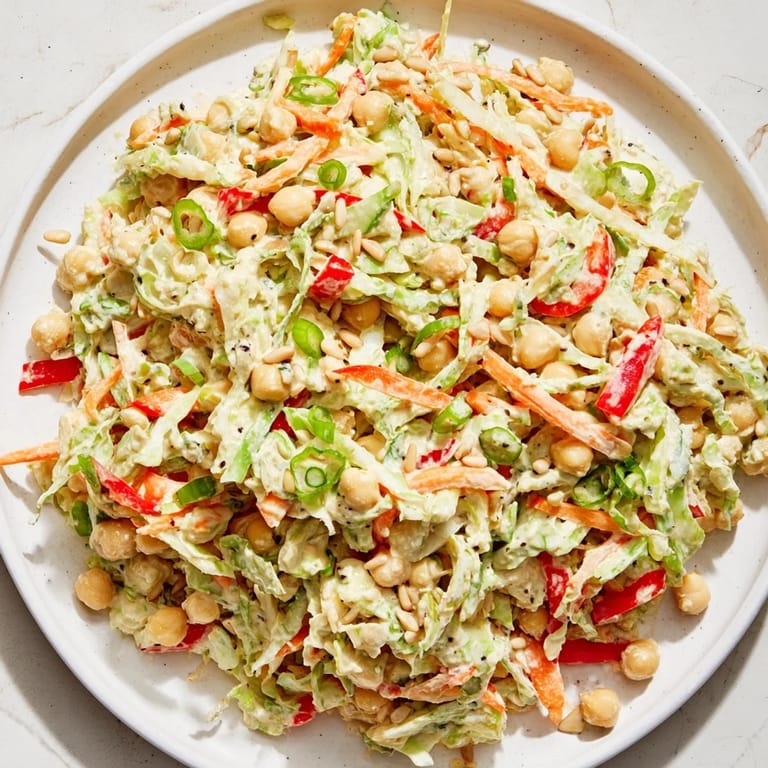
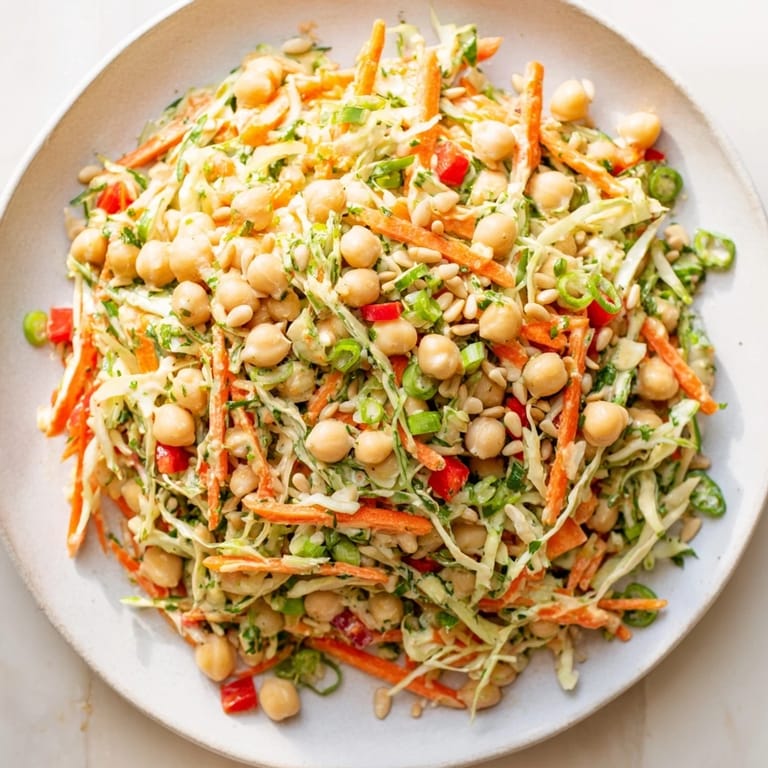
 There's something about a bowl of chickpeas and raw vegetables that feels like you're taking care of yourself without trying too hard. I discovered this salad one afternoon when I had a hungry friend stopping by unexpectedly, and my fridge was looking a bit sparse. I grabbed a can of chickpeas, some cabbage that needed using, a couple of carrots, and suddenly I was whisking together tahini and lemon juice, watching the dressing transform into something creamy and golden. It turned out to be exactly the kind of meal that tastes fresh and nourishing without any fuss.
I made this salad for a small picnic once, right as the weather was starting to get warm, and I remember being struck by how the flavors had deepened after a couple of hours in the cooler. The cabbage had softened just slightly, the dressing had settled into every crevice, and somehow it tasted more like itself than it did fresh from the bowl. My friend reached for a second helping and said, 'This is the kind of salad I'd actually choose to eat,' which felt like the highest compliment.
Ingredients
- Chickpeas: Two cups of cooked chickpeas give you that hearty substance and fiber that keeps you satisfied; if you're using canned, rinsing them well removes the excess sodium and starchy coating.
- Cabbage: Shredding your own cabbage gives you control over thickness and texture, and it stays fresher-tasting than pre-shredded versions.
- Carrots: Shredded rather than chopped keeps them tender and lets them mingle with the dressing more intimately.
- Red bell pepper: One small one adds a pop of sweetness and brightness that balances the earthiness of the tahini.
- Green onions: Thinly sliced, they provide a sharp note that cuts through the creaminess beautifully.
- Fresh parsley: A quarter cup chopped brings a grassy freshness that feels alive in your mouth.
- Sunflower seeds: Optional, but they add that crucial crunch and a subtle nuttiness that elevates the whole thing.
- Tahini: Three tablespoons of this sesame paste is the foundation of the dressing, bringing richness and earthiness.
- Lemon juice: Freshly squeezed is non-negotiable here; bottled tastes thin and hollow by comparison.
- Olive oil: Extra-virgin adds a fruitiness that tahini alone would miss.
- Maple syrup or honey: A tablespoon balances the tartness of the lemon and rounds out the tahini's intensity.
- Garlic: One minced clove is enough to add depth without overwhelming.
- Cold water: Two to three tablespoons, added gradually, will thin your dressing to exactly the right consistency.
- Ground cumin: Half a teaspoon brings warmth and a subtle spiciness that makes this taste intentional.
- Salt and pepper: Half a teaspoon salt and a quarter teaspoon of freshly ground pepper are your final adjusters.
Tired of Takeout? 🥡
Get 10 meals you can make faster than delivery arrives. Seriously.
One email. No spam. Unsubscribe anytime.
Instructions
- Gather and prep your vegetables:
- Get a large bowl ready and add your drained chickpeas, shredded cabbage, carrots, diced bell pepper, sliced green onions, chopped parsley, and sunflower seeds if you're using them. There's something satisfying about seeing all these colors and textures in one bowl before the dressing joins them.
- Build the tahini dressing:
- In a small bowl, whisk together the tahini, fresh lemon juice, olive oil, maple syrup, and minced garlic, then stir in the cumin, salt, and pepper. As you gradually whisk in the cold water, watch the mixture lighten and loosen until it's the consistency of thick pourable cream.
- Bring it all together:
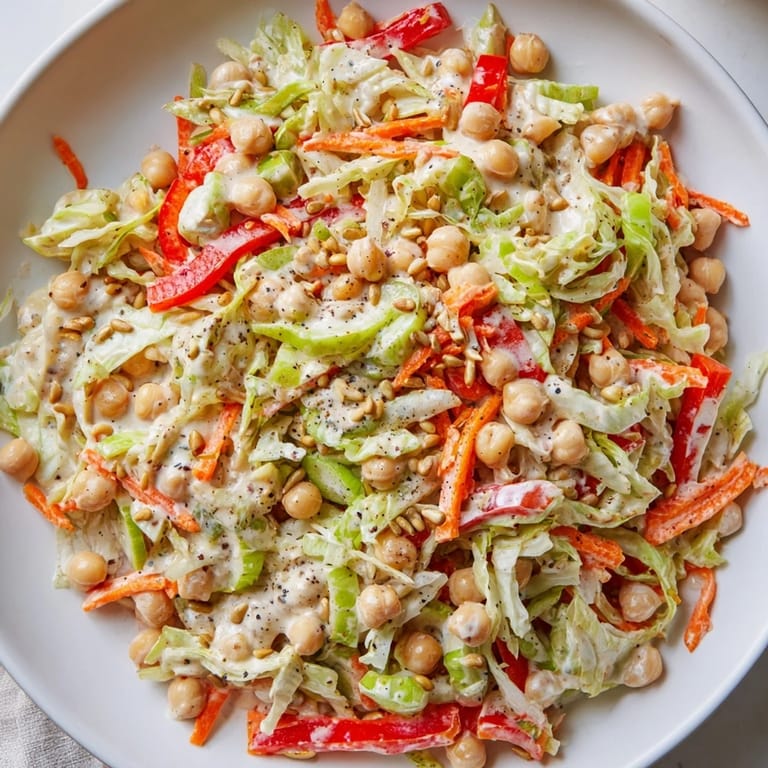
- Pour the dressing over the salad and toss everything together with a gentle but thorough hand, making sure every piece of vegetable gets coated. Take a taste and adjust the salt, pepper, or lemon juice if you feel it needs it.
- Chill and serve:
- You can eat this right away while the vegetables still have their snap, or let it chill in the fridge for thirty minutes to an hour, letting the flavors meld and deepen. Either way, you've got a meal that feels both comforting and bright.
 Pin It
 I remember a moment, sitting outside with this salad in front of me, when I realized I wasn't eating it out of obligation or because it was 'healthy'—I was eating it because I genuinely wanted more. That's when I knew it had crossed over from being a recipe into being something I'd make again and again.
Why Raw Vegetables Matter Here
The joy of this salad lives in the contrast between the raw crispness of the vegetables and the creamy, warm spice of the dressing. Cooking would dim that brightness entirely. The cabbage, carrots, and bell pepper stay firm and alive, giving your teeth something to do, and that texture keeps the eating experience from becoming one-note. I've learned that sometimes the best thing you can do in the kitchen is respect what a vegetable wants to be, and these vegetables want to be raw, cool, and crunchy.
The Tahini Dressing as the Whole Story
This dressing is worth understanding because once you do, it becomes a template for everything else. The balance of acid from lemon, richness from tahini and oil, warmth from cumin and garlic, and a touch of sweetness creates something that tastes sophisticated without being complicated. I've poured this over grains, vegetables, even roasted chickpeas, and it never disappoints. The key is respecting the proportions and not rushing the whisking—let the water go in gradually so the tahini can emulsify properly instead of breaking.
Making It Your Own
One of the great gifts of this salad is how forgiving it is to improvisation. I've made it a dozen different ways depending on what was in my kitchen or what my mood was calling for. You can swap the red cabbage for green, add shredded beets for earthiness, toss in some pomegranate seeds for brightness, or add a handful of fresh mint if you're feeling Mediterranean. The structure stays strong no matter what, so you're free to play.
- If you want heat, a pinch of cayenne pepper wakes the whole thing up without making it spicy.
- Radishes and celery add extra crunch if you like that sharp, watery bite in your salad.
- A crumble of feta or a handful of toasted nuts transforms it from side dish to main course.
 Pin It
 This is the kind of salad that proves good food doesn't have to be complicated to be nourishing. It's become one of those recipes I come back to again and again because it works.
Recipe FAQs
- → What can I substitute for tahini in the dressing?
Sunflower seed butter or almond butter work well as creamy alternatives to tahini, offering a similar texture with a slightly different flavor.
- → How can I add more crunch to this dish?
Incorporate thinly sliced radishes, chopped celery, or swap sunflower seeds for toasted pumpkin seeds to enhance the crunch.
- → Can I prepare the dressing ahead of time?
Yes, the tahini-lemon dressing can be whisked together in advance and stored refrigerated for up to 2 days for convenience.
- → Is this dish suitable for gluten-free diets?
Yes, all ingredients are naturally gluten-free, making it a safe option for gluten-sensitive individuals.
- → What protein options pair well with this salad?
Grilled chicken, baked tofu, or seared salmon complement the fiber-rich vegetables, enhancing the meal’s nutritional profile.