 Pin It
 The first time I made quick pickles, I wasn't actually trying to—I had a handful of carrots that were about to wrinkle in the fridge, a jar I'd been saving, and twenty minutes before friends came over. I threw together whatever vinegar and spices I could find, poured hot brine over everything, and by the time dessert rolled around, they were somehow perfect. Now I make them constantly, not because I'm planning ahead, but because I've learned that the best snacks are the ones you stumble into.
I once brought these to a potluck where someone had made an elaborate cheese board, and halfway through the evening I noticed the pickled carrots were almost completely gone while the fancy brie sat relatively untouched. It was a small, silly victory that taught me something about what people actually want to eat—sometimes it's not the complicated thing, it's the one that makes your mouth wake up.
Ingredients
- Carrots: Look for carrots that are straight and firm—they pickle more evenly than curved ones, and their sweetness becomes almost floral once the brine hits them.
- Distilled white vinegar: Don't skip the distilled part; regular vinegar can cloud the brine, and you want these to be bright and clear.
- Kosher salt: It dissolves faster than table salt and gives a cleaner taste without any metallic edge.
- Garlic: Halving the cloves lets them infuse without overpowering, though one time I forgot this step and the pickles tasted like a vampire's nightmare—still delicious, just intense.
- Spices: Mustard seeds pop slightly as the brine cools, coriander adds a subtle citrus note, and black pepper keeps things grounded instead of one-note.
- Red pepper flakes: Optional, but a small pinch transforms these from a side dish into something that makes you pause.
- Fresh dill: If you have it, use it; if not, the pickles work fine without, but dill adds an unexpected brightness that lingers on your tongue.
Tired of Takeout? 🥡
Get 10 meals you can make faster than delivery arrives. Seriously.
One email. No spam. Unsubscribe anytime.
Instructions
- Pack your jar like you're building something:
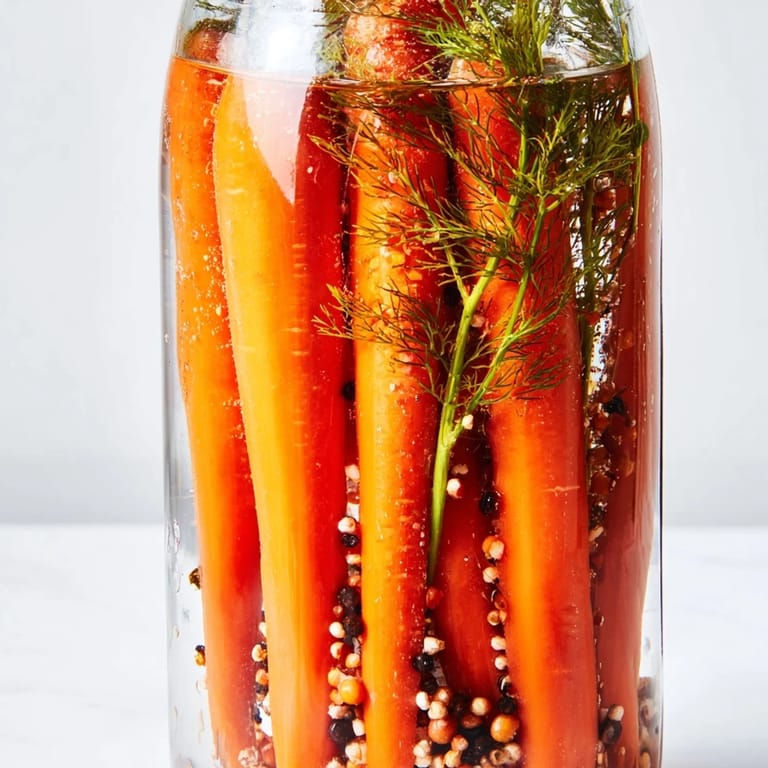
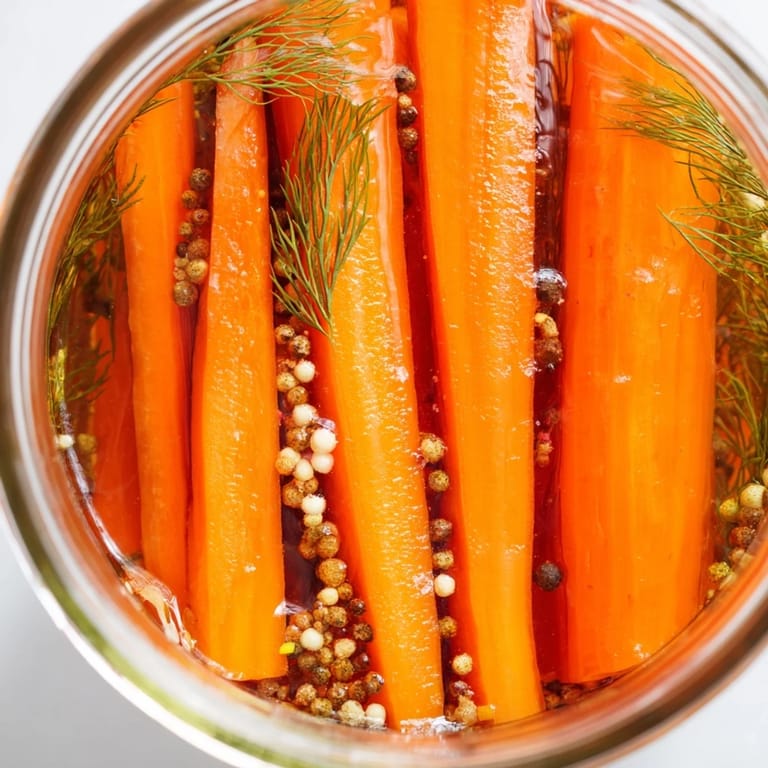
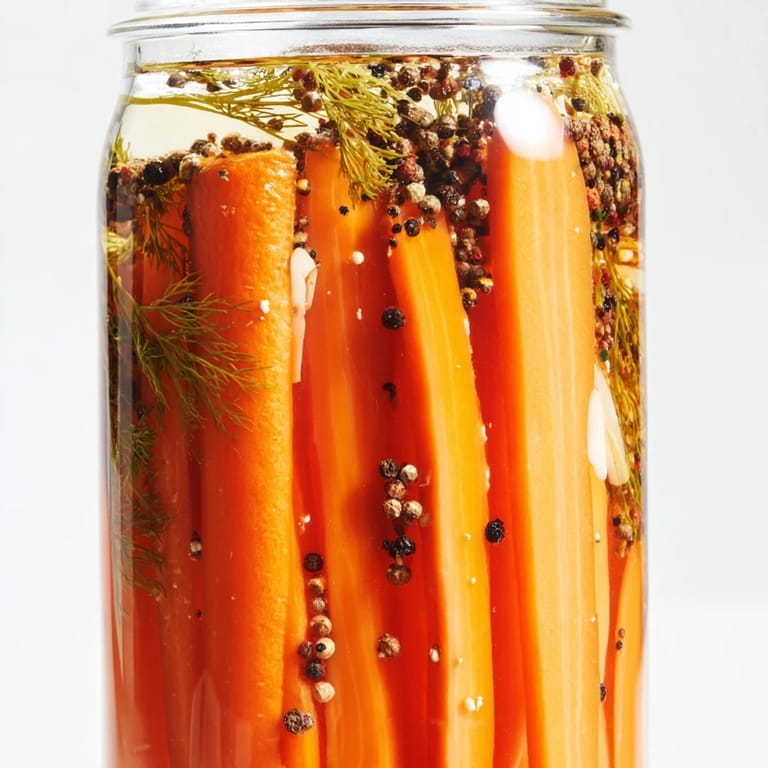
- Stand the carrot spears up vertically so they fit snugly—they'll pickle more evenly this way and look more appealing when you open the jar. Wedge your garlic halves and spices into the gaps like you're arranging flowers.
- Make your brine and let it warm gently:
- Combine the vinegar, water, sugar, and salt in a small saucepan and bring it to a simmer, stirring once or twice until everything dissolves. You want it hot but not a rolling boil, which would cook the carrots soft.
- Pour the brine carefully over everything:
- Once you pour, the jar will smell incredible—vinegar and garlic rising up as steam—and you'll know you're on the right track. Make sure every carrot spear is submerged under the brine, or the exposed parts will soften and lose their crunch.
- Let it cool and seal:
- Leave the jar uncovered while it comes to room temperature, which takes about thirty minutes; this is when the magic happens and flavors start to blend. Once cool, cap it and move it to the fridge, where the cold will halt the cooking and lock in the crunch.
 Pin It
 Last winter, my partner was stressed about work and I set out a board with cheese, bread, and a jar of these pickles without saying anything. Halfway through the evening, they grabbed a carrot spear and visibly relaxed—the crunch, the tang, something about it reset their mind. It's strange how a simple pickled vegetable can be a small form of care.
Why These Are Different Every Time
Each batch tastes subtly different depending on when you make them, what carrots you use, how cold your fridge is. I've learned to see this as a feature, not a bug—it keeps you curious about the jar you opened last week versus the one you made yesterday. Some batches are more floral, others more aggressively tangy, and both are right.
How to Use Them
These pickles are doing triple duty in my kitchen most weeks: they're a snack I actually reach for instead of something healthier I should reach for, they brighten up a sandwich or taco with just one or two spears, and they're the secret weapon on a cheese board when you want to cut through richness and reset your palate. People always ask what they are, which is somehow satisfying every single time.
Storage and Variations
A sealed jar keeps for up to two weeks in the fridge, though I've never had them last that long—they disappear. The brine is your playground once you understand the basic template: swap dill for thyme if you want something earthier, add jalapeño slices if you like heat, try a pinch of turmeric for color and warmth, or experiment with other vegetables like radishes or green beans using the exact same method.
- If you're feeling adventurous, add a thin slice of fresh ginger for a subtle warmth that plays beautifully with the vinegar.
- Keep the brine ratio the same—one cup vinegar to one cup water—and you won't go wrong with whatever else you add.
- Remember that anything you add will pickle alongside the carrots, so choose flavors that make sense together.
 Pin It
 These pickles are the kind of thing that makes cooking feel less like a chore and more like building something you'll actually want to eat. Once you've made them once, you'll understand why they keep showing up on your countertop.
Recipe FAQs
- → How long should the carrot spears chill before tasting?
For quick tanginess, chill for at least 1 hour, though 24 hours deepens the flavor and crunch.
- → Can I adjust the spice level in the brine?
Yes, adding more crushed red pepper flakes or jalapeño slices will increase the heat and complexity.
- → Are there alternatives to dill for seasoning?
Fresh thyme or other herbs like rosemary can be used for a different aromatic twist.
- → What tools are essential for preparing these pickled carrots?
A chef's knife, cutting board, glass jar with lid, small saucepan, and measuring utensils are needed.
- → How long can the pickled carrot spears be stored?
They keep up to 2 weeks refrigerated, maintaining crispness and flavor.