 Pin It
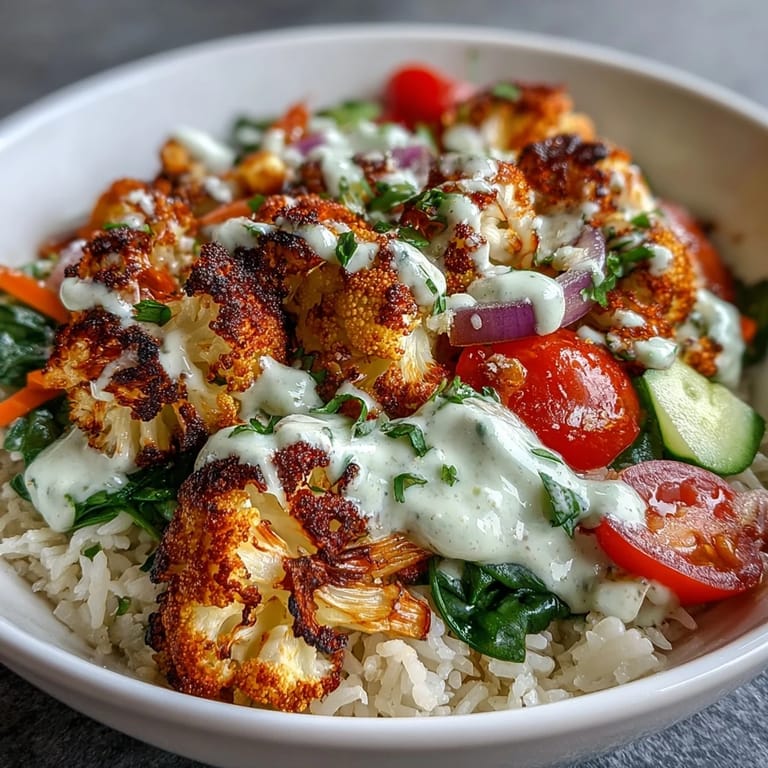
 My friend Sarah showed up at my apartment one Tuesday evening with a bag of farmers market vegetables and this simple idea: what if we just roasted everything until it was golden and threw it in a bowl? We didn't have a plan, just curiosity and hunger. That night, with the oven humming and tahini sauce coming together in a whisked bowl, I realized how the best meals often happen when you stop overthinking and start trusting your ingredients. This roasted cauliflower bowl became our go-to answer whenever someone asked, "What should we make?"
I made this for my neighbor Marcus after he mentioned feeling stuck in a lunch rut, eating the same sad desk salads every day. When he came by to pick it up and saw the golden cauliflower and that creamy sauce pooling around the rice, his whole face changed. He texted me three days later saying he'd made it twice already, and would I please write down how I seasoned the cauliflower because his kitchen now smelled like mine. That's when I knew this wasn't just food anymore.
Ingredients
- Cauliflower florets: One large head gives you enough golden, caramelized pieces to feel substantial without being heavy; cutting them evenly ensures they cook at the same pace.
- Olive oil: Use good quality here since it's doing real work in the roasting, bringing out nutty flavors that tahini will echo.
- Oregano and thyme: Dried herbs concentrate their power in the oven's heat, but if you have fresh, use half again as much because they're gentler.
- Smoked paprika: This is the secret whisper that makes people ask what you did differently; don't skip it or substitute with regular paprika.
- Garlic powder: It distributes evenly across every floret unlike minced garlic which can burn; it's the practical choice here.
- Basmati or jasmine rice: Either one works beautifully; jasmine is slightly stickier if you like that, basmati stays more distinct and fluffy.
- Cherry tomatoes: Halved, they burst with brightness and their juice mingles with the sauce; don't use regular tomatoes as they'll water everything down.
- Cucumber: Diced fresh, it provides cool crunch that contrasts with warm roasted cauliflower; this textural play is what makes the bowl interesting.
- Tahini: The base of your sauce, creamy and earthy; store it with the oil stirred in to prevent separation.
- Lemon juice: Fresh squeezed makes a measurable difference, cutting through richness and waking up every flavor in the bowl.
- Maple syrup or honey: Just enough sweetness to balance acid and salt; it's subtle but crucial for sauce harmony.
Tired of Takeout? 🥡
Get 10 meals you can make faster than delivery arrives. Seriously.
One email. No spam. Unsubscribe anytime.
Instructions
- Heat your oven and prep:
- Get that oven to 425°F and line a sheet with parchment paper so nothing sticks and cleanup becomes almost effortless. This temperature is hot enough to caramelize the cauliflower's edges without drying it out.
- Season the cauliflower:
- In a large bowl, coat those florets generously with olive oil and all those herbs and spices, making sure every piece gets touched by the seasoning. Spread them in a single layer on your sheet with some space between them; crowding prevents browning and you want that golden char.
- Roast until golden:
- Twenty-five to thirty minutes, tossing halfway through so the bottom pieces get their turn in the heat. You'll know it's ready when the edges look slightly crispy and the smell fills your kitchen.
- Cook the rice:
- While the cauliflower roasts, bring water and salt to a boil with your rice, then reduce heat and cover. Fifteen minutes on low heat, then let it sit covered for a few minutes off heat; this resting period matters more than people realize.
- Make the tahini sauce:
- Whisk tahini with lemon juice, water, olive oil, maple syrup, and seasonings until smooth and pourable, adding more water if it seems too thick. Taste it as you go; you want bright, balanced, and creamy all at once.
- Assemble your bowls:
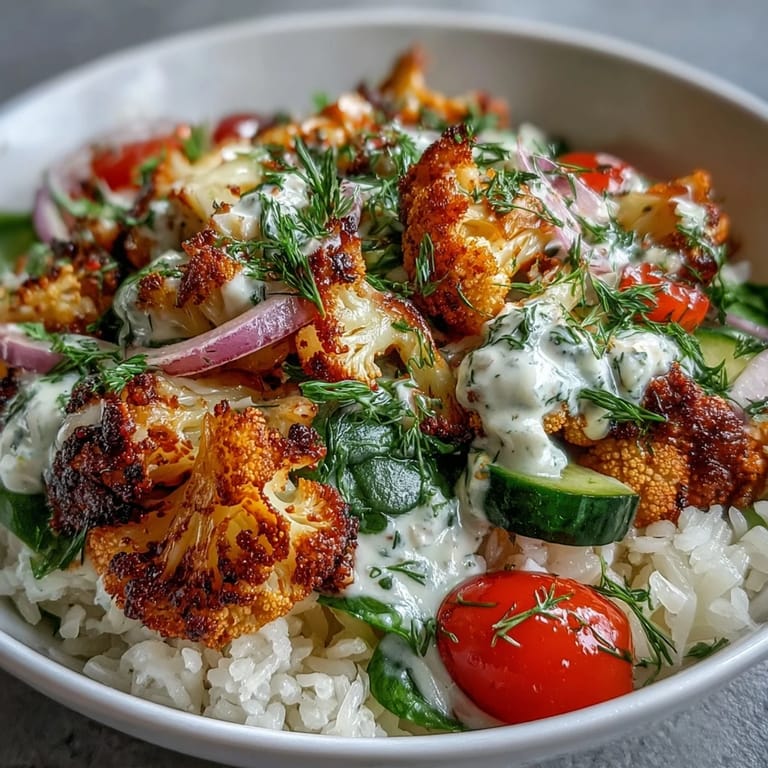
- Start with warm rice as your base, then layer that fresh spinach on top while the rice is still warm so it just barely wilts. Add the roasted cauliflower, then arrange your raw vegetables around it like you're composing something beautiful.
- Finish and serve:
- Drizzle that tahini sauce generously over everything and serve right away while the cauliflower is still warm and the vegetables are still crisp. The contrast between temperatures is part of what makes this bowl work.
 Pin It
 Last month, my sister came over stressed about eating better, and I served her this bowl without making a big deal about it. She ate quietly for a few minutes, then looked up and said it tasted like care in a bowl. That's what stuck with me, how food becomes a small way of saying you're thinking about someone's wellbeing without needing a single word.
Why the Roasting Method Makes All the Difference
High heat caramelizes the cauliflower's natural sugars, creating crispy edges and sweet, tender insides that steamed or boiled versions can never achieve. The key is space on the baking sheet; if pieces touch, they steam instead of roast. I learned this the hard way by overcrowding once, and the result was soft and pale instead of golden and caramelized. Now I always use two baking sheets if needed.
Building the Perfect Grain Bowl
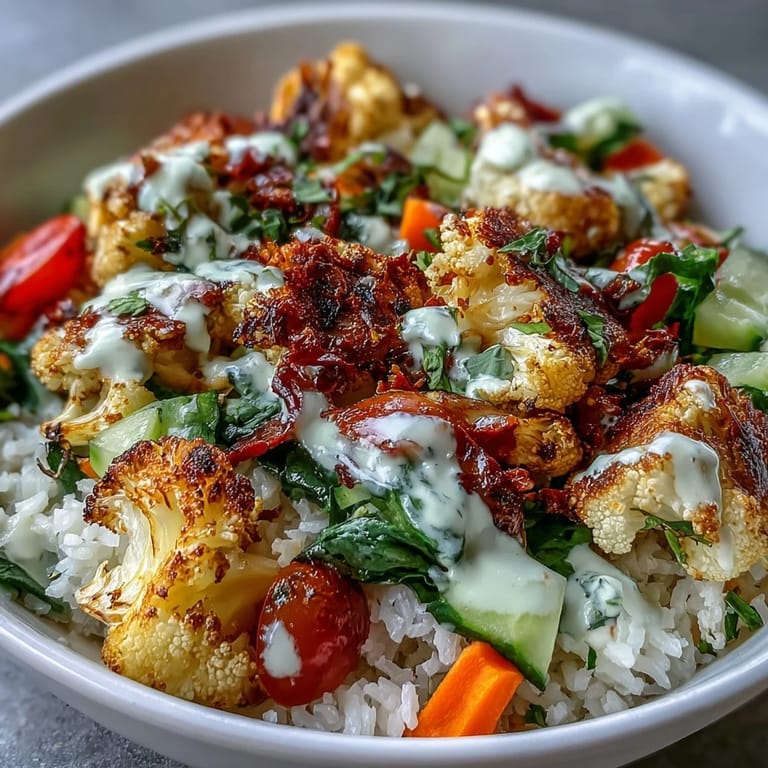
The architecture of this bowl matters: warm rice and greens at the bottom to soften slightly, then roasted hot vegetables, then fresh cool vegetables for contrast. The tahini sauce connects everything, making each bite a complete experience of textures and temperatures. This isn't random layering; it's intentional composition that makes every spoonful satisfying instead of just some bites hitting right while others feel incomplete.
Tahini Sauce as Your Secret Weapon
This creamy sauce transforms a bowl of vegetables into something crave-worthy and complete. It happens to be vegan, gluten-free if you use good ingredients, and absolutely better fresh than store-bought versions. Once you learn this ratio, you'll make it for roasted vegetables, grain bowls, wraps, and probably drizzle it on things that have no business being that good.
- Lemon juice is non-negotiable; it's what makes the sauce bright instead of flat and heavy.
- Add water gradually when whisking so you control the consistency rather than ending up too thin and having to salvage it.
- This sauce keeps in the fridge for three days and actually tastes better on day two after flavors meld.
 Pin It
 This bowl has become my answer to so many questions: what's for dinner, what can I bring to a potluck, how do I eat better without feeling deprived. Every time I make it, I remember that Tuesday night with Sarah, her optimism about roasted vegetables, and how the best kitchen discoveries often start with nothing more than an open mind and hungry friends.
Recipe FAQs
- → Can I make this bowl ahead of time?
Yes, prepare the roasted cauliflower, rice, and vegetables up to 3 days in advance. Store separately in airtight containers. Make the tahini sauce fresh or refrigerate for up to 3 days—thin with water before serving if it thickens.
- → What can I substitute for tahini?
You can use cashew butter, almond butter, or Greek yogurt blended with lemon for a creamy alternative. Each substitution will slightly alter the flavor profile but still provide a rich, tangy element.
- → How do I get crispy roasted cauliflower?
Avoid overcrowding the baking sheet to ensure proper air circulation. Cut florets into uniform pieces for even cooking, and roast at 425°F until deeply golden. Don't flip too frequently—let them develop that caramelized exterior.
- → Can I add protein to this bowl?
Absolutely. Chickpeas roasted alongside the cauliflower work beautifully. Grilled tofu, pan-seared tempeh, shredded chicken, or poached eggs are excellent additions for a more substantial meal.
- → What other vegetables work well in this bowl?
Roasted sweet potatoes, bell peppers, zucchini, or Brussels sprouts complement the cauliflower. Raw options like shredded radishes, sliced avocado, or pickled red cabbage add wonderful texture and flavor contrast.
- → Is this bowl gluten-free?
Yes, naturally gluten-free. Use tamari or coconut aminos instead of soy sauce in any accompanying seasonings. All core ingredients—cauliflower, rice, vegetables, and tahini—are naturally gluten-free.