 Pin It
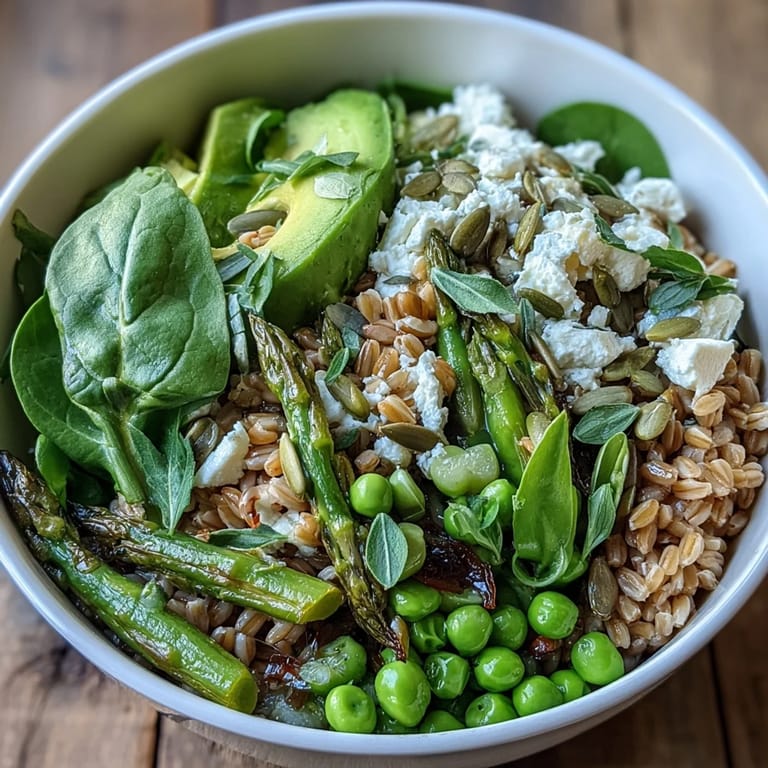
 Last spring, I found myself standing in the farmer's market with an armful of the most impossibly green vegetables—pencil-thin asparagus, tender pea shoots, beans that snapped with promise. Something about the season made me want to build a bowl instead of a plate, something that celebrated each ingredient without fussing over it. That's when this Spring Green Bowl became my answer to those mornings when you want food that feels alive.
I remember serving this to my neighbor who'd just moved in, and she ate it in near silence, then asked for the recipe before finishing her bowl. That's when I realized it wasn't really about being fancy—it was about letting good ingredients speak for themselves, the way she was speaking through her fork.
Ingredients
- Quinoa, brown rice, or farro (1 cup/180 g): Choose your grain based on texture preference—quinoa cooks fastest and stays fluffy, while brown rice brings earthiness and farro offers a subtle chew that pairs beautifully with spring vegetables.
- Water (2 cups/480 ml) and salt (½ tsp): Salt in the cooking water seasons the grains from within, so you're not adding seasoning as an afterthought.
- Fresh or frozen green peas (1 cup/150 g): Frozen peas are honestly just as good as fresh here because they're frozen at peak ripeness—I've stopped feeling guilty about using them.
- Asparagus (1 cup/120 g), trimmed and cut into 2-inch pieces: The cut matters because smaller pieces cook evenly and distribute throughout the bowl without dominating any single bite.
- Green beans (1 cup/120 g), trimmed and cut into 2-inch pieces: Look for beans that snap when you bend them—that's your signal they're fresh enough to honor in this dish.
- Baby spinach leaves (2 cups/60 g): A quick wilt in the pan softens the texture while keeping that grassy, mineral quality that makes spring taste like spring.
- Extra-virgin olive oil (3 tbsp): This is not the place to economize—good oil makes the dressing taste intentional, like you planned every element.
- Freshly squeezed lemon juice (2 tbsp) and lemon zest (1 tsp): Fresh juice brightens everything without tasting sour, and the zest adds a whisper of citrus oil that lingers pleasantly.
- Dijon mustard (1 tsp): This acts as an emulsifier, helping the oil and acid marry into something silky rather than separated.
- Maple syrup or honey (1 tsp): Just enough sweetness to round out the dressing's sharp edges without making it dessert-adjacent.
- Garlic clove (1 small, minced): One clove is plenty—you want whisper of garlic, not a shout.
- Salt and freshly ground black pepper: Taste as you go because these are the final adjustments that make the bowl feel made specifically for your palate.
- Toasted pumpkin or sunflower seeds (2 tbsp optional): The toasting step matters because it brings out nuttiness and creates contrast with the tender vegetables.
- Crumbled feta cheese (¼ cup optional): Salty and tangy, it adds substance without heavy cream or butter.
- Fresh herbs—mint, parsley, or dill (chopped): Choose one or combine them; herbs are where you can add your own signature to this bowl.
Tired of Takeout? 🥡
Get 10 meals you can make faster than delivery arrives. Seriously.
One email. No spam. Unsubscribe anytime.
Instructions
- Rinse and set up your grains:
- Run your chosen grain under cold water in a fine-mesh strainer, swirling it gently until the water runs clear—this removes surface starch that would make them sticky. Bring fresh salted water to a rolling boil in your saucepan, and you'll know it's ready when it sounds almost aggressive.
- Cook the grain foundation:
- Add your rinsed grain to the boiling water, give it a stir, then reduce heat to low and cover tightly. The grain will soften quietly over the next 15–35 minutes depending on what you chose; resist peeking too often because steam is doing important work under that lid.
- Blanch the spring vegetables:
- Bring a large pot of salted water to boil—season it so it tastes almost like the sea. Working with one vegetable type at a time, submerge the peas for about 2 minutes until they brighten, then the asparagus and beans for another 2–3 minutes until they're tender but still have a whisper of crunch.
- Shock them into color:
- Immediately after blanching, transfer each batch to a bowl of ice water using a slotted spoon or spider strainer—this stops the cooking instantly and locks in that shocking green that makes the bowl feel alive. Drain thoroughly on a clean kitchen towel or colander.
- Wilt the spinach with intention:
- Heat your skillet over medium heat without any oil—the residual heat and the spinach's own moisture are all you need. Add the leaves and stir gently for just 1–2 minutes until they surrender and darken, then move them to a plate before they turn gray.
- Whisk the dressing into being:
- In a small bowl, combine olive oil, fresh lemon juice, zest, mustard, sweetener, and minced garlic, then whisk vigorously for about 30 seconds until it becomes pale and slightly thickened—you'll feel the texture change under the whisk. Taste it, adjust salt and pepper, and taste again.
- Compose your bowls:
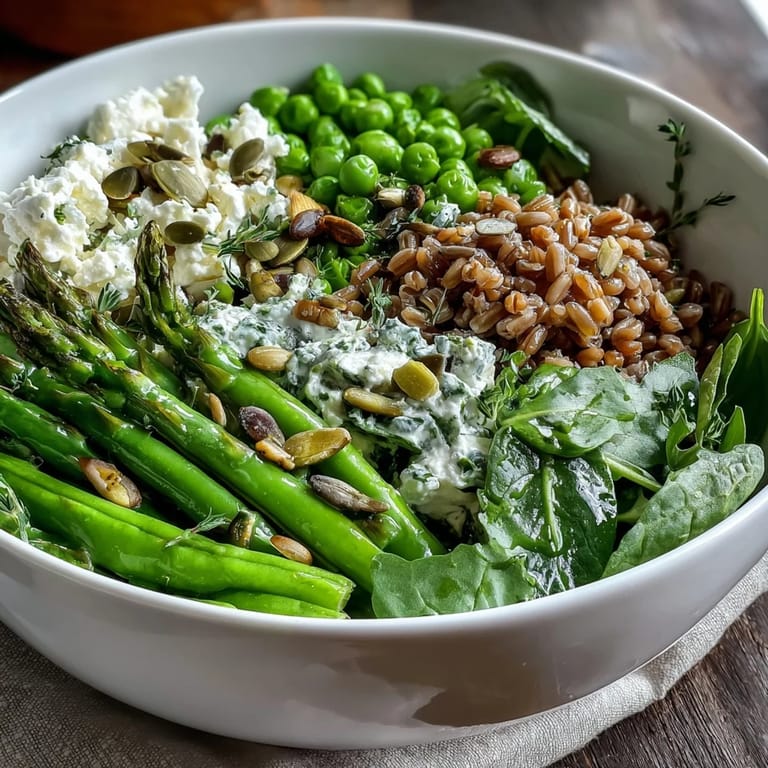
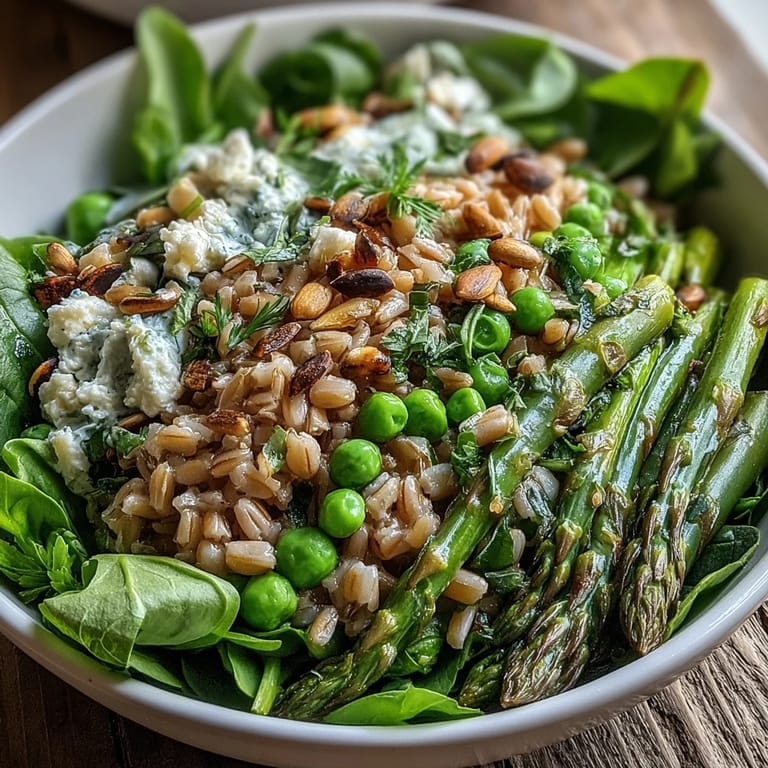
- Divide the warm (or room-temperature) grain evenly among four bowls, then arrange the vegetables in groups on top—this isn't about being precious, just about creating small sections of color. Drizzle generously with dressing, letting it pool slightly in the grain so it absorbs the flavor.
- Crown with intention:
- Scatter seeds, cheese if using, and herbs across the top, tasting as you go to make sure nothing's overdone. Serve immediately while the grain is still warm and the greens are still bright.
 Pin It
 There was an afternoon last May when my daughter helped me make this, and she arranged the vegetables in perfect little sections like she was painting. When we sat down to eat, she noticed how the colors made her happy before the flavors even had a chance—that's when I understood why bowls matter more than plates sometimes.
Timing and Rhythm in the Kitchen
The beauty of this bowl is that you can stagger the cooking steps so nothing feels rushed. Start the grain first since it needs the most time, then blanch your vegetables while it simmers peacefully. By the time the grain is tender, your vegetables are chilled and your spinach is ready—it's like a small dance where every step lands exactly when you need it to. The dressing comes together last, taking just two minutes but feeling like the most important part because it's what binds everything together.
Grain Choices and What They Bring
I've made this bowl with quinoa when I wanted lightness, brown rice when I craved something grounding, and farro when I wanted the vegetables to feel like they were cradled in something tender. Each grain whispers a slightly different story—quinoa tastes like spring mornings, brown rice like autumn kitchens somehow, and farro like you've done something intentional. There's no wrong choice here; it's about listening to what your body wants that particular day and trusting that instinct.
Building Your Perfect Bowl
This is where you become the chef of your own experience. The vegetables, grains, and dressing are a solid foundation, but the toppings and herbs are where your personality enters the bowl. I've added everything from crispy chickpeas to grilled tofu to soft-boiled eggs depending on the season and what I had time for, and every version felt both intentional and new. The recipe isn't precious—it wants to be played with.
- Protein additions like grilled chicken, baked tofu, or roasted chickpeas turn this into a more substantial main course without losing the lightness you loved in the first place.
- Late spring and early summer mean you might swap in fresh pea shoots, baby lettuce, or tender greens instead of spinach—follow your market instead of this list.
- Make the dressing up to three days ahead and store it separately; it will taste even better as flavors meld, and your vegetables stay crisp because you're only dressing at the moment of eating.
 Pin It
 This bowl taught me that the most satisfying meals are sometimes the simplest ones, built from respect for ingredients rather than complicated techniques. Make it often, make it your own, and notice how spring tastes a little different every time you do.
Recipe FAQs
- → Can I make this bowl ahead of time?
Absolutely. Cook the grains and vegetables in advance, then store them separately in airtight containers in the refrigerator for up to 3 days. Keep the dressing in a separate jar and wait to dress until just before serving to maintain the best texture and flavor.
- → What grains work best for this bowl?
Quinoa, brown rice, and farro all provide excellent texture and nutty flavor. Quinoa cooks the fastest at 15 minutes, while brown rice takes about 35 minutes. Bulgur and couscous are great alternatives that cook even more quickly if you are short on time.
- → How do I blanch vegetables properly?
Bring a large pot of salted water to a rolling boil. Add vegetables and cook for 2–3 minutes until just tender and brightly colored. Immediately transfer to ice water to stop the cooking process—this step preserves the vibrant green color and crisp-tender texture.
- → Can I add protein to make it more filling?
Yes, grilled chicken, baked tofu, or roasted chickpeas all pair beautifully. The bowl already contains 9 grams of protein from the grains and vegetables, but adding protein will make it even more satisfying as a main course.
- → Is the lemon dressing customizable?
Certainly. Swap maple syrup for honey, adjust the garlic to your taste, or add fresh herbs like dill and parsley directly into the dressing. The emulsified base of olive oil and lemon juice provides a perfect canvas for your personal touch.