 Pin It
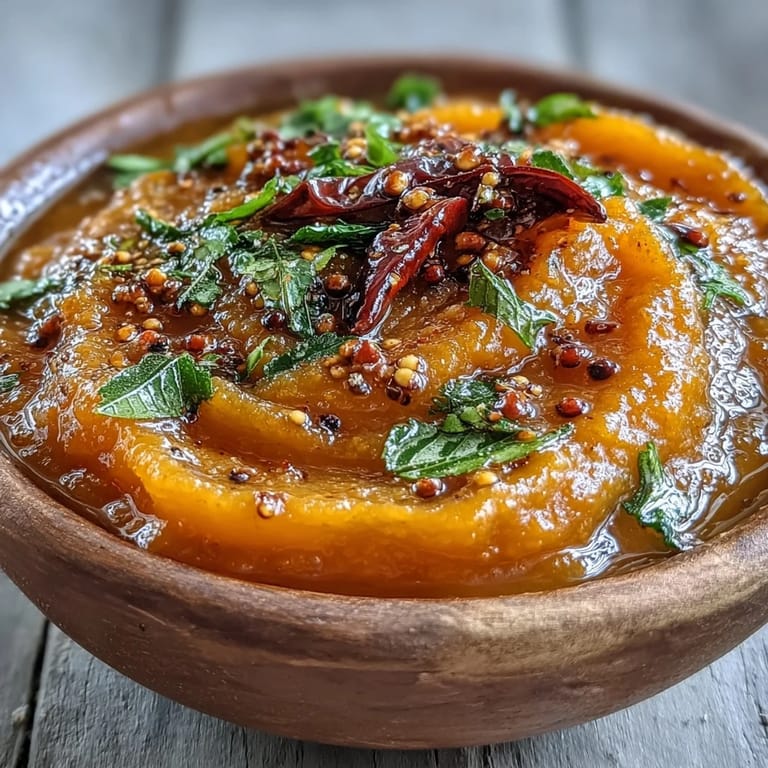
 My neighbor's mother taught me this chutney recipe one humid afternoon when she caught me staring at the guava tree in her backyard, wondering what to do with the fruit. She laughed, wiped her hands on her sari, and said the secret wasn't in fancy technique but in respecting the guava's natural tartness—let it shine through the sweetness. That conversation changed how I approach condiments entirely.
I made this for a breakfast gathering once and watched my friend (who doesn't usually eat Indian food) take a second dosa just for another spoonful of this chutney. She asked why it tasted bright instead of heavy, and I realized it was because the coconut oil tempering adds richness without drowning the fruit. That's when I understood this wasn't just a side dish—it was the meal's backbone.
Ingredients
- Semi-ripe guavas (2, chopped, about 1½ cups): Choose fruit that's still slightly firm with a touch of green—they'll have better structure and natural tartness than ripe ones, and won't turn into mush when blended.
- Fresh grated coconut (¼ cup): The coconut acts as a textural anchor and adds subtle sweetness that balances the guava's punch without overpowering it.
- Green chilies (1–2, chopped): These aren't just heat; they add grassy brightness that complements the fruit beautifully.
- Ginger (1-inch piece, peeled and chopped): A small piece goes a long way, warming the chutney with subtle spice that emerges after you swallow.
- Fresh coriander leaves (2 tablespoons, chopped): Don't skip this—it adds a floral note that makes people wonder what makes the chutney taste so alive.
- Salt (½ teaspoon or to taste): Salt draws out the guava's natural juices and makes every other flavor more pronounced.
- Jaggery or brown sugar (1 teaspoon): Use jaggery if you can find it; it adds an earthy sweetness that refined sugar can't match, though brown sugar works in a pinch.
- Lemon juice (1 tablespoon): This is your brightness knob—adjust upward if you want the chutney to cut through rich foods, downward if you prefer it softer.
- Coconut oil (1 tablespoon for tempering): The tempering oil should smell nutty and warm; it's what transforms the chutney from simple to special.
- Mustard seeds (½ teaspoon): Wait for that excited popping sound in hot oil—that's when you know the flavor is unlocking.
- Urad dal (½ teaspoon, split black gram): These small golden lentils add a subtle nuttiness and slight crunch when they turn golden.
- Dried red chili (1): One whole chili adds warmth and color without overwhelming heat; you can always add more at the table.
- Curry leaves (6–8): Their flavor is almost impossible to describe—herbaceous, slightly bitter in a good way, and completely essential to the tempering's success.
- Asafoetida (a pinch, optional): This smells intense on its own but mellows into a savory depth that makes people ask what they're tasting.
Tired of Takeout? 🥡
Get 10 meals you can make faster than delivery arrives. Seriously.
One email. No spam. Unsubscribe anytime.
Instructions
- Blend the base:
- Combine guavas, coconut, green chilies, ginger, coriander, salt, jaggery, and lemon juice in a blender with 2–3 tablespoons of water and blend until completely smooth. If the mixture looks too thick, add water one tablespoon at a time—the consistency should be like pourable yogurt, not soup.
- Transfer and rest:
- Pour the chutney into your serving bowl and let it sit while you prepare the tempering; this allows the flavors to meld slightly and the guava's natural sweetness to emerge.
- Heat the oil:
- Pour coconut oil into a small pan and let it warm over medium heat until it shimmers—you'll smell the toasty coconut aroma, which is your signal to proceed.
- Temper the seeds:
- Add mustard seeds and listen for them to pop and splutter against the hot oil (cover loosely with a lid if they jump everywhere). This usually takes 10–15 seconds of satisfying crackling.
- Build the tempering:
- Add urad dal, dried red chili, curry leaves, and asafoetida, stirring constantly for about 30 seconds until the dal turns golden and the curry leaves darken slightly. The whole mixture should smell warm and complex, not burnt.
- Finish:
- Pour the hot tempering over the chutney in one motion and stir well—the heat will carry the oil's flavor throughout, bringing everything together.
 Pin It
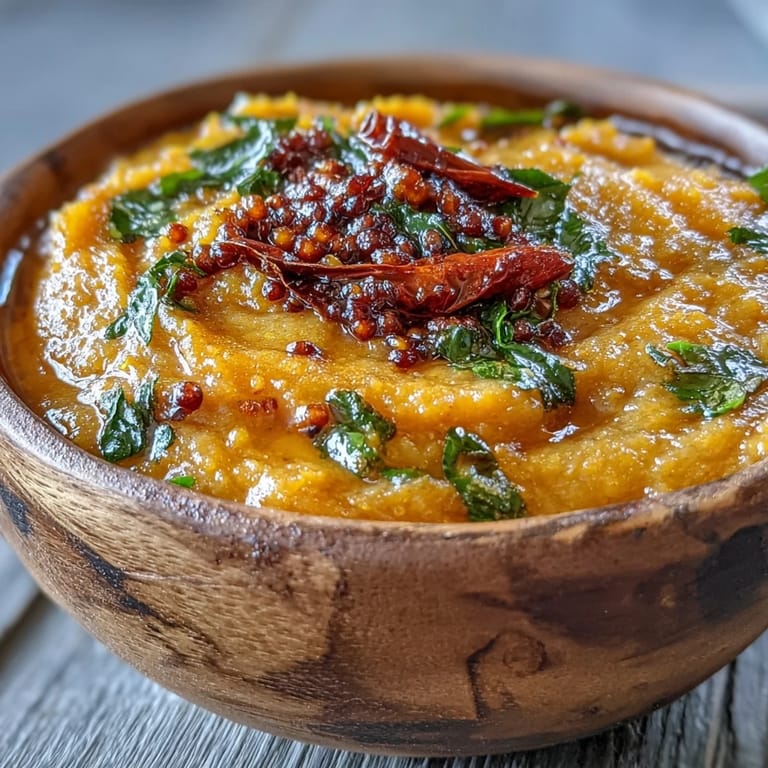
 There's a moment every time I make this when the tempering hits the cool chutney and the kitchen fills with this warm, complex aroma that stops people mid-conversation. That's when you know it's ready, and honestly, it's the best proof that simple ingredients matter most.
Serving Suggestions
This chutney is traditionally paired with South Indian breakfast staples like idli, dosa, and vada, where its tanginess cuts through the richness beautifully. I've also spread it on sandwiches, stirred it into yogurt as a dip, and even used it as a glaze for roasted vegetables, and every application surprises me with how versatile it truly is.
Storage and Make-Ahead Notes
Guava chutney keeps well in an airtight container in the refrigerator for up to 4 days, though the tempering's crispness fades slightly after a day—I recommend making the base ahead and tempering fresh when you're ready to serve. If you're meal prepping, you can freeze the untempered chutney for up to two weeks and temper it whenever you need it, which is a small trick that saves you from making four small batches.
Variations and Customizations
Once you understand the basic balance—tangy fruit, creamy coconut, warm spices—you can start experimenting with what's in your kitchen. I've made versions with mango instead of guava (using slightly less since mangoes are sweeter), added a tiny pinch of turmeric for earthiness, and even swapped the dried red chili for a fresh one if I wanted more herbaceous heat instead of slow burn.
- Add a teaspoon of grated white peach or papaya if you want extra sweetness without changing the flavor profile too drastically.
- If asafoetida isn't available or you dislike it, skip it entirely—the tempering stands on its own with the mustard seeds and curry leaves.
- For spice lovers, double the green chilies or add a small pinch of black pepper at the blending stage for a sharper bite that sticks around.
 Pin It
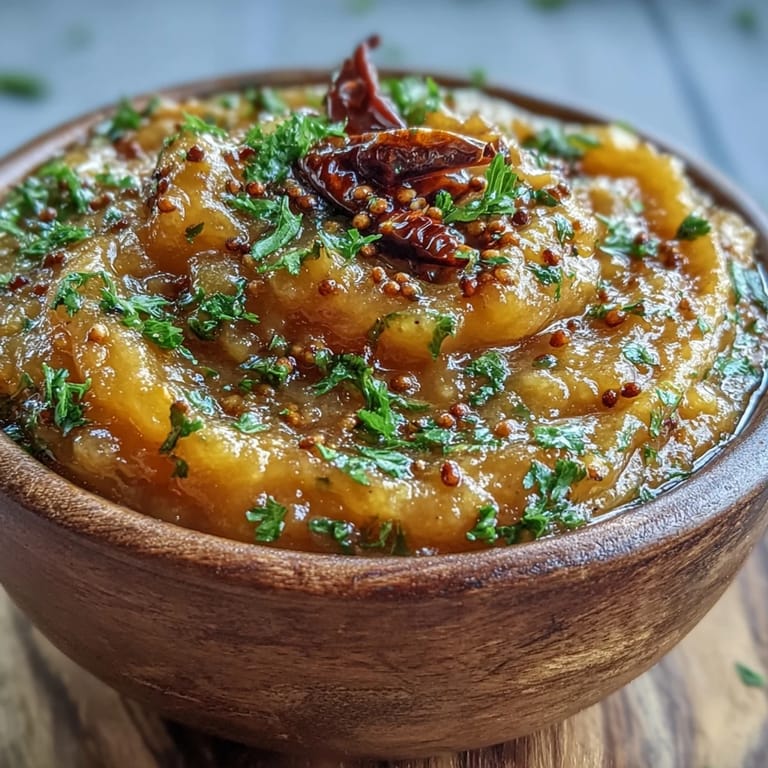
 This chutney represents something I've come to love about Indian cooking: the way simple, seasonal ingredients transform through technique and intention into something genuinely special. Make it once and you'll understand why my neighbor's garden gave her so much joy.
Recipe FAQs
- → What does guava chutney taste like?
Guava chutney offers a harmonious blend of tangy, sweet, and mildly spicy flavors. The semi-ripe guavas provide natural tartness, while jaggery adds subtle sweetness. Fresh coconut contributes creaminess, and green chilies bring gentle heat. The tempering adds nutty, aromatic notes that elevate the overall taste profile.
- → Can I make guava chutney ahead of time?
Yes, guava chutney can be prepared ahead and stored in an airtight container in the refrigerator for 3-4 days. The flavors actually develop and meld better after sitting for a few hours. Add the tempering just before serving for the freshest taste and crunchiest texture.
- → What can I serve with guava chutney?
This versatile chutney pairs perfectly with South Indian breakfast items like idli, dosa, vada, and uttapam. It also works well as a spread for sandwiches, wraps, or burgers. Use it as a dipping sauce for snacks like samosas, pakoras, or even as a unique condiment for grilled meats and seafood.
- → How do I adjust the consistency of the chutney?
Control the consistency by adjusting the amount of water during blending. Start with 2-3 tablespoons for a thick, spreadable texture. Add more water, one tablespoon at a time, if you prefer a thinner, pourable consistency. Remember that the chutney thickens slightly after refrigeration.
- → Can I use ripe guavas instead of semi-ripe?
While semi-ripe guavas provide the ideal balance of tartness, you can use ripe guavas for a sweeter version. If using fully ripe guavas, reduce the jaggery slightly and increase lemon juice to maintain the tangy profile. The texture may be softer, but the flavor will still be delicious.
- → Is guava chutney spicy?
This chutney is mildly spiced, with heat coming from 1-2 green chilies. The spice level is adjustable - start with one chili for subtle warmth or add two for more pronounced heat. The dried red chili in tempering adds flavor without significant spiciness, making it family-friendly.