 Pin It
 There's something almost meditative about the ritual of cleaning mussels—the satisfying click of the shells, the brine-soaked intimacy of holding them under cool running water. Years ago, I watched a Belgian friend move through this dish with such casual grace that I realized moules marinière wasn't about technique or timing, but about respecting the ingredient and letting it sing. That evening, the smell of white wine meeting garlic and fresh herbs filled her tiny kitchen, and I understood why this simple preparation has endured for centuries along the coast.
I made this for a dinner party once when I was nervous about impressing someone I cared about, and somehow the simplicity of it was exactly right. The pot steamed quietly on the stove while we talked, and when I lifted the lid to reveal dozens of opened shells, the aroma alone got a genuine reaction. It became our dish after that—the one that proved that good food doesn't need to be complicated, just attentive.
Ingredients
- Fresh live mussels, 2 kg: Look for shells that are tightly closed or snap shut when tapped; discard any that feel heavy with sand or smell off. The fresher they are, the sweeter the meat inside.
- Shallots, 2 medium, finely chopped: Shallots have a gentler, slightly sweet edge compared to onions—they dissolve into the broth and mellow the wine beautifully.
- Garlic, 2 cloves, minced: Mince it finely so it releases its essence into the steaming liquid without overpowering the delicate mussel flavor.
- Leek, white part only, finely sliced: The white part is milder and more tender than the green; it adds a subtle sweetness that rounds out the aromatics.
- Celery, 2 stalks, finely chopped: This isn't a vegetable dish—celery's job here is to add depth and umami to the broth without announcing itself.
- Flat-leaf parsley, 1 small bunch, chopped: Add this at the very end so it stays bright and fresh; it's the final flourish that makes the dish feel alive.
- Fresh thyme and 1 bay leaf: These herbs infuse the wine with subtle earthiness and help balance the brininess of the mussels.
- Dry white wine, 300 ml: Use something you'd actually drink—the wine becomes the soul of the dish, so choose one with good acidity and a touch of minerality.
- Olive oil, 2 tbsp: This just helps soften the aromatics; it's not about richness here, but about creating a welcoming base for the mussels.
- Freshly ground black pepper and sea salt: Taste the broth before adding salt—mussels release plenty of brine, so you may not need much.
- Lemon wedges, to serve: A squeeze of lemon cuts through the richness and brightens each spoonful.
Tired of Takeout? 🥡
Get 10 meals you can make faster than delivery arrives. Seriously.
One email. No spam. Unsubscribe anytime.
Instructions
- Prepare and inspect the mussels:
- Rinse them under cold running water, scrubbing the shells gently and pulling away the dark beard. Discard any that are already open or cracked, or any that don't snap shut when you tap them firmly—these won't open during cooking and aren't safe to eat.
- Build the aromatic base:
- Heat olive oil in a large pot over medium heat and add the shallots, garlic, leek, and celery. Sauté for 3 to 4 minutes, stirring occasionally, until everything becomes soft and fragrant—you're not browning them, just coaxing out their sweetness.
- Wake up the herbs and wine:
- Stir in the thyme and bay leaf, then pour in the white wine. Let it come to a gentle simmer for about a minute—this softens the herbs and lets the wine's alcohol begin to cook off, leaving only its flavor behind.
- Introduce the mussels:
- Add all the cleaned mussels to the pot in a single layer if possible, though a little overlap is fine. Cover with a tight-fitting lid and turn the heat up to high.
- Steam until they surrender:
- Steam for 5 to 7 minutes, shaking the pot gently once or twice midway through. You'll hear them shifting inside, and gradually the shells will crack open. When most have opened, they're done—don't wait for every single one if the majority are ready, as overcooking toughens the meat.
- Finish and season:
- Remove from heat and stir in the chopped parsley. Taste a spoonful of broth and season with pepper and just a pinch of salt if needed—remember the mussels have already seasoned the liquid generously.
- Serve immediately:
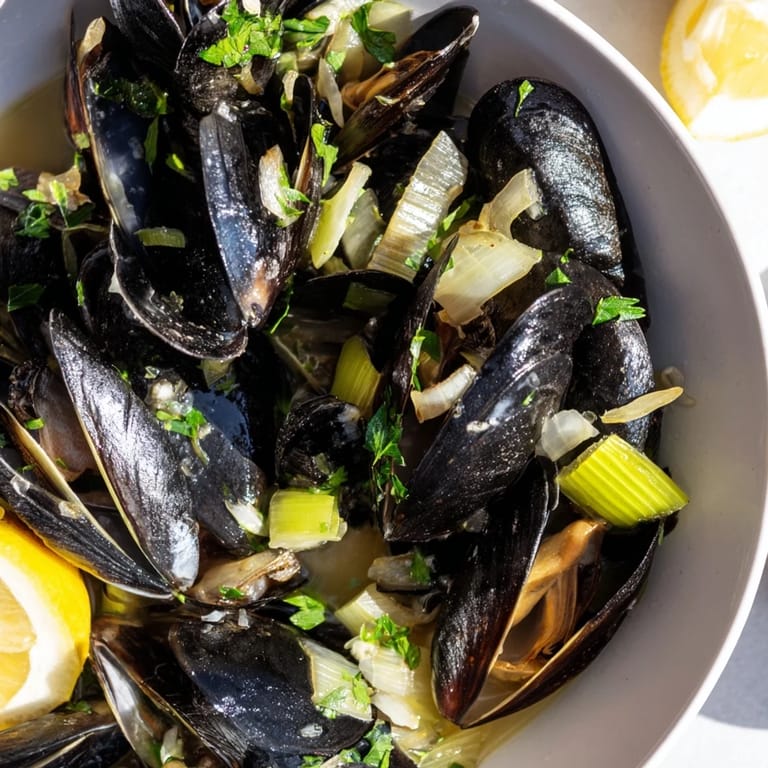
- Divide the mussels and broth among deep bowls, making sure everyone gets plenty of that precious liquid. Offer lemon wedges and crusty bread for soaking.
 Pin It
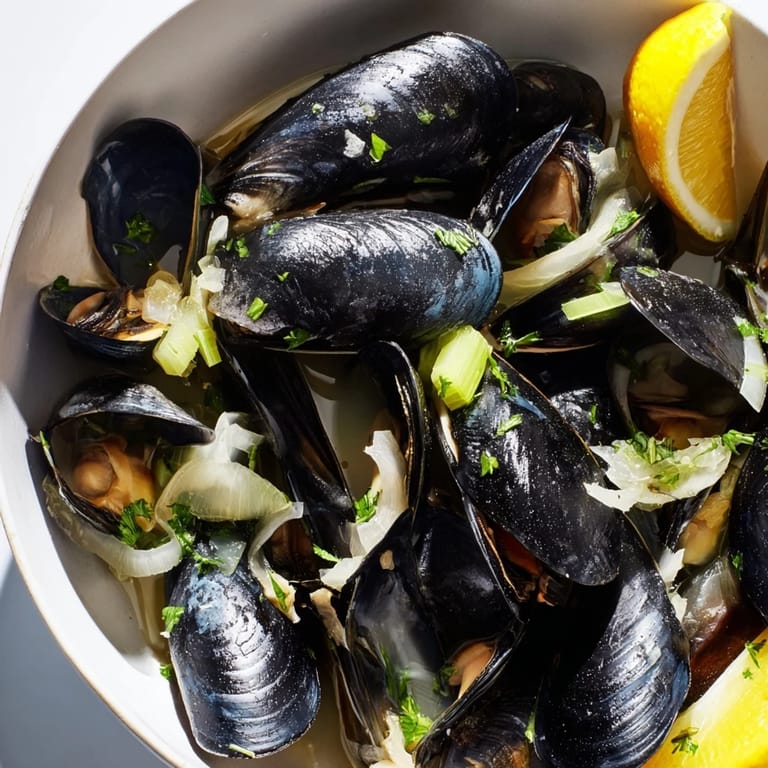
 I realized eating moules marinière is less about the individual mussels and more about the ritual of them—cracking shells, sipping that golden broth, tearing bread into it, the conversation that happens around a shared pot. It's a dish that asks you to slow down.
Choosing and Storing Mussels
Fresh mussels should smell like the ocean, not fishy or ammonia-like, and they should feel heavy for their size—that weight means they're full of meat and liquid. Buy them the day you plan to cook them and store them in the coldest part of your fridge, ideally in a mesh bag so air can circulate. If you keep them in a sealed plastic bag, they'll suffocate and spoil faster. Some people soak them in salted water for an hour before cooking to help them purge any sand, which is a nice touch if you have the time.
Wine Selection Matters
The wine you use becomes the soul of this dish, so don't use anything you wouldn't sip. A crisp white wine with good acidity—like Muscadet, Albariño, or Sauvignon Blanc—will brighten the broth and balance the briny mussels. Avoid heavily oaked wines or anything too sweet; they'll overpower the delicate mussel flavor and turn the broth muddy. If you're cooking without alcohol, use a splash of good fish stock and a squeeze of lemon instead, though it won't quite be the same magic.
Variations and Additions
Once you master the basic version, you can play with it gently. A knob of butter stirred in at the end makes the broth richer and silkier. Some cooks add a pinch of saffron for luxury, or a splash of cream for indulgence, but I find these often mask the pure flavor of the mussels themselves. You can also swap the white wine for cider, which Belgians sometimes do, or add a touch of Pernod if licorice notes appeal to you.
- For richness: stir in 2 tablespoons of unsalted butter at the end, which makes the broth taste almost like a sauce.
- For smokiness: add a pinch of smoked paprika with the herbs.
- For brightness: finish with a splash of Pastis or a squeeze of fresh lime instead of lemon.
 Pin It
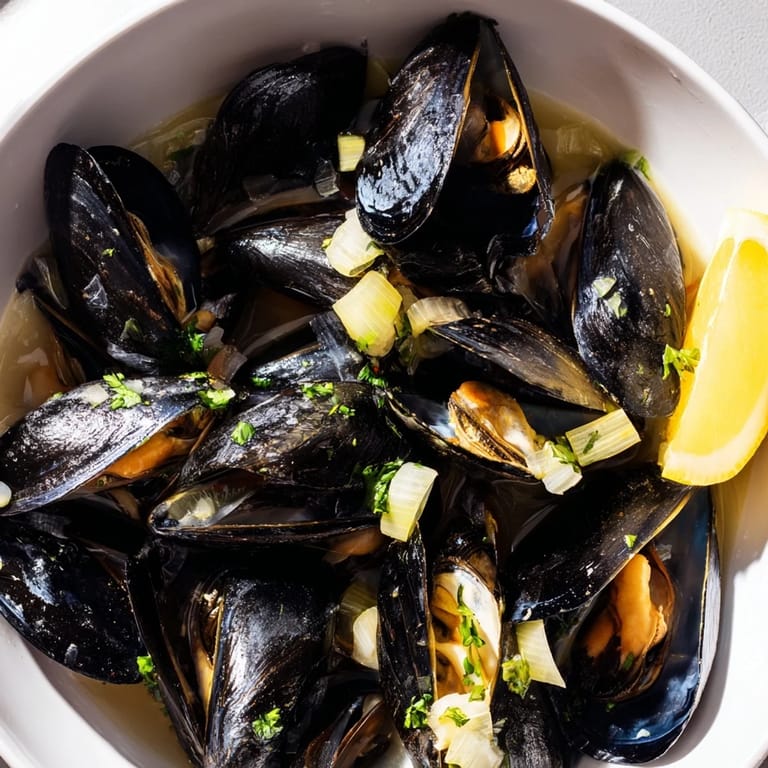
 This dish carries the honesty of Belgian coastal cooking—no pretense, just the ocean, wine, and fire coming together in perfect harmony. Make it when you want to feel both elegant and completely at ease.
Recipe FAQs
- → How should mussels be cleaned before cooking?
Rinse mussels under cold water, scrub shells to remove debris, and debeard them by pulling out the fibrous threads. Discard any mussels that remain open when tapped.
- → What is the best way to steam mussels evenly?
Place cleaned mussels in a pot with aromatics and liquid, cover tightly, and cook over high heat while occasionally shaking the pot until the shells open, about 5–7 minutes.
- → Can I substitute ingredients if some aromatics aren't available?
Yes, for example, shallots can be replaced with small yellow onions. Fresh herbs like thyme and parsley are recommended for authentic flavor but can be adjusted.
- → What are ideal accompaniments for this dish?
Traditional sides include crusty bread to soak up the broth and Belgian fries with mayonnaise for a classic pairing.
- → How can the broth be enhanced for richer flavor?
Adding unsalted butter at the end of cooking enriches the broth, creating a smoother, more decadent taste.