 Pin It
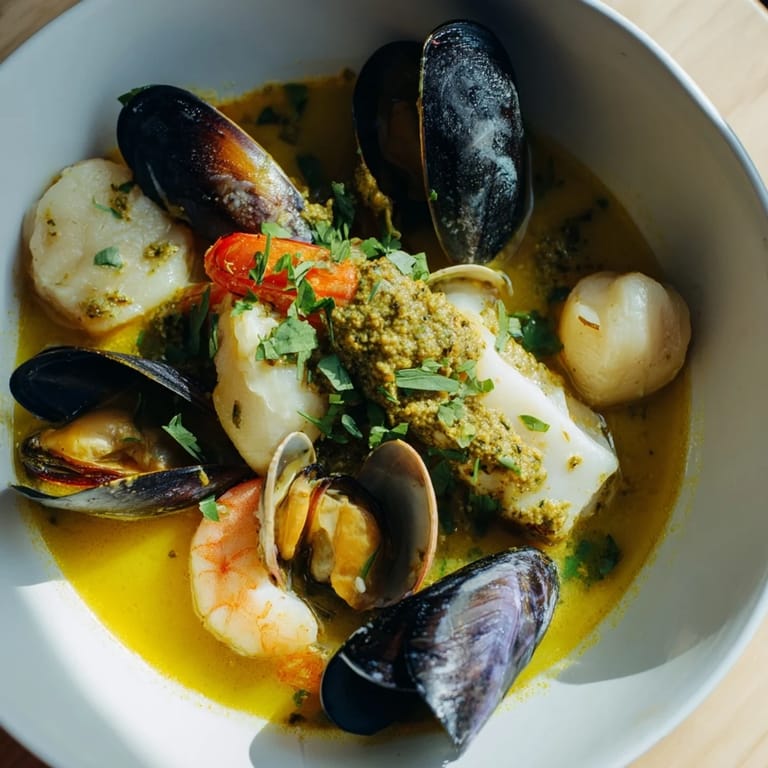
 The first time I tasted bouillabaisse, I was sitting at a crowded bistro table in Marseille, watching the chef ladle a rust-colored broth over toasted bread with a dollop of golden rouille. What struck me most wasn't the fancy technique—it was how humble it felt, like someone's grandmother had thrown together the best of the day's catch and made it into something unforgettable. Years later, I realized that's exactly what bouillabaisse is: a celebration of imperfection, of using what's fresh and making it sing with saffron and fennel. Now when I make it, I'm not trying to be fancy. I'm just chasing that moment when the kitchen fills with briny, aromatic steam and everyone leans in closer.
I remember the winter my partner surprised me by cooking this for our anniversary dinner at home. The apartment smelled like saffron and sea salt for hours, and when they brought it to the table in those deep bowls with the rouille swirled on top, I understood why this dish has survived centuries. It wasn't about impressing me with technique; it was about saying 'I spent time thinking about you' in the most delicious way possible.
Ingredients
- Firm white fish fillets (monkfish or sea bass): These hold their shape through the gentle simmering and provide a meaty backbone to the stew—they're your anchor.
- Oily fish fillets (red mullet): The fat content adds richness and authenticity; don't skip this or substitute with white fish only, as the flavor becomes flat.
- Mussels and shrimp: Fresh is non-negotiable here—they cook so quickly that any staleness shows immediately.
- Sea scallops: Optional but magical when you find good ones; they add sweetness and a textural contrast.
- Olive oil: Use good quality but not your most precious bottle; this is cooking oil, not finishing oil.
- Onion, leek, and fennel: This aromatic base is your foundation—the sweetness builds the depth of the broth.
- Saffron threads: Buy whole threads and toast them lightly before steeping; it wakes up their flavor in ways powder never can.
- Orange zest: This is the secret whisper that makes people pause mid-bite and wonder what they're tasting.
- Fish stock: Homemade is ideal, but a quality store-bought stock won't betray you if you can't make your own.
- Dry white wine: Something you'd drink—never use 'cooking wine' that tastes like regret.
Tired of Takeout? 🥡
Get 10 meals you can make faster than delivery arrives. Seriously.
One email. No spam. Unsubscribe anytime.
Instructions
- Build your aromatic base gently:
- Heat olive oil and coax the onion, leek, fennel, carrot, and garlic into softness over medium heat for 8-10 minutes—you're looking for surrender, not color. This slow start is where patience pays dividends; rushing this step means a thin, hurried broth.
- Wake the spices and tomatoes:
- Add the tomatoes, orange zest, bay leaf, thyme, parsley, saffron, fennel seeds, and peppercorns. Cook for 5 minutes until the kitchen smells like a Provençal market. The aroma tells you the flavors are waking up.
- Deglaze with wine and build the broth:
- Pour in the white wine and let it bubble for 2 minutes to cook off the harsh edge, then add your stock. Bring to a gentle boil, then lower the heat and simmer uncovered for 25 minutes—this is when the broth develops its soul.
- Strain for silken perfection:
- Push everything through a fine sieve, pressing gently on the solids to extract every drop of flavor. This step transforms a rustic stew into something refined without losing its heart.
- Cook the seafood in stages:
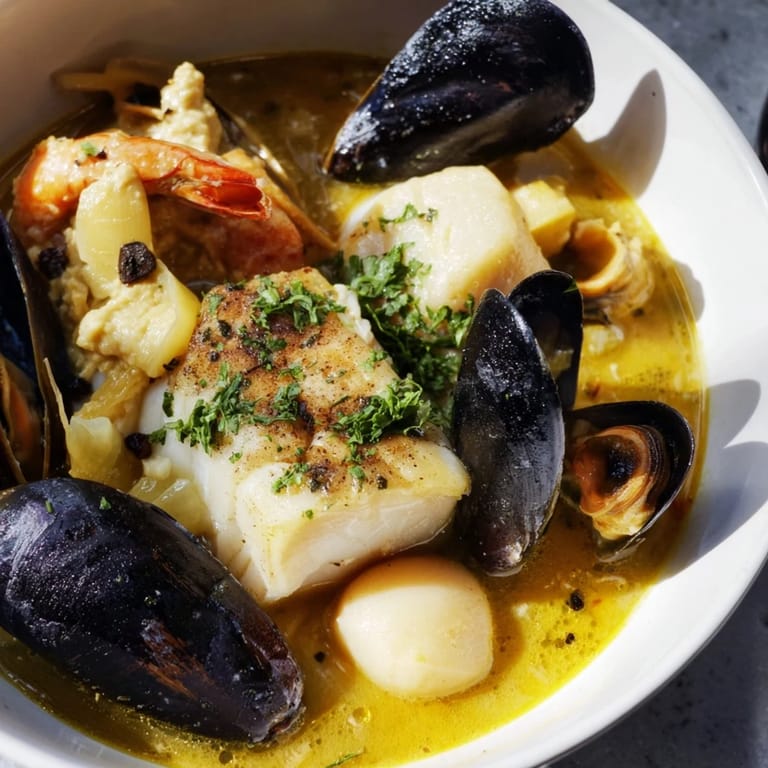
- Bring the broth back to a gentle simmer and add the firm white fish first (5 minutes), then the oily fish, mussels, shrimp, and scallops (another 5-6 minutes). Watch for the moment the mussels crack open—that's your cue everything is done.
- Make the rouille by hand:
- Whisk the egg yolk, garlic, chili, saffron water, and mustard together in a bowl. Drizzle the olive oil in slowly—almost one drop at a time at first—while whisking constantly, just like making mayonnaise. The emulsion is what makes this sauce luxurious.
 Pin It
 There's something sacred about the moment you pour this stew into a bowl at the table and watch someone take their first spoonful. That hesitation before they taste it, the way their eyes close when the saffron and sea salt hit their tongue—that's when bouillabaisse stops being dinner and becomes a memory.
The Story Behind Bouillabaisse
Bouillabaisse was born from necessity—Provençal fishermen would take the catch they couldn't sell and turn it into a communal meal on the docks. It was never meant to be fancy; it was meant to be honest. What started as resourcefulness became a legend, and somehow that humble origin is exactly why it works. Every ingredient has a reason, and nothing is wasted. When you make this dish, you're not just following a recipe; you're honoring centuries of people who knew that the best food comes from paying attention and respecting what you have.
The Rouille: Where Magic Happens
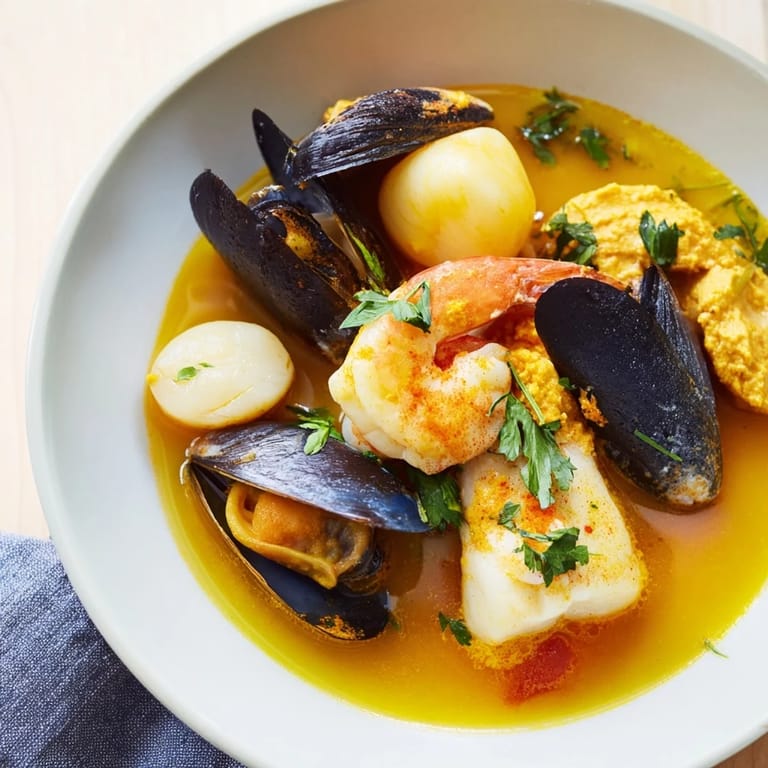
The rouille is what separates a good bouillabaisse from one that haunts you. It's a saffron-and-garlic aioli that clings to every spoonful of broth, turning it golden and silky. The first time I made it, I was terrified it would break, but I learned that emulsions are just about patience and rhythm—the oil has to go in slowly, and your wrist has to be steady. It's the same motion your grandmother probably used, over and over, until her arm knew it by heart.
Serving and Pairing
Serve bouillabaisse in shallow bowls that have been warmed, and toast your baguette slices until they're crispy but not hard—they need to absorb the broth without falling apart. Brush them lightly with olive oil, and don't be shy with the rouille; a generous spoonful is not just acceptable, it's mandatory. A chilled Provençal rosé or crisp white wine alongside makes the whole experience feel like you're sitting in a sun-soaked restaurant overlooking the Mediterranean.
- If you can't find good seafood, it's better to make something else than to make bouillabaisse with mediocre fish.
- Rouille made the day before actually tastes better, so there's no shame in prep work.
- Leftovers can be gently reheated, but add new seafood rather than reheating the old—it deserves better.
 Pin It
 This is the kind of meal that reminds you why cooking matters. It's not about being perfect; it's about being present, about choosing good ingredients and treating them with respect, and about the kind of love that shows up in a bowl.
Recipe FAQs
- → What types of fish work best for this dish?
Firm white fish like monkfish or sea bass paired with oily fish such as red mullet create a perfect balance of textures and flavors.
- → How is the saffron incorporated into the stew?
Saffron threads are added during the broth preparation to infuse a subtle, aromatic color and flavor throughout the dish.
- → What is rouille and how is it made?
Rouille is a garlicky sauce made by whisking egg yolk, chili, saffron, and mustard with olive oil to a thick, creamy consistency, enhancing the stew when served alongside.
- → Can the broth be prepared ahead of time?
Yes, the broth can be made in advance and strained, allowing flavors to meld before reheating and adding seafood for final cooking.
- → What bread is traditionally served with this dish?
Toasted baguette slices brushed with olive oil are classic accompaniments, perfect for dipping into the rich broth and enjoying with rouille.
- → Are there alternatives for those avoiding gluten?
Gluten-free bread can replace the traditional baguette for individuals with gluten sensitivities without altering the dish's character.