 Pin It
 My kitchen got quieter after I moved to the city, but it smelled better than ever the first time I simmered a pot of bone broth with fresh turmeric and ginger. Something about the golden steam rising up felt like I was doing something ancient and wise, even though I was just following a wellness article I'd clipped months ago. The broth cooled that night, and I found myself sipping it straight from a mug before bed, feeling genuinely different—clearer, warmer, less achy. That simple bowl became my ritual, especially during long work weeks when I needed something that felt like medicine and comfort at once.
I made this for my mom during her recovery week, and watching her finish an entire bowl—then ask for seconds—was the moment I knew this recipe had staying power. She's not one for trendy food, but she couldn't argue with how she felt afterward. Now she texts me the recipe to friends, which is basically her love language.
Ingredients
- Beef or chicken bone broth (1.5 liters): This is your foundation—the collagen and minerals are what makes this bowl actually do something for your body, so splurge on quality here or make your own if you have time.
- Yellow onion, quartered: The onion isn't meant to stay recognizable; it dissolves into the broth and adds sweetness and depth that turmeric alone can't achieve.
- Garlic cloves (4, smashed): Smashing rather than mincing releases more of the beneficial compounds, and the cloves will soften completely during simmering.
- Fresh ginger (thumb-sized piece, sliced): Fresh ginger tastes completely different from ground—it's peppery and bright, not dusty, and it actually helps reduce inflammation rather than just adding flavor.
- Fresh turmeric (thumb-sized piece, sliced): If you can find fresh turmeric, use it; it's earthier and less bitter than the powder, though either works beautifully.
- Apple cider vinegar (2 tbsp): This little splash helps your body absorb all those minerals and collagen from the broth—it's worth not skipping even though you won't taste it directly.
- Black peppercorns (1 tsp whole): Whole peppercorns stay in the broth longer and release their essence gradually, keeping the heat subtle and sophisticated.
- Sea salt (1 tsp, adjusted to taste): Taste as you go; the broth will concentrate as it simmers, and you might need less salt than you'd expect.
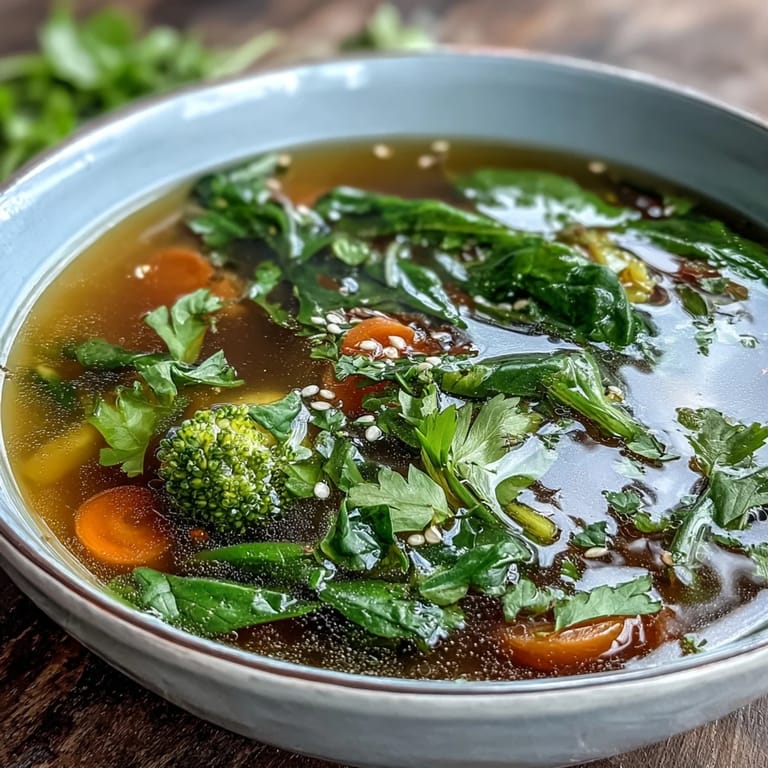
- Carrots, celery, broccoli, zucchini, spinach: These vegetables add texture and nutrients but keep their structure if you time the cooking right—add them in stages so nothing gets mushy.
- Fresh parsley or cilantro (2 tbsp chopped): This final flourish adds brightness and a subtle herbaceousness that makes the whole bowl feel intentional rather than medicinal.
- Sesame seeds and lemon wedges: These are your finishing touches—the crunch and acid that make you actually want to eat slowly and notice what you're tasting.
Tired of Takeout? 🥡
Get 10 meals you can make faster than delivery arrives. Seriously.
One email. No spam. Unsubscribe anytime.
Instructions
- Build Your Broth Base:
- Pour your bone broth into a large stockpot, then add the quartered onion, smashed garlic, sliced ginger, sliced turmeric, apple cider vinegar, whole peppercorns, and salt. Bring it to a gentle boil over medium-high heat—you'll see small bubbles breaking the surface, and the kitchen will smell like healing is actually possible.
- Let the Magic Happen:
- Reduce the heat to low, cover the pot, and let it simmer quietly for 1.5 hours. This isn't a vigorous simmer; you want a gentle, patient cooking that coaxes every bit of nutrition and flavor into the liquid without boiling away the delicate compounds you're after.
- Strain with Care:
- Set a fine mesh sieve over your pot and carefully pour the broth through, leaving all the solids behind. The broth should be clear and golden, and you'll notice it tastes richer and more refined than when you started.
- Add Your Vegetables Thoughtfully:
- First, add the carrots and celery, simmering for 10 minutes until they're tender but still have a slight bite. Then add the broccoli florets, giving them another 5 minutes or so.
- Finish With Delicate Greens:
- Finally, add the zucchini slices and baby spinach, simmering just 2–3 minutes until the spinach wilts into the broth but still looks vibrant green rather than olive-drab. Taste now and add more salt if the broth feels flat.
- Serve with Intention:
- Divide the broth and vegetables among your bowls, then top each one with chopped fresh herbs, a sprinkle of sesame seeds if you like, and a squeeze of lemon to brighten everything. Eat slowly and notice how you feel.
 Pin It
 There's a moment, usually around day three of drinking this broth regularly, when you realize your fingers aren't as stiff in the morning or your skin looks dewy without trying. That's when you stop thinking of it as a recipe and start thinking of it as part of taking care of yourself—the way brushing your teeth is, except it actually tastes good.
Why Bone Broth Is Worth the Wait
Bone broth isn't trendy because of marketing; it genuinely contains collagen, gelatin, and minerals that your body recognizes and uses. When you simmer bones for hours, you're breaking down the connective tissue into something your digestive system can absorb easily, which is why people report feeling better—less joint pain, better skin, clearer thinking—after making it a habit. The slow simmering with ginger and turmeric amplifies the anti-inflammatory benefits, creating a broth that works harder than plain bone broth alone ever could.
Timing the Vegetables Right
The secret to a beautiful broth bowl is adding vegetables in stages rather than all at once, so each one cooks just enough to be tender but not so long that it falls apart or loses its color. Carrots and celery need the most time because they're dense, so they go in first. Broccoli follows because it's delicate and can go from perfect to mushy in seconds. Zucchini and spinach are added last, finishing in just a few minutes so the bowl looks as good as it tastes and the vegetables keep their nutritional integrity.
Customizing Your Bowl
This recipe is a template, not a rule—swap in whatever vegetables are in season or what your body is craving that day. Winter calls for mushrooms and kale, spring wants fresh peas and young greens, and summer loves the zucchini and fresh herbs. You can also add shredded cooked chicken, tofu cubes, or a soft-boiled egg to turn this into more of a full meal. The broth is the constant; everything else is your invitation to play and personalize.
- Make a big batch of the plain broth on Sunday and portion it into containers so you can have a healing bowl ready any day of the week.
- If you can't find fresh turmeric, don't skip it—ground turmeric works beautifully, just use 1 teaspoon instead of the fresh piece.
- Squeeze your lemon wedge right into the bowl at the last moment so the acid hits your palate fresh and the brightness doesn't fade.
 Pin It
 This broth bowl has become my version of self-care, the way some people light candles or take long baths. It's warm, it tastes like someone who loves me made it, and it actually works.
Recipe FAQs
- → What makes this broth collagen-boosting?
The slow-simmered bone broth naturally contains collagen and gelatin from the bones, which breaks down during the long cooking process. Apple cider vinegar helps extract these beneficial compounds.
- → Can I make this vegetarian?
Yes, simply substitute the bone broth with high-quality mushroom broth or vegetable broth. The flavor profile will be slightly different but still delicious and nourishing.
- → How long does this keep in the refrigerator?
The broth bowl will keep for 4-5 days in an airtight container in the refrigerator. The broth may gel when cold, which is perfectly normal and indicates good collagen content.
- → Can I freeze this for later?
Absolutely! Freeze the broth and vegetables separately for best texture. The broth keeps frozen for up to 3 months. Thaw overnight in the refrigerator before reheating.
- → What vegetables work best in this broth bowl?
Root vegetables like carrots, parsnips, and turnips hold up well during simmering. Leafy greens like spinach, kale, or bok choy should be added in the last few minutes to maintain their texture and vibrant color.