 Pin It
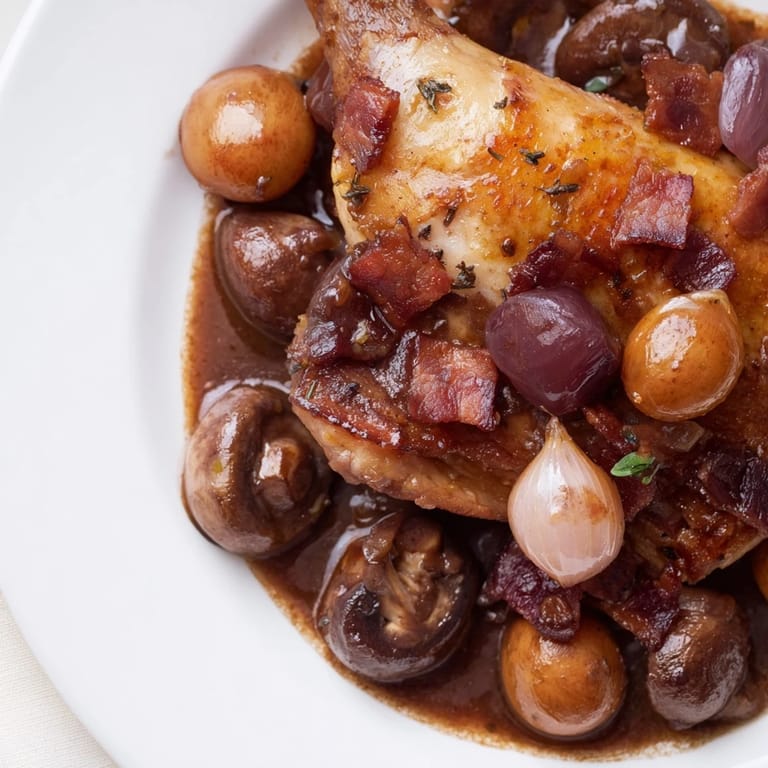
 My first coq au vin came together almost by accident on a rainy autumn evening when I had a bottle of decent Burgundy sitting open and a whole chicken waiting to be roasted. Instead of the usual weeknight routine, I decided to braise it low and slow, letting the wine do the heavy lifting. Hours later, when I lifted that Dutch oven lid, the kitchen smelled like a Parisian bistro, and I knew I'd stumbled onto something I'd be making for years.
I made this for my partner one February when we were both exhausted from work, and somehow the ritual of it—bacon sizzling, chicken browning, wine hitting the hot pan with that perfect sizzle—became the evening we needed. We sat at the kitchen counter while it cooked, wine glasses in hand, and by the time dinner was ready, we'd already forgotten what we were stressed about.
Ingredients
- 1 whole chicken (about 1.5 kg), cut into 8 pieces: Thighs and drumsticks stay juicier than breasts, so don't shy away from dark meat—it's what makes this dish sing.
- 150 g smoked bacon or pancetta, diced: The smoky richness is non-negotiable; it's the backbone of the flavor profile.
- 200 g pearl onions, peeled: They soften into sweet nuggets, but peeling them is tedious—freeze them for 10 minutes first and the skins slip right off.
- 250 g cremini or button mushrooms, cleaned and quartered: Cremini add earthiness that white mushrooms can't match, and quartering them means they cook evenly.
- 2 medium carrots, sliced: They thicken the sauce naturally as they soften, adding a subtle sweetness that balances the wine's tannins.
- 2 garlic cloves, minced: Just enough to whisper in the background, not shout.
- 750 ml dry red wine (Burgundy or Pinot Noir): Don't use cooking wine or anything you wouldn't drink—the wine is the star, and cheap wine makes a cheap-tasting dish.
- 250 ml chicken stock: Homemade is best, but quality store-bought works; it mellows the wine's acidity.
- 2 tbsp tomato paste, 2 tbsp all-purpose flour, 2 tbsp olive oil, 2 tbsp unsalted butter: These build the foundation—the tomato paste adds umami depth, flour thickens delicately, and the fat carries flavor.
- 2 bay leaves, 4 sprigs fresh thyme, salt and freshly ground black pepper: Fresh thyme makes a difference you can taste; dried works in a pinch, but use less.
Tired of Takeout? 🥡
Get 10 meals you can make faster than delivery arrives. Seriously.
One email. No spam. Unsubscribe anytime.
Instructions
- Prep your chicken:
- Pat the pieces dry—moisture is the enemy of browning. Season generously with salt and pepper, letting it sit for a minute so the seasoning adheres.
- Render the bacon:
- In your Dutch oven over medium heat, let the bacon cook slowly until it's crisp and the fat is golden. This fat is liquid gold for the rest of the dish.
- Build a crust on the chicken:
- Working in batches so you don't crowd the pan, brown each piece until the skin is deep golden and the meat releases easily. Don't rush this—it takes about 10 minutes total and develops the flavors you'll taste in every spoonful.
- Soften the vegetables:
- Add the carrots, pearl onions, and garlic to the pot and let them sauté for about 5 minutes until they're just starting to turn golden. You're building layers, not cooking them through.
- Add the paste and flour:
- Stir in the tomato paste and flour, cooking for a minute while stirring constantly. This prevents lumps and lets the flour toast slightly, deepening its flavor.
- Combine everything:
- Return the chicken and bacon to the pot, then pour in the wine and stock. Scrape the bottom of the pot with a wooden spoon to loosen every browned bit—that's pure flavor. Add the bay leaves and thyme.
- Braise low and slow:
- Bring everything to a simmer, then cover and move to a 325°F oven for 1.5 hours. The gentle, even heat cooks the chicken through while the wine reduces into an silky sauce.
- Brown the mushrooms separately:
- While the pot braises, heat butter and oil in a skillet and sauté the mushrooms over medium-high heat for about 5 minutes until they're caramelized. Sautéing them separately means they stay firm and don't turn the sauce muddy.
- Finish and serve:
- Remove the lid for the last 15 minutes of cooking to let the sauce reduce slightly. Stir in the mushrooms, taste, and adjust seasoning. Remove the bay leaves and thyme sprigs, then serve hot over bread, potatoes, or noodles.
 Pin It
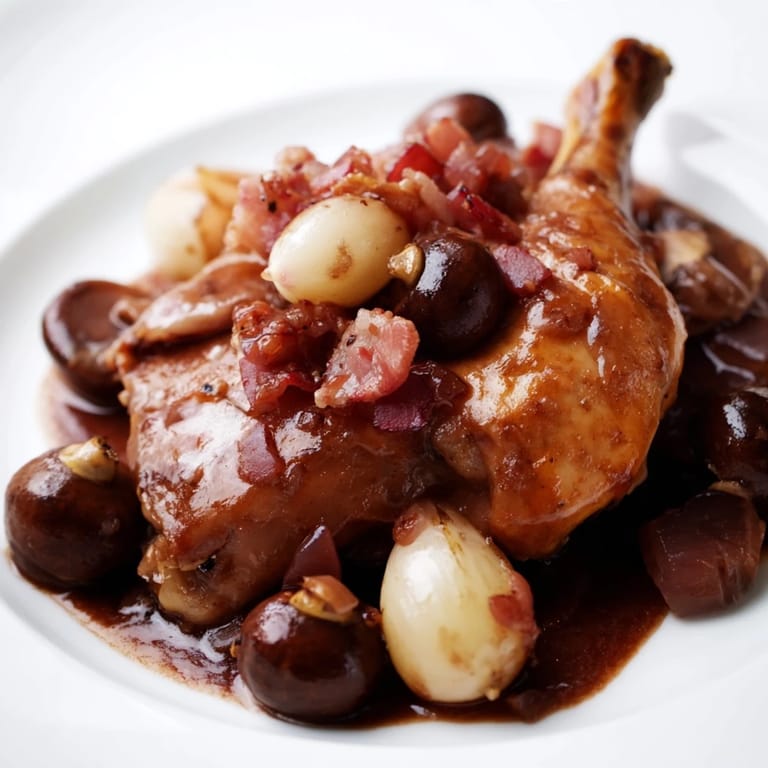
 There was a moment last winter when my grandmother tasted this and got quiet for a few seconds, then said it reminded her of a restaurant in Lyon she'd visited decades ago. That's when I realized coq au vin isn't just dinner—it's a taste of another place and time, carried forward in your own kitchen.
Why This Dish Deserves Your Time
Coq au vin is a study in patience rewarded. It looks like a lot of steps, but most of the cooking happens hands-off while you do something else. The magic is in the long braise, where tough collagen in the chicken converts to gelatin, the wine mellows into something velvety, and somehow the whole becomes greater than the sum of its parts. It's the kind of cooking that feels indulgent without being complicated.
Pairing and Serving
Serve this over something that can soak up the sauce—crusty bread is traditional, but buttered egg noodles or creamy mashed potatoes work beautifully. The sauce is rich enough that you don't need much else, though a simple green salad alongside cuts through the richness nicely. If you want to add a splash of brandy when sautéing the mushrooms, that's the classic move, and it's worth it for the aromatic boost.
Storage and Make-Ahead Tips
Coq au vin actually improves overnight as flavors meld, so don't hesitate to make it a day ahead. Store it in an airtight container in the fridge for up to four days, or freeze for up to three months (thaw overnight before reheating). Reheat gently over low heat, stirring occasionally, so the chicken doesn't dry out and the sauce stays silky.
- If you're using chicken thighs instead of a whole bird, they're actually more forgiving and tend to stay juicier.
- For a gluten-free version, swap regular flour for cornstarch or a gluten-free blend, using the same amount.
- The quality of your wine and stock will make a noticeable difference, so choose ones you'd actually enjoy drinking.
 Pin It
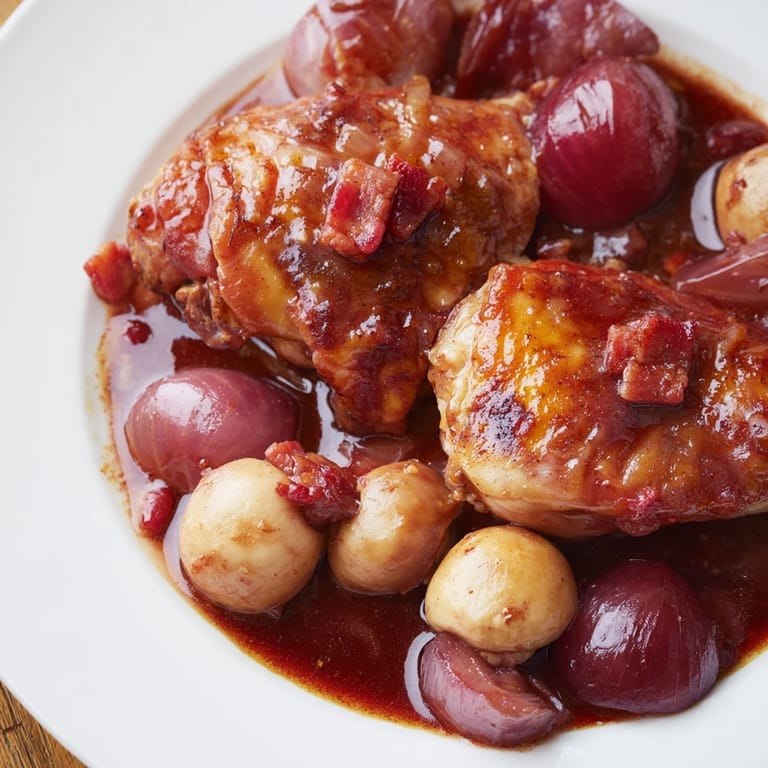
 This is the kind of dish that transforms an ordinary evening into something memorable, the kind of cooking that makes you feel capable and satisfied. Once you've made it once, you'll find yourself reaching for it again and again.
Recipe FAQs
- → What cut of chicken works best for Coq au Vin?
Bone-in chicken pieces like thighs and drumsticks are ideal as they stay tender and absorb flavors well during slow braising.
- → Why use red wine in this dish?
Red wine adds acidity and deepens the flavor, helping to tenderize the chicken while creating a rich, aromatic sauce.
- → Can I substitute the mushrooms?
Yes, cremini or button mushrooms are preferred, but other varieties like shiitake can work well for added earthiness.
- → How do pearl onions enhance the flavor?
Pearl onions cook down to sweet, tender morsels that balance the savory notes of bacon and herbs in the dish.
- → What is the best way to thicken the sauce?
Incorporating flour early on and reducing the cooking liquid helps develop a velvety, thickened sauce without heaviness.