 Pin It
 The aroma of minestrone simmering on my stovetop brings me right back to that rainy weekend in northern Italy when I ducked into a tiny trattoria to escape a sudden downpour. While my coat dried by their woodstove, an elderly woman served me a steaming bowl of vegetable soup that warmed me from the inside out. I watched her through the kitchen doorway, tossing ingredients with confident hands, and knew I had to recreate that magic at home.
Last winter, my neighbor broke her ankle slipping on ice, and I brought over a pot of this minestrone as part of a meal train. Her husband called me later that evening, not just to thank me, but to sheepishly ask for the recipe. Three days later, I spotted him at the grocery store with a cart full of vegetables and a determined look on his face - apparently the soup had become their comfort food during recovery.
Ingredients
- Olive oil: Use a good quality extra virgin olive oil here - it creates the foundation of flavor for the entire soup and a robust variety really makes a difference.
- Fresh vegetables: The combination of onion, carrot, celery, zucchini, potato and green beans creates layers of flavor and texture, each vegetable releasing its goodness at different cooking stages.
- Cannellini beans: These creamy white beans provide protein and a silky texture - I learned from an Italian grandmother to slightly mash some against the side of the pot to naturally thicken the broth.
- Small pasta: Tiny pasta shapes like ditalini or small elbows cook right in the soup, absorbing all those wonderful flavors while releasing starch that helps bind everything together.
- Fresh greens: Adding spinach or kale at the end preserves their vibrant color and nutrients while gently wilting into the hot soup.
Tired of Takeout? 🥡
Get 10 meals you can make faster than delivery arrives. Seriously.
One email. No spam. Unsubscribe anytime.
Instructions
- Build the flavor base:
- Heat the olive oil in a large pot over medium heat, then add the holy trinity of Italian cooking - onion, carrots, and celery. The kitchen will start filling with that sweet, aromatic scent as they soften and release their flavors.
- Layer in more vegetables:
- Once your base vegetables have softened, stir in the garlic, zucchini, potato, and green beans. This staggered addition allows each vegetable to maintain its proper texture in the finished soup.
- Create the broth:
- Add the diced tomatoes, cannellini beans, vegetable broth, herbs, and that essential bay leaf. I love watching the pot as it comes to a gentle boil, with all those colorful ingredients dancing together.
- Simmer for depth:
- Reduce the heat, cover, and let everything simmer for about 20 minutes. This is where patience pays off as the flavors meld and deepen.
- Add the pasta:
- Stir in your chosen small pasta shape and simmer uncovered until both the pasta and vegetables reach that perfect tender stage. The soup will naturally thicken as the pasta releases its starch.
- Finish with fresh elements:
- Remove the bay leaf, then stir in the spinach or kale just until wilted. Those bright green leaves provide a fresh contrast to the deep, developed flavors of the soup.
- Season and serve:
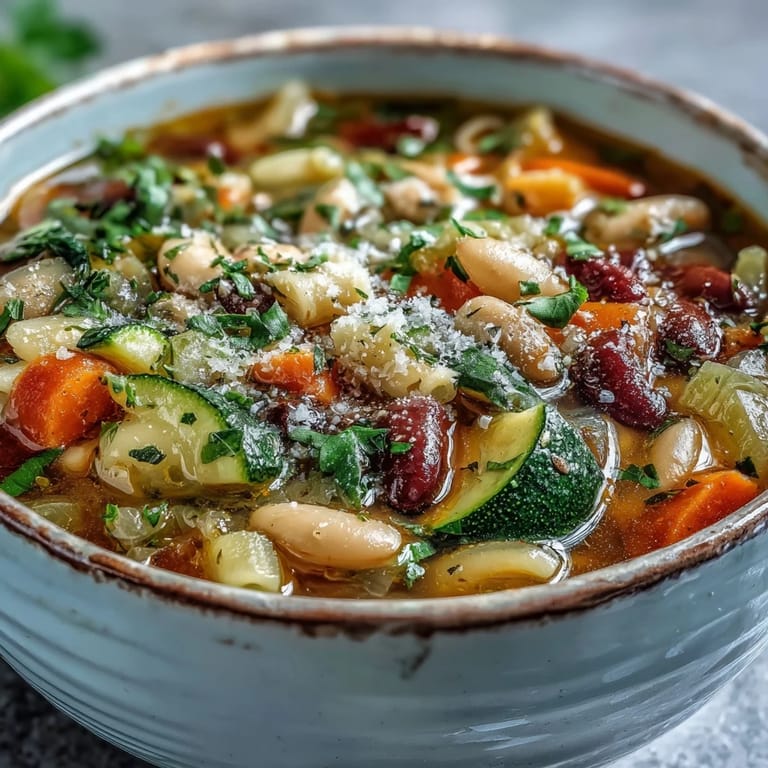
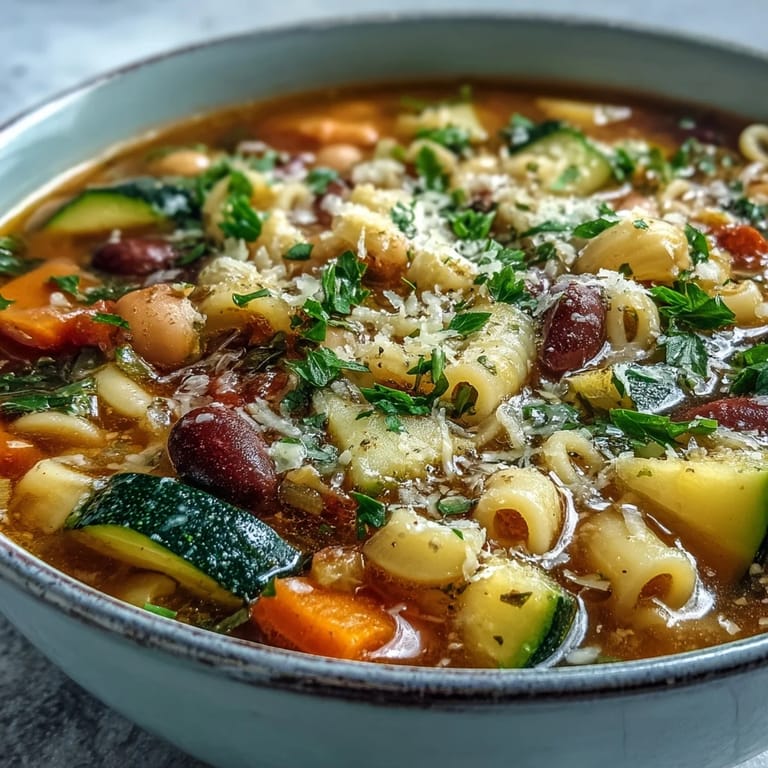
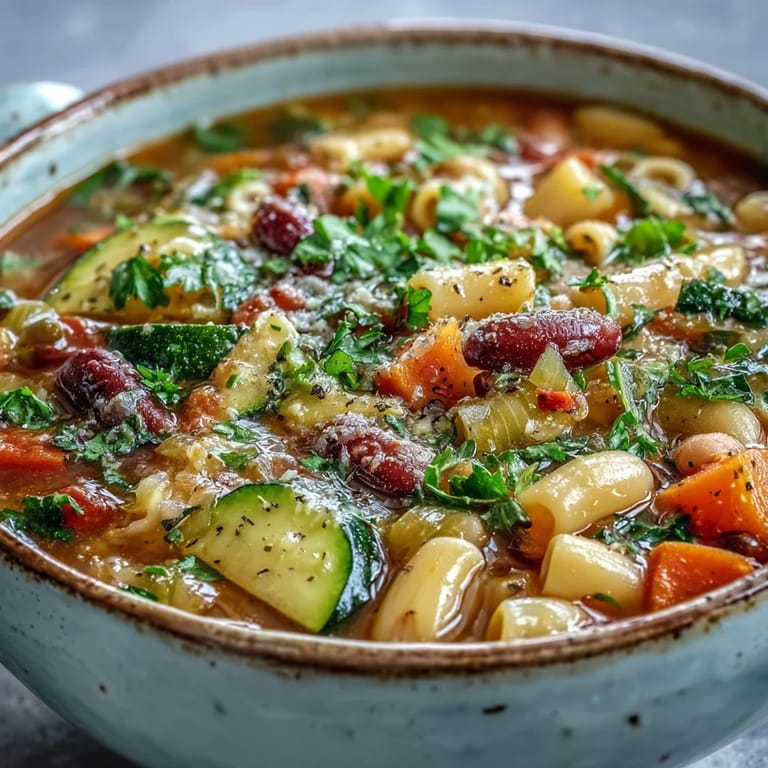
- Now is the time to taste and adjust with salt and pepper. Ladle into bowls, sprinkle with fresh parsley and a dusting of Parmesan if desired.
 Pin It
 My most memorable minestrone moment happened during an impromptu dinner party when a snowstorm kept friends from leaving after an afternoon visit. With limited ingredients but a well-stocked pantry, I threw together this soup while we played board games by the fireplace. By the time we sat down to eat, the windows were steamed up, the house smelled incredible, and that humble pot of vegetables had transformed our unexpected evening into something special.
Seasonal Adaptations
My minestrone changes with the seasons, which keeps it exciting year-round. Spring versions feature tender asparagus and fresh peas, summer brings yellow squash and fresh tomatoes instead of canned, autumn calls for chunks of butternut squash, while winter versions incorporate hearty cabbage and extra beans. I find this seasonal approach keeps the soup from ever feeling repetitive, even when I make it monthly.
Storage Solutions
This soup actually improves with time as the flavors continue to develop. I often make a double batch on Sunday afternoons and portion it into containers for quick lunches throughout the week. Just be aware that the pasta will continue absorbing liquid in the refrigerator, so you might need to add a splash of broth when reheating.
Serving Suggestions
While minestrone is certainly a complete meal on its own, I love creating little accompaniments that make it feel special. A simple green salad dressed with lemon and olive oil offers a bright counterpoint, while a board of Italian cheeses and olives turns soup night into a feast.
- Crusty ciabatta bread rubbed with a cut garlic clove and drizzled with olive oil is perfect for sopping up the last bits of broth.
- For wine lovers, a medium-bodied Sangiovese or Chianti complements the tomato notes beautifully without overpowering the vegetables.
- Keep a small bowl of extra grated Parmesan on the table so everyone can add more to taste as they enjoy their soup.
 Pin It
 This minestrone has become more than just a recipe in my kitchen - it's a reliable friend that adapts to whatever life throws my way. Whether feeding a crowd, nurturing someone back to health, or simply warming myself on a cool evening, these humble ingredients never fail to create something greater than the sum of their parts.
Recipe FAQs
- → What vegetables are traditionally in minestrone?
Traditional minestrone includes onions, carrots, celery, zucchini, potatoes, green beans, and tomatoes. This foundation can be adapted with seasonal vegetables like cabbage, peas, or spinach.
- → What pasta works best in minestrone?
Small pasta shapes like ditalini, elbow macaroni, or shells work beautifully. Their size complements the chunky vegetables and beans without overpowering the spoonable texture.
- → Can minestrone be made gluten-free?
Absolutely. Simply substitute regular pasta with gluten-free alternatives like rice-based ditalini or chickpea pasta. The rest of the ingredients remain naturally gluten-free.
- → How long does minestrone keep in the refrigerator?
Stored in an airtight container, minestrone keeps well for 4-5 days. The flavors often deepen and improve after a day or two. Add pasta when reheating to prevent it from becoming mushy.
- → Can minestrone be frozen?
Yes, freeze without the pasta for best results. The pasta can become soft when frozen and reheated. Add freshly cooked pasta when reheating the thawed soup for ideal texture.
- → What makes minestrone more flavorful?
Simmering a Parmesan rind in the broth adds rich umami depth. Also, sautéing vegetables before adding liquid builds a flavor foundation. Fresh herbs and finishing with quality olive oil elevates the bowl.