 Pin It
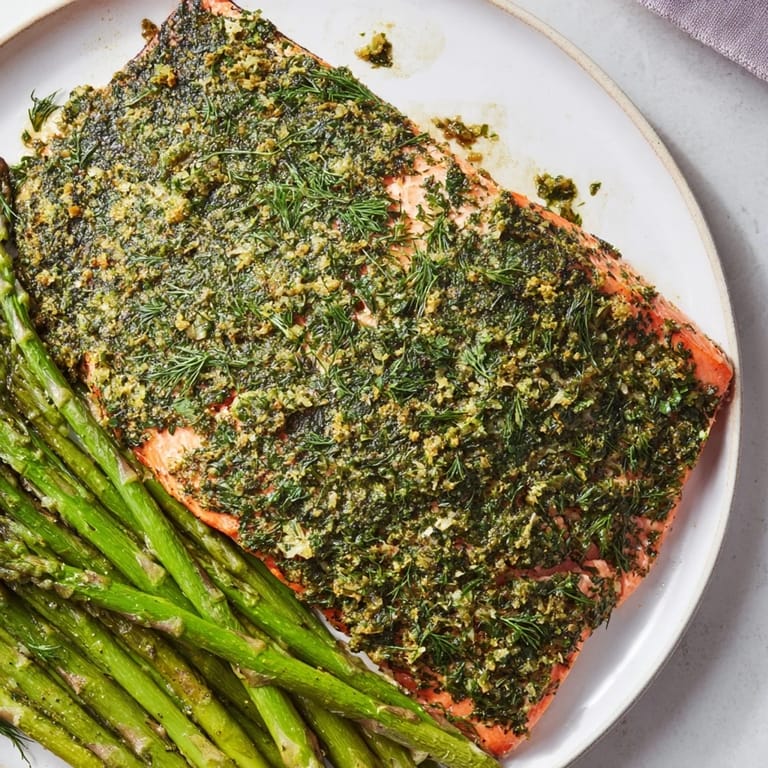
 One quiet Tuesday after work, I stopped by the market with no real plan and spotted these gorgeous wild-caught salmon fillets next to bundles of bright green asparagus. I grabbed both, along with a handful of fresh herbs, and decided to keep things simple. Twenty minutes later, my kitchen smelled like lemon and dill, and I had a dinner that looked like it took actual effort. That accidental experiment became my go-to whenever I want something that feels special but doesn't chain me to the stove.
I made this for my sister when she visited last spring, and she kept asking what the secret was. There was no secret, just good salmon and a little mustard to help the herbs stick. She texted me a photo of her own version two days later, proud as anything. It made me realize how rare it is to find a recipe that actually delivers without hidden steps or fancy techniques.
Ingredients
- Salmon fillets: Look for fillets that are evenly thick so they cook at the same rate, and if you can, smell them first, they should smell like the ocean, not fishy.
- Dijon mustard: This is the glue that holds the herb crust in place and adds a subtle tang that balances the richness of the fish.
- Fresh parsley, dill, and chives: Dried herbs won't give you the same vibrant flavor or texture, so splurge on fresh bunches and store leftovers in a damp paper towel in the fridge.
- Garlic and lemon zest: These two wake up the entire dish, the zest especially cuts through the oiliness of the salmon in the best way.
- Asparagus: Snap off the woody ends instead of cutting them, the spear will naturally break where it gets tender.
- Olive oil: Use something decent here since it touches everything, you'll taste it.
Tired of Takeout? 🥡
Get 10 meals you can make faster than delivery arrives. Seriously.
One email. No spam. Unsubscribe anytime.
Instructions
- Preheat and Prep:
- Get your oven to 400°F and line a baking sheet with parchment, which prevents sticking and makes cleanup a breeze. This is also a good time to wash your herbs and trim the asparagus.
- Make the Herb Mixture:
- Chop the parsley, dill, and chives as finely as you can manage, then toss them with the garlic, lemon zest, salt, and pepper in a small bowl. The finer the chop, the better it clings.
- Coat the Salmon:
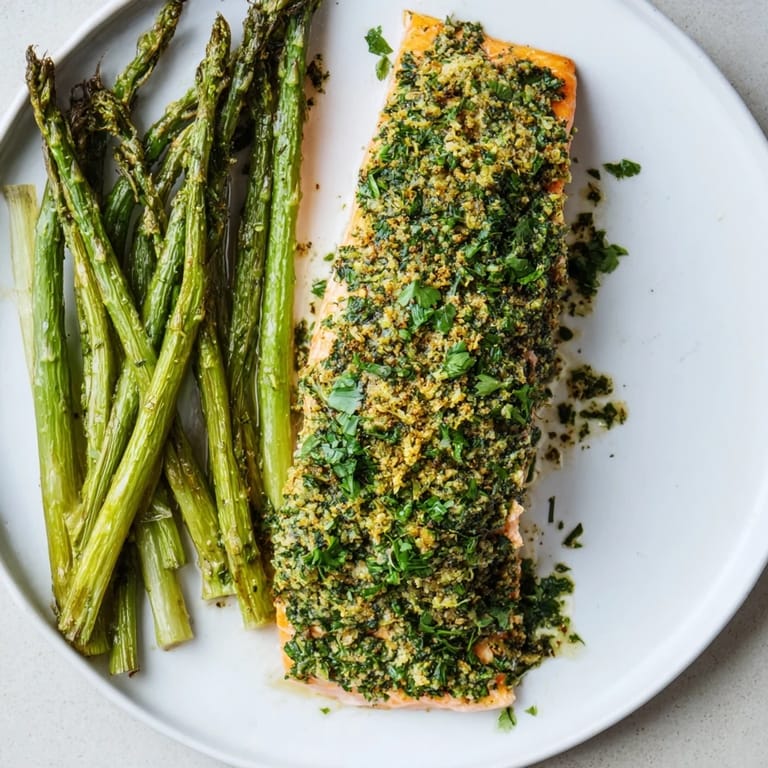
- Lay the fillets on your prepared sheet, then brush each one with olive oil and a thin layer of Dijon. Press the herb mixture onto the tops like you're patting down wet sand, it should stick easily.
- Season the Asparagus:
- Scatter the asparagus around the salmon, drizzle with olive oil, and season with salt and pepper. Give them a quick toss with your hands so every spear gets coated.
- Bake:
- Slide the whole pan into the oven and set a timer for 15 minutes, then check the salmon with a fork. If it flakes easily and the asparagus is tender with a little char, you're done.
- Serve:
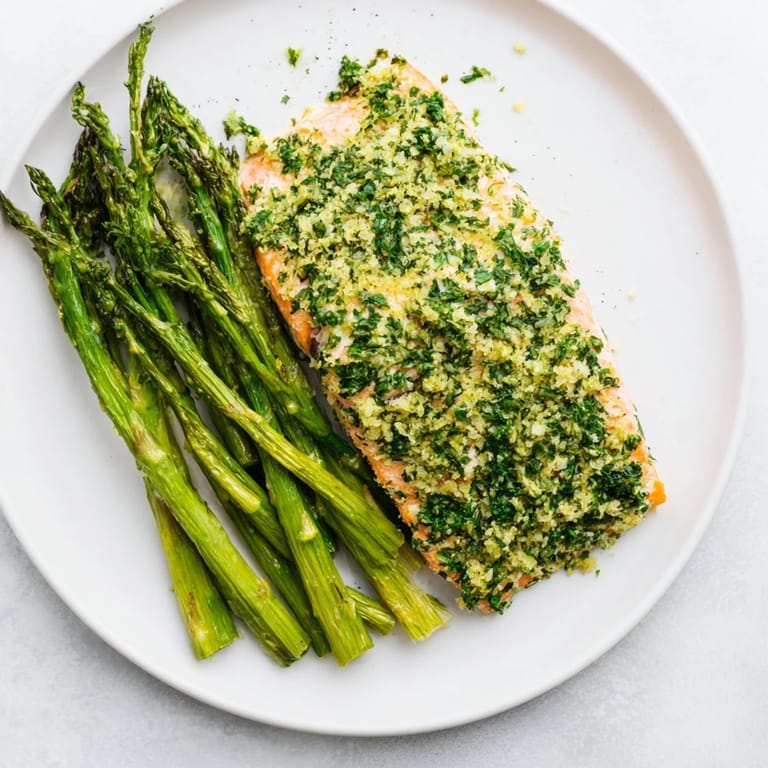
- Plate everything while it's still hot and add a lemon wedge on the side for squeezing. The acid brightens everything up right before you eat.
 Pin It
 The first time I served this to a date, they assumed I'd been cooking all afternoon and I didn't correct them. We ate on the couch with lemon juice dripping onto our plates, and it felt like the kind of meal that makes you want to cook more often. Food doesn't have to be complicated to feel like it matters.
Choosing Your Salmon
Wild-caught salmon has a firmer texture and deeper flavor, but farmed salmon works just fine and is usually cheaper. If you're buying frozen, thaw it in the fridge overnight and pat it very dry before you start. Skin-on fillets are fine too, just flip them skin-side down and the crust will still work perfectly.
Herb Swaps and Variations
Tarragon is fantastic if you like a slight anise note, and basil makes it feel more summery and Italian. I've also used cilantro and lime zest when I wanted a brighter, almost citrusy vibe. The ratio stays the same, just swap out the herbs and match the citrus zest to whatever you're using.
Making It a Full Meal
I usually serve this over a bed of couscous or alongside roasted baby potatoes tossed in the same pan juices. A simple arugula salad with lemon vinaigrette rounds it out without adding much work. If you want to go all in, a crisp white wine like Sauvignon Blanc or Pinot Grigio is perfect.
- Couscous or quinoa soaks up the lemony pan drippings beautifully
- Roasted cherry tomatoes add a pop of sweetness if you have extra oven space
- A handful of toasted pine nuts over the asparagus makes it feel fancy
 Pin It
 This recipe has saved me on countless busy nights when I needed something nourishing that didn't feel like a chore. I hope it does the same for you.
Recipe FAQs
- → What herbs are used for the crust?
Fresh parsley, dill, chives, garlic, and lemon zest combine to form the flavorful herb crust topping the salmon.
- → How is the asparagus prepared?
The asparagus is trimmed, tossed with olive oil, salt, and pepper, then roasted alongside the salmon until tender.
- → Can the mustard be substituted?
Yes, Dijon mustard adds tang and helps bind the herb crust, but alternatives like whole grain mustard could work with slight flavor changes.
- → Is this suitable for a gluten-free diet?
Yes, provided the Dijon mustard is certified gluten-free and no other gluten-containing ingredients are added.
- → What wine pairs well with this dish?
A crisp Sauvignon Blanc or a light Pinot Grigio complements the fresh herbs and rich salmon beautifully.
- → Can the herb mix be altered?
Absolutely, substituting dill with tarragon or basil offers a delightful twist on the flavor profile.