 Pin It
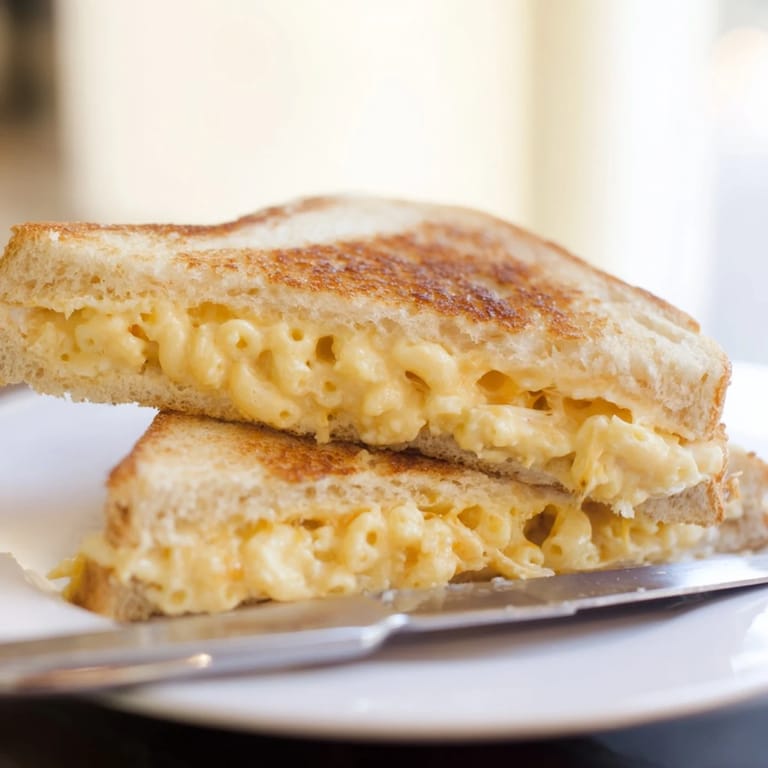
 A rainy Tuesday afternoon, staring into the fridge at leftover mac and cheese from the night before—that's when it hit me. Why not turn yesterday's side dish into today's lunch centerpiece? I grabbed the sourdough, some butter, and a skillet, half-laughing at how brilliantly lazy the idea felt. Twenty minutes later, I was biting into something so ridiculously indulgent I texted a photo to my sister with the caption "I've peaked." She showed up the next week demanding I make her one.
I made this for my nephew's birthday dinner at his request, which shocked everyone since he's usually a plain grilled cheese kid. He watched me cook each sandwich with the focus of a scientist, asking why I pressed down with the spatula and whether the cheese inside really melted all the way through. When he took his first bite, he closed his eyes and nodded solemnly, then declared it "the best thing that ever happened to bread." His mom rolled her eyes, but she ate two sandwiches herself.
Ingredients
- Elbow macaroni: The small curves are perfect for holding onto the creamy cheese sauce, and they nestle into the sandwich without falling out when you bite in.
- Sharp cheddar cheese: Its bold, tangy flavor keeps the mac and cheese from tasting one-note and boring, especially when melted into that silky sauce.
- Unsalted butter: You'll use it twice—once for the sauce, once for griddling—so using unsalted lets you control the saltiness of the whole dish.
- Whole milk: This makes the cheese sauce creamy without being too heavy, and it helps everything melt together smoothly.
- Sourdough bread: Its sturdy texture holds up to the creamy filling, and the slight tang complements the richness of the cheese beautifully.
- Black pepper: Just a pinch wakes up the cheese sauce and keeps it from tasting flat.
- Extra cheese slices: Completely optional, but adding a slice of cheddar or American to the sandwich gives you that picture-perfect cheese pull when you bite in.
Tired of Takeout? 🥡
Get 10 meals you can make faster than delivery arrives. Seriously.
One email. No spam. Unsubscribe anytime.
Instructions
- Cook the macaroni:
- Bring salted water to a rolling boil, then add the macaroni and cook until it's just tender with a slight bite, about seven to eight minutes. Drain it well in a colander so no extra water dilutes your cheese sauce.
- Make the cheese sauce:
- Melt butter in the same warm saucepan, then stir in the drained macaroni, milk, shredded cheddar, and pepper, stirring constantly until the cheese melts into a glossy, creamy sauce. Let it cool for a few minutes so it thickens up enough to stay put inside the sandwich.
- Assemble the sandwiches:
- Lay out your bread slices and butter one side of each, then flip four slices over and pile about a quarter cup of mac and cheese on the unbuttered side. Top with an extra cheese slice if you're feeling indulgent, then close with the remaining bread slices, buttered side facing out.
- Cook the sandwiches:
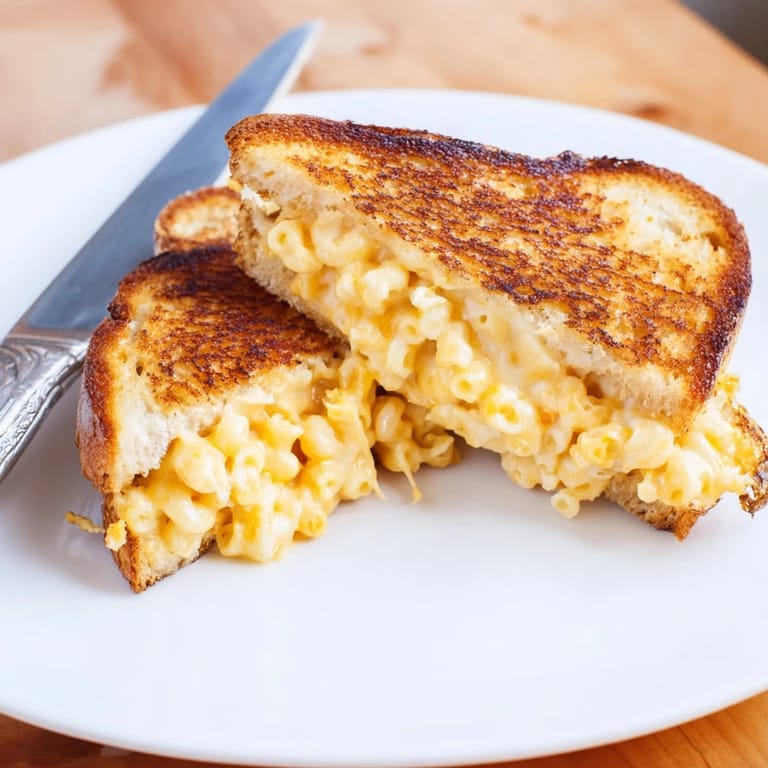
- Heat your skillet over medium heat, place the sandwiches in the pan, and cook for three to four minutes per side, pressing gently with a spatula until the bread turns golden and crispy. The cheese inside should be melty and warm, and the outside should crackle just a little when you lift it with the spatula.
- Rest and serve:
- Pull the sandwiches off the heat and let them sit for a minute or two so the filling settles and doesn't spill everywhere when you slice. Cut them in half and serve while they're still hot and gooey.
 Pin It
 One Sunday morning, I made these for a late breakfast and added crispy bacon bits to the mac and cheese on a whim. My best friend walked into the kitchen, took one look at the skillet, and said, "You're out of control." She meant it as a compliment, I think, because she ate hers standing at the counter, eyes closed, making little happy noises. That's when I knew this recipe wasn't just good—it was the kind of thing that makes people forget their manners and just enjoy the moment.
What to Serve Alongside
I always reach for a bowl of tomato soup because the tangy brightness cuts right through the richness of all that cheese. A simple green salad with a lemony vinaigrette works too, giving you something fresh and crisp to balance the creamy, buttery sandwich. If you want to keep it casual, pickles or a handful of kettle chips on the side add just the right amount of crunch and salt.
How to Store and Reheat
Leftover sandwiches can be wrapped in foil and kept in the fridge for up to two days, though they're never quite as good as fresh. To reheat, I skip the microwave and go straight to a skillet over medium-low heat, flipping once, so the bread crisps back up and the cheese inside gets gooey again. If you have leftover mac and cheese but haven't made the sandwiches yet, just store the mac in an airtight container and assemble fresh sandwiches whenever the craving hits.
Ways to Make It Your Own
Once you've got the basic technique down, this sandwich becomes a blank canvas for whatever flavors you're craving. I've stirred chopped jalapeños into the mac for a spicy kick, swapped sourdough for buttery brioche when I wanted something a little sweeter, and even used leftover truffle mac from a dinner party for a fancy version. You can tuck a thin slice of tomato inside for acidity, add a handful of fresh spinach for color, or sprinkle everything bagel seasoning on the buttered bread before griddling.
- Mix cooked bacon or caramelized onions into the mac and cheese for extra depth.
- Try different breads like rye, ciabatta, or thick-cut white bread depending on your mood.
- Add a dash of hot sauce or a smear of Dijon mustard inside for a tangy, spicy twist.
 Pin It
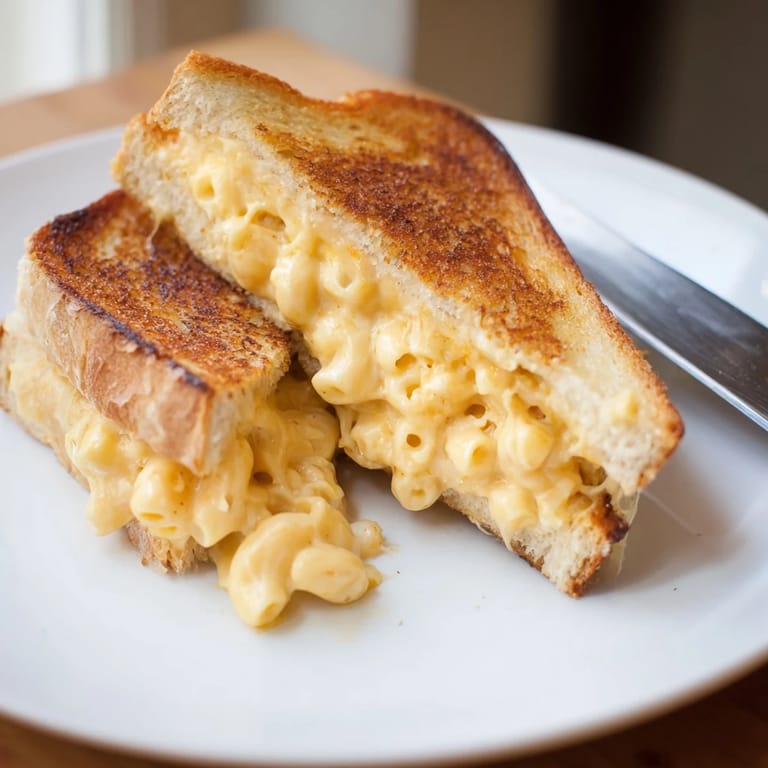
 This sandwich has become my go-to answer when someone asks what comfort food really means—it's not fancy, it's not complicated, but it hits every craving at once. Make it once, and I promise you'll start finding excuses to have leftover mac and cheese in the fridge.
Recipe FAQs
- → Can I prepare the macaroni and cheese ahead of time?
Yes, you can make the macaroni and cheese up to 2 days in advance and refrigerate it. When ready to assemble, gently reheat it in a saucepan over low heat, adding a splash of milk if it's too thick. This makes weeknight assembly even quicker.
- → What bread works best for this sandwich?
Sourdough, brioche, and hearty sandwich bread all work wonderfully. Sourdough provides a tangy contrast, while brioche offers richness. Avoid thin white bread, which may get too soggy. Choose bread thick enough to contain the creamy filling without breaking.
- → How do I prevent the sandwich from falling apart?
Let the cooked macaroni and cheese cool slightly before assembling so it firms up and holds together better. Don't overfill each sandwich—use about 1/4 cup filling per slice. Pressing gently with a spatula while cooking helps seal everything together.
- → Can I add vegetables to this sandwich?
Absolutely. Thin slices of tomato, sautéed mushrooms, crispy bacon, or fresh spinach layer beautifully. Add vegetables directly on top of the macaroni and cheese before covering with the top bread slice. Avoid overly wet ingredients that could make the bread soggy.
- → What's the best way to cook multiple sandwiches?
Work in batches if your skillet is small rather than crowding the pan. This ensures even browning and allows you to press each sandwich gently without interference. Keep finished sandwiches warm on a plate in a low oven while cooking the remaining batches.
- → Can I freeze these sandwiches?
Yes, wrap cooked sandwiches individually in foil and freeze for up to a month. Reheat in a 350°F oven for 12-15 minutes until warmed through. Avoid microwaving, which can make the bread tough and uneven.