 Pin It
 There's something almost magical about watching Brussels sprouts transform in a hot oven—those tiny, skeptical-looking vegetables suddenly turn golden and crispy at the edges, releasing this nutty sweetness that makes you wonder why you ever hesitated. I discovered this bowl one Tuesday when I had half a container of sprouts about to wilt, some leftover quinoa, and the kind of afternoon where cooking felt less like a chore and more like solving a puzzle. The balsamic dressing came together almost by accident, born from rooting around in my pantry and thinking, wouldn't that tang be perfect against all that caramelized richness? It turned out to be one of those meals that tastes more intentional than it actually was.
I made this for my sister when she was going through a phase of trying to eat better, and she sat at my kitchen counter picking at the bowl while I stood nearby, waiting for the verdict. She kept reaching back for more, barely looking up, and by the time she was done she asked for the recipe—which, honestly, meant everything coming from someone who usually orders pizza. Now whenever she texts that she's tired of her usual routine, I know what she's really asking me to cook.
Ingredients
- Brussels sprouts (1 lb, trimmed and halved): The star here—they need to be roughly the same size so they roast evenly, and trimming the brown outer leaves first keeps everything neat and lets the heat get to every surface.
- Red onion (1 medium, thinly sliced): The acidity in your mouth craves this, and when it roasts it loses its bite and becomes almost sweet.
- Olive oil (2 tbsp for roasting): Don't skimp on this; it's what creates those caramelized, golden edges everyone will ask about.
- Salt and black pepper (1/2 tsp salt, 1/4 tsp pepper): Season generously before roasting so the flavors have time to deepen.
- Quinoa or brown rice (1 cup uncooked): Quinoa has a better texture when it cools, but brown rice works beautifully if that's what you have on hand.
- Water or vegetable broth (2 cups): Broth adds subtle depth; water works just fine if you're keeping things simple.
- Balsamic vinegar (1/4 cup): The acidity cuts through the richness of the roasted vegetables like nothing else can.
- Extra-virgin olive oil (2 tbsp for dressing): This is where quality actually matters—use something good enough that you'd taste it on its own.
- Maple syrup or honey (1 tbsp): Just enough to balance the vinegar's sharpness without making this taste like dessert.
- Dijon mustard (1 tsp): Adds complexity and helps emulsify the dressing so it doesn't separate.
- Walnuts or pecans (1/4 cup, toasted): The crunch is non-negotiable; toasting them yourself makes all the difference in flavor.
- Dried cranberries (2 tbsp): They soften slightly when tossed into warm grains and add little bursts of tartness.
- Pumpkin seeds (1 tbsp): These add a subtle earthiness and more texture contrast.
Tired of Takeout? 🥡
Get 10 meals you can make faster than delivery arrives. Seriously.
One email. No spam. Unsubscribe anytime.
Instructions
- Heat your oven and prep your pan:
- Get the oven to 425°F and line a baking sheet with parchment paper—this keeps everything from sticking and makes cleanup infinitely easier. You want the pan ready so you can work quickly once you've tossed the vegetables.
- Coat and spread the vegetables:
- In a bowl, toss your halved Brussels sprouts and red onion slices with olive oil, salt, and pepper until everything's evenly coated. Spread them flat on the baking sheet in a single layer, cut-side down if possible—this is where the magic happens.
- Roast until golden:
- Slide the pan into the oven and let them roast for 25 to 30 minutes, stirring once halfway through so they caramelize on all sides. You'll know they're done when the edges are deeply browned and a fork goes through the center easily—don't stop short of this point.
- Cook your grains:
- While everything roasts, rinse your quinoa thoroughly under cold water (skip this for rice). In a saucepan, bring 2 cups of water or broth to a boil, stir in the grains, reduce the heat to low, cover, and let it simmer quietly for 15 to 20 minutes until the liquid is absorbed. Fluff with a fork and taste for seasoning.
- Whisk the dressing:
- In a small bowl, combine balsamic vinegar, extra-virgin olive oil, maple syrup, Dijon mustard, salt, and pepper, whisking until it comes together. A few vigorous strokes will help everything emulsify slightly, though it's okay if it separates a little.
- Assemble your bowls:
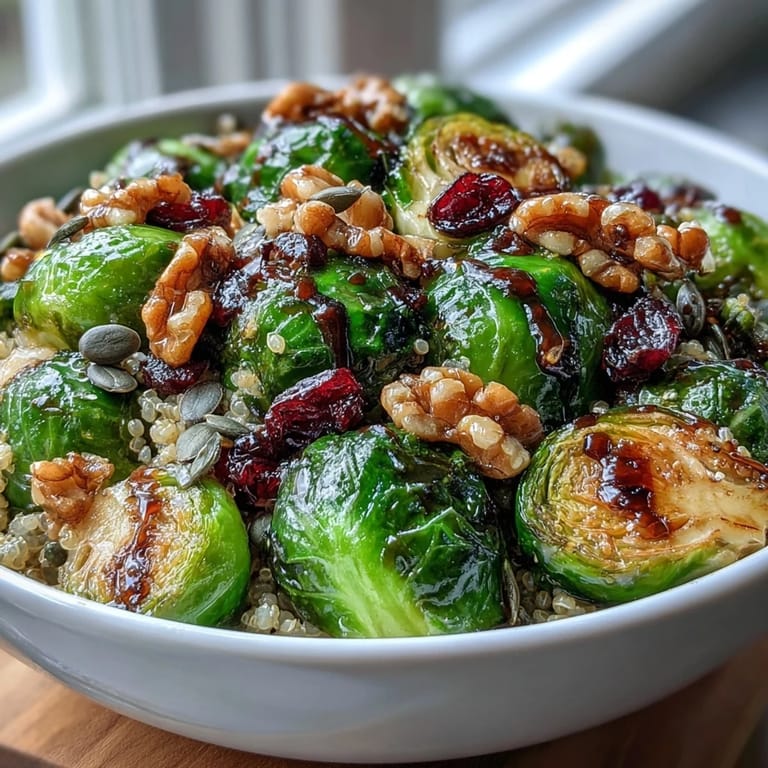
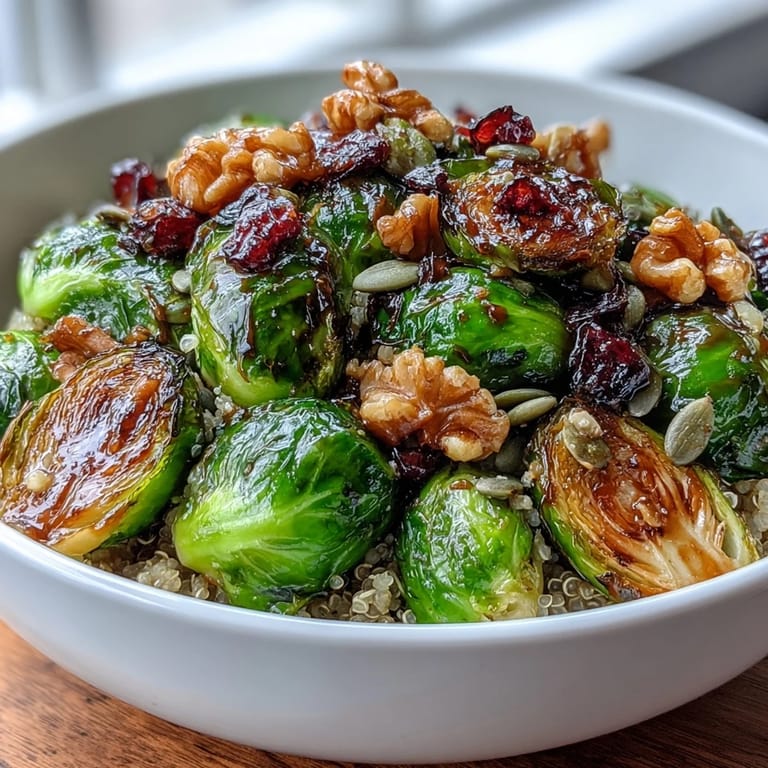
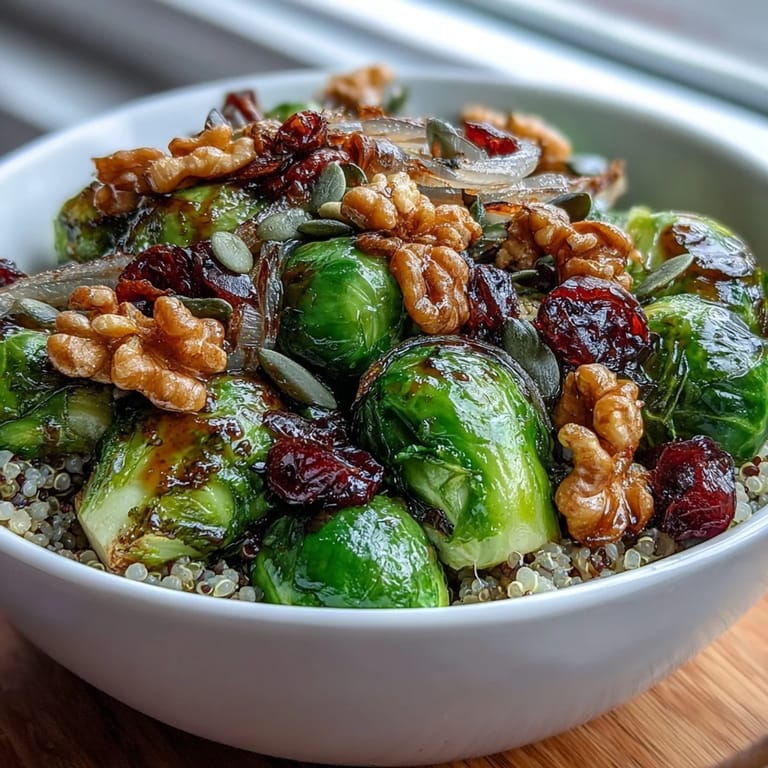
- Divide the warm grains among four bowls, then pile the roasted Brussels sprouts and red onions on top. Drizzle generously with the balsamic dressing and scatter your toasted nuts, cranberries, and seeds across the top.
 Pin It
 I remember my friend Marco asking what made my version taste so different from one he'd had at a restaurant, and the answer was simply patience—I let those sprouts sit in the heat long enough to caramelize properly. That moment made me realize how much of good cooking is just giving ingredients the time and conditions they need to become their best selves.
Why This Bowl Actually Works
The beauty of this bowl is how it balances four completely different textures and temperatures against each other—warm, tender grains; crispy roasted vegetables; creamy dressing; and crunchy nuts all existing in the same spoonful. The balsamic brings acidity that cuts through richness, while the maple syrup prevents the whole thing from tasting aggressive. It's the kind of bowl that makes you feel like you're eating something wholesome without tasting like health food.
Making It Your Own
This recipe is really a framework more than a rigid formula, which is why I keep coming back to it even when my kitchen situation changes. Swap the quinoa for farro or bulgur if that's what you're in the mood for, or add roasted sweet potatoes for color and sweetness, chickpeas for protein, or even crumbled feta if you're not keeping things vegan. The dressing works on almost anything, so once you've made it you'll find yourself using it on salads, grain bowls, and roasted vegetables for weeks afterward.
Storage and Timing Notes
This bowl tastes best served warm, but it's just as good at room temperature the next day if you need to make it ahead—I've eaten this at my desk more than once, having packed it the night before. The dressing keeps separately in the fridge for up to five days, which means you can roast vegetables one night and have this bowl ready to go whenever hunger strikes.
- Assemble right before eating if you want maximum crispness on the nuts and vegetables.
- Store grains and roasted vegetables separately from the dressing so nothing gets soggy overnight.
- The whole thing comes together in under an hour start to finish, making it perfect for any day of the week.
 Pin It
 This bowl became my answer to the question I used to dread: what's for dinner? It's nourishing without being preachy, simple without being boring, and generous enough that you actually want to eat it. Once you understand how the pieces fit together, you'll find yourself building variations for months.
Recipe FAQs
- → Can I prepare this bowl ahead of time?
Yes, you can roast the vegetables and cook the grains up to 3 days in advance. Store them separately in airtight containers in the refrigerator. Assemble with fresh dressing when ready to serve.
- → What other grains work well in this bowl?
Farro, bulgur, couscous, or barley make excellent substitutions for quinoa or brown rice. Adjust cooking liquid and time according to package instructions for your chosen grain.
- → How do I get the Brussels sprouts properly caramelized?
Spread them in a single layer on the baking sheet without overcrowding. The high oven temperature of 425°F helps achieve golden, crispy edges. Stir halfway through for even browning.
- → Can I make this bowl protein-rich?
Absolutely. Add chickpeas, grilled tofu, roasted chickpeas, or even feta cheese. You could also serve with a side of roasted chicken or incorporate lentils into the grain base.
- → Is the balsamic dressing customizable?
The dressing is quite versatile. Adjust sweetness by varying maple syrup, add fresh herbs like thyme or rosemary, or incorporate a clove of minced garlic for extra depth of flavor.
- → Can I add other roasted vegetables?
Sweet potatoes, carrots, butternut squash, or beets roast beautifully alongside the Brussels sprouts. Just ensure all vegetables are cut to similar sizes for even cooking.