 Pin It
 There's something about the smell of tomatoes hitting a hot oven that stops me mid-thought every time. I discovered this soup completely by accident one October afternoon when I had a surplus of tomatoes from the farmer's market and absolutely no plan. The combination of roasting and blending transformed something I almost threw away into the kind of soup that tastes like pure comfort, the sort you'd want on repeat all season long.
I made this for my partner on our first genuinely cold evening of the year, and watching them taste it felt like a small victory in the kitchen. They had seconds, then asked if I could freeze half of it for later, which told me everything I needed to know about whether this recipe was worth keeping around.
Ingredients
- Ripe tomatoes, 1.5 kg (3.3 lbs): Use tomatoes at their peak ripeness; underripe ones will taste sharp and thin even after roasting, so wait for ones that smell fragrant and give slightly to pressure.
- Large onion, 1: The onion becomes almost sweet during roasting and forms the flavor backbone, so don't skip it or use a small one.
- Garlic cloves, 4: Roasted garlic loses its harsh edge and becomes creamy, adding depth without overpowering the tomato.
- Olive oil, 2 tbsp: Good olive oil matters here since it's doing real work in the roasting process, carrying flavors and creating that caramelized surface.
- Salt, 1 tsp: Season generously at roasting; this is your chance to build flavor from the start rather than fixing it later.
- Freshly ground black pepper, ½ tsp: Grind it fresh because pre-ground loses its spark, and you want that little bite in there.
- Dried or fresh thyme, 1 tsp or 1 tbsp: Thyme is the herb that knows how to treat tomatoes right, bringing an earthy warmth that enhances rather than masks.
- Vegetable broth, 500 ml (2 cups): Don't use chicken broth here; it competes with the tomato instead of supporting it.
- Tomato paste, 1 tbsp: This little spoonful concentrates the tomato flavor and adds subtle umami richness that makes people wonder what your secret is.
- Sugar, 1 tsp (optional): Add only if your tomatoes taste acidic after roasting; a pinch can balance without making the soup taste sweet.
- Heavy cream or coconut cream, 60 ml (¼ cup) (optional): Cream makes this luxurious and silky, but it's truly optional if you prefer the pure tomato flavor to shine.
- Day-old bread, 4 thick slices: Slightly stale bread crisps up better than fresh bread, which tends to dry out unevenly.
- Olive oil for croutons, 2 tbsp: Use the same good olive oil as for the soup to keep the flavor profile consistent.
- Garlic powder, ½ tsp: This distributes evenly across the bread cubes, giving every crouton a subtle garlic presence.
- Salt and pepper for croutons, ¼ tsp salt and to taste: Season the croutons separately so you can control their saltiness independently from the soup.
Tired of Takeout? 🥡
Get 10 meals you can make faster than delivery arrives. Seriously.
One email. No spam. Unsubscribe anytime.
Instructions
- Heat your oven and prepare the vegetables:
- Preheat to 200°C (400°F) while you halve your tomatoes and quarter the onion; this gives the oven time to reach full temperature. Arrange everything on a large baking tray with the cut sides of the tomatoes facing up so they can caramelize properly.
- Coat and roast everything together:
- Drizzle with olive oil and scatter the salt, pepper, and thyme across the vegetables, then toss gently to coat. Into the oven they go for 30 to 35 minutes, and you'll know they're ready when the tomato edges look slightly blackened and the onions have collapsed into soft submission.
- Toast your croutons simultaneously:
- While the vegetables roast, toss your bread cubes with olive oil, garlic powder, salt, and pepper in a bowl, then spread them on a separate baking sheet. They'll bake alongside the vegetables for 10 to 15 minutes, stirring once halfway through, until they're golden and crispy on all sides.
- Build the soup base:
- Once the roasted vegetables have cooled enough to handle, transfer them to a large saucepan along with the vegetable broth, tomato paste, and sugar if you're using it. Bring everything to a simmer over medium heat and let it bubble gently for about 10 minutes so the flavors marry together.
- Blend until silky smooth:
- Using an immersion blender, purée the soup directly in the pot until completely smooth, or work in batches with a regular blender if you prefer. If you're adding cream, stir it in now and taste for seasoning, adjusting salt and pepper until it tastes like your version of perfect.
- Serve with ceremony:
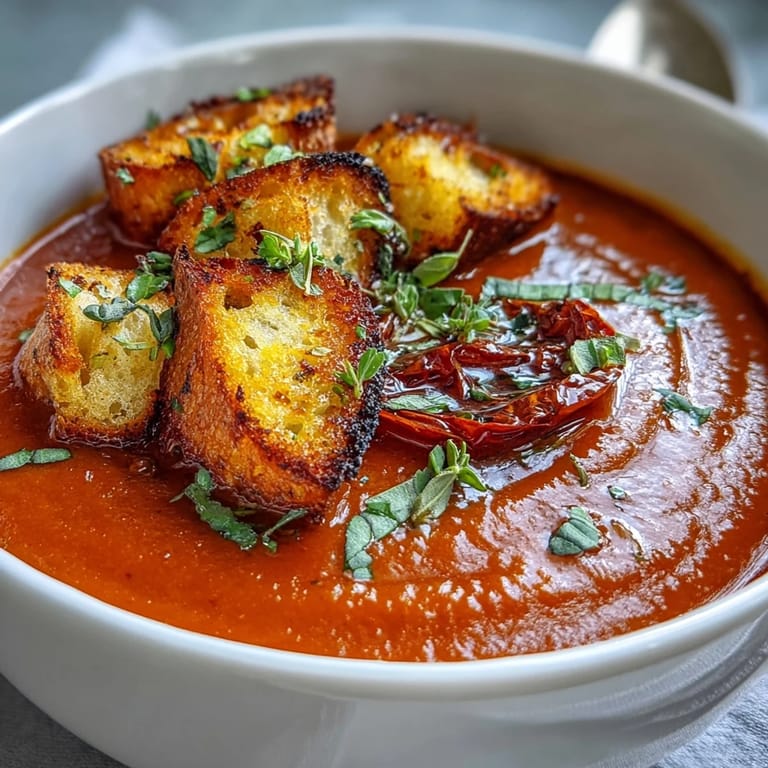
- Ladle the hot soup into bowls and pile those crispy croutons generously on top, letting them sit in the warmth for just a moment before you taste. Serve immediately while everything is still at its best.
 Pin It
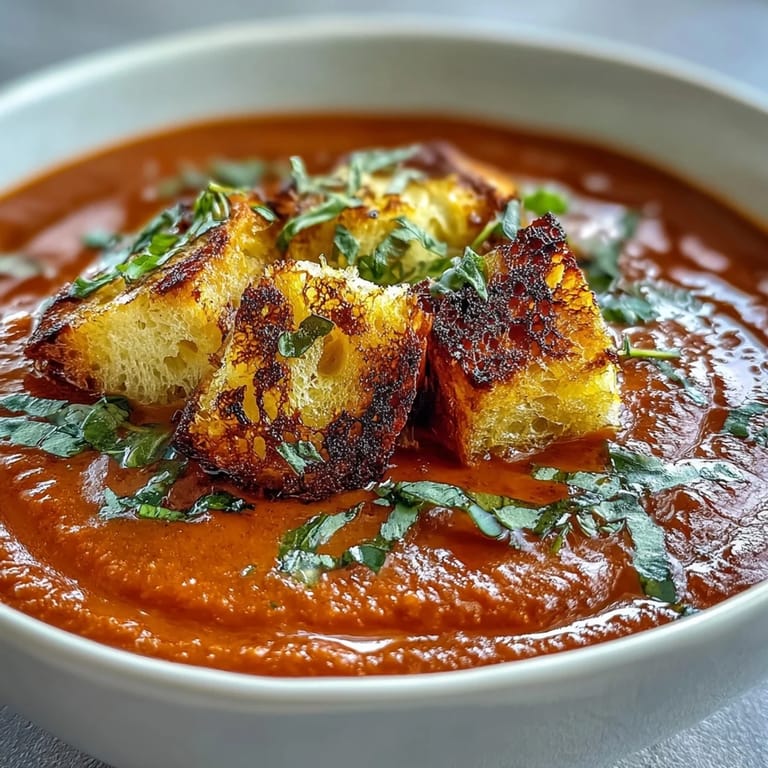
 There was an evening when a friend stopped by unexpectedly and I served this soup with croutons, and they literally paused mid-bite and asked what restaurant I'd gotten it from. That moment made me realize this isn't just a recipe; it's something that actually impresses people, which is its own kind of magic.
Why Roasting Changes Everything
The roasting process isn't fancy, but it's transformative. When tomatoes hit the heat, their sugars concentrate and caramelize while their water content reduces, which deepens the flavor exponentially. You end up with a soup that tastes richer and more complex than if you'd simply simmered raw tomatoes, and that's science working in your favor.
Making Croutons That Actually Stay Crispy
The trick I learned the hard way is not to oversoak them with oil, and to bake them until they're genuinely crunchy, not just lightly toasted. If they're sitting in warm soup before eating, they'll soften slightly from the steam, so that crispy-crunchy texture you achieved in the oven is your actual target. Day-old bread makes an enormous difference here because fresh bread turns mushy faster.
Customizing Your Bowl
The beauty of this soup is how it accepts additions without losing its identity. A pinch of smoked paprika adds a subtle depth if you want something earthier, while a small splash of balsamic vinegar can brighten it if the soup tastes a touch flat. Fresh basil torn in at the end, or a good drizzle of olive oil, feels like a professional touch that takes two seconds.
- If your tomatoes taste too acidic after roasting, a tiny pinch of sugar balances it without being obvious.
- Coconut cream instead of heavy cream makes this fully plant-based and adds a subtle sweetness that works beautifully.
- Leftover soup keeps for three days refrigerated and freezes well for up to a month, making it perfect for future quiet evenings.
 Pin It
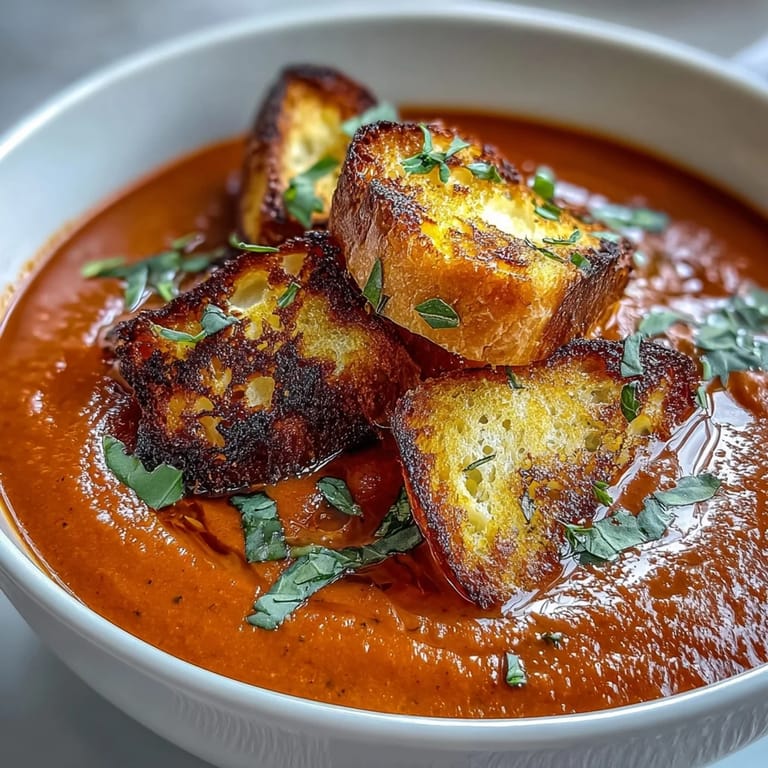
 This soup has become my go-to when I want to make something that feels both simple and special. It's the kind of recipe that proves you don't need complexity to create something memorable.
Recipe FAQs
- → Can I use canned tomatoes instead of fresh?
While fresh tomatoes deliver the best flavor, canned whole tomatoes work in a pinch. Drain them well and roast according to the same method—they'll still develop that sweet, concentrated flavor. Reduce the roasting time to about 20 minutes since they're already quite soft.
- → How do I store leftovers?
Store cooled soup in an airtight container in the refrigerator for up to 4 days. The croutons are best kept separately in a sealed bag at room temperature for 3-4 days. Reheat soup gently on the stovetop, adding a splash of broth if it's thickened, and refresh croutons in a warm oven for 5 minutes.
- → Can I freeze this soup?
Absolutely. Cool the soup completely before transferring to freezer-safe containers, leaving room for expansion. It freezes beautifully for up to 3 months. Thaw overnight in the refrigerator and reheat slowly on the stovetop. Croutons don't freeze well—make a fresh batch when serving.
- → What's the best bread for croutons?
Day-old bread with a sturdy structure works best—sourdough, ciabatta, or a rustic country loaf. The slight dryness helps the cubes crisp up beautifully without burning. Avoid very soft sandwich bread, which can become tough rather than crisp when baked.
- → How can I make this soup extra creamy without dairy?
Coconut cream adds lovely richness and subtle sweetness. For a nutty variation, blend in a soaked cashew cream or add puréed white beans. Even without cream, the roasted vegetables create a naturally velvety texture—just purée thoroughly until silky smooth.