 Pin It
 The smell of seared beef always pulls me back to Sunday afternoons when the kitchen would fog up with that rich, caramelized scent. I used to think pot roast was just something grandmothers made, until I realized it was one of the few dishes that actually tasted better the longer you ignored it. There's something deeply satisfying about walking away from the oven for three hours and coming back to fork-tender beef that practically falls apart. It's not fancy, but it never needed to be. This is the kind of meal that makes your home smell like comfort itself.
I made this for my in-laws the first time they visited, mostly because I panicked and needed something that cooked itself. They arrived early, of course, and found me frantically searing beef in a cloud of smoke. But by dinner, the whole house smelled like a French countryside inn, and no one remembered my earlier chaos. My father-in-law went back for thirds, which is the highest compliment I've ever received from that man.
Ingredients
- Boneless beef chuck roast: This cut has just enough marbling to stay juicy through the long roast, and it shreds beautifully without drying out.
- Kosher salt and black pepper: Season generously before searing, the crust you build here is half the flavor of the final dish.
- Carrots and parsnips: Parsnips add a subtle sweetness that balances the richness of the beef, if you can't find them, turnips work in a pinch.
- Yellow onions: Cut them into wedges so they hold their shape and caramelize slowly in the braising liquid.
- Potatoes: Any starchy variety works, but I prefer Yukon Golds because they don't turn to mush.
- Garlic: Smash the cloves with the side of your knife, it releases more flavor and saves you from mincing.
- Tomato paste: Cooking it for a minute in the hot pot deepens its flavor and adds a hint of umami.
- Beef broth and red wine: The wine is optional, but it adds a layer of complexity that water just can't match.
- Worcestershire sauce: A secret weapon for depth, just a couple tablespoons transform the whole braise.
- Fresh thyme, rosemary, and bay leaves: Use whole sprigs so you can fish them out later, dried herbs work but fresh ones make the kitchen smell incredible.
- Olive oil: For searing, you need something with a high enough smoke point to get a good crust without burning.
Tired of Takeout? 🥡
Get 10 meals you can make faster than delivery arrives. Seriously.
One email. No spam. Unsubscribe anytime.
Instructions
- Preheat and prep the beef:
- Set your oven to 300°F and pat the roast completely dry with paper towels, moisture is the enemy of a good sear. Season every side with salt and pepper, more than you think you need.
- Sear the beef:
- Heat olive oil in your Dutch oven until it shimmers, then lay the beef in gently and let it sit undisturbed for 3 to 4 minutes per side. You want a dark, crusty exterior that smells almost sweet.
- Sauté the vegetables:
- Toss in the onions, carrots, parsnips, potatoes, and celery, stirring occasionally until they start to soften and pick up color. Add the garlic and tomato paste, cooking just until fragrant, about a minute.
- Deglaze and build the braise:
- Pour in the red wine and scrape up all those brown bits stuck to the bottom, that's pure flavor. Let it bubble for a couple minutes, then nestle the beef back in and add the broth, Worcestershire, and herbs.
- Slow roast:
- Bring everything to a gentle simmer, cover tightly, and slide it into the oven. Walk away for 3 to 3.5 hours, checking once halfway through if you're anxious, but it really doesn't need you.
- Rest and serve:
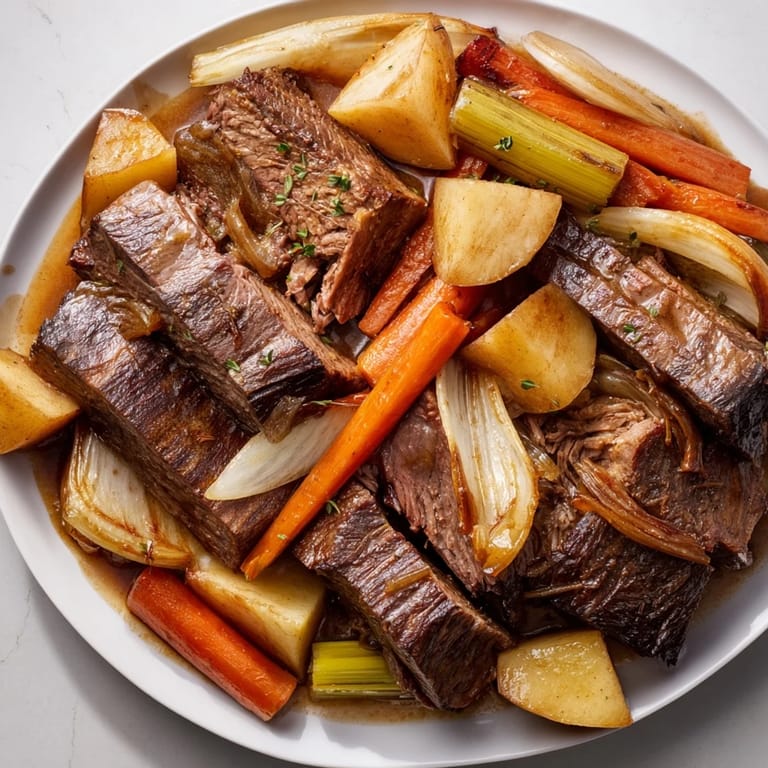
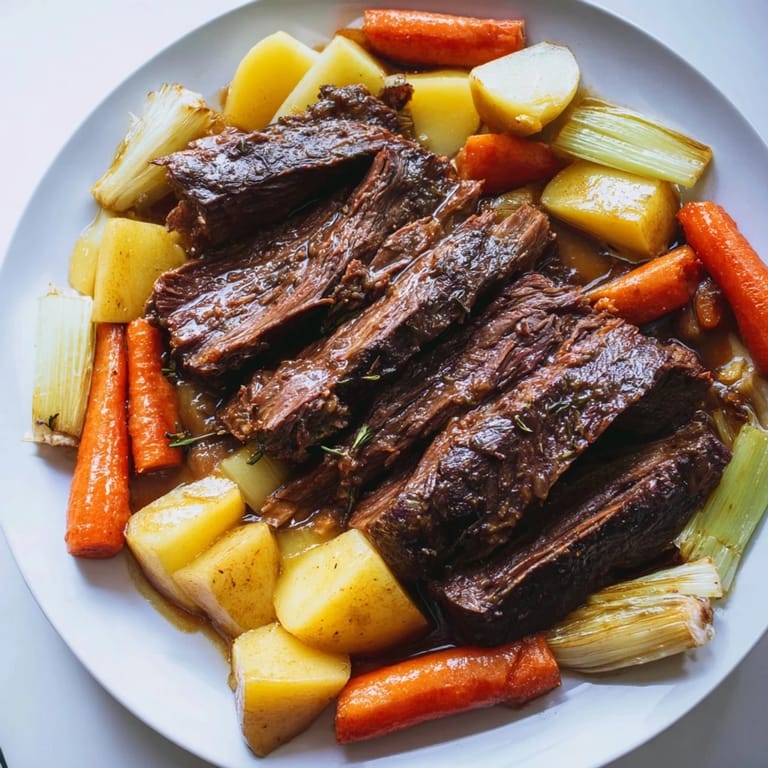
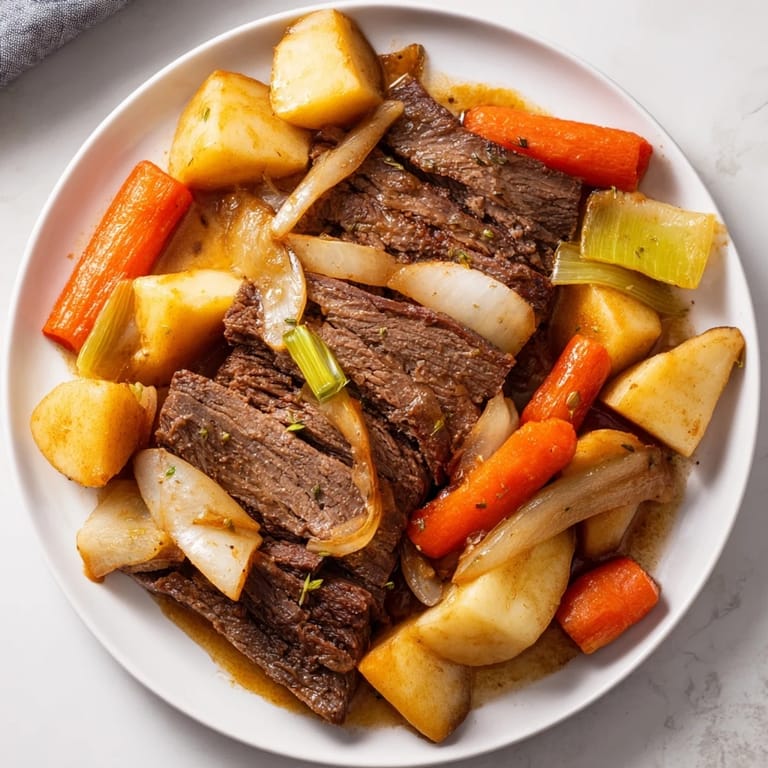
- Pull the pot out, discard the herb stems and bay leaves, and let the beef rest for 10 minutes. Slice or shred it, then spoon over the vegetables and that glossy, rich pan juice.
 Pin It
 There was a winter evening when the power flickered twice and I thought I'd lose the whole roast, but it held steady and we ate by candlelight with snow piling up outside. That night, this dish stopped being just dinner and became the thing we talked about every winter after. Food has a way of anchoring memories like that, especially when it's simple and made with care.
Getting the Perfect Sear
The trick is patience and a screaming hot pan. If you move the beef too early, it'll stick and tear, but if you wait until it releases naturally, you'll get that deep mahogany crust. I learned this the hard way after ruining a perfectly good roast by fussing with it too much. Now I set a timer, walk away, and trust the heat to do its job.
Making the Sauce Richer
Once the beef and vegetables are out, I like to simmer the pan juices on the stovetop until they reduce by half and turn glossy. If you want it thicker, whisk together a tablespoon of cornstarch with cold water and stir it in, it'll thicken in about a minute. Sometimes I skip this entirely and just ladle the thin, flavorful broth over everything, both ways are good.
Storing and Reheating Leftovers
This pot roast tastes even better the next day after all the flavors have mingled overnight in the fridge. I store the beef and vegetables in their own juices in an airtight container for up to four days. Reheat gently on the stovetop with a splash of broth, or wrap portions in foil and warm in a low oven.
- Shred leftovers and pile them onto crusty bread with horseradish for an unbeatable sandwich.
- Chop everything up, add more broth, and turn it into a quick stew for lunch.
- Freeze individual portions in zip-top bags for up to three months, thaw overnight in the fridge before reheating.
 Pin It
 This is the meal I make when I want the house to feel like home, when I need something steady and unhurried. It never disappoints, and neither will you when you serve it.
Recipe FAQs
- → What cut of beef is best for slow roasting?
Beef chuck roast is ideal due to its marbling and connective tissue, which breaks down during slow cooking for tender, flavorful meat.
- → Can I substitute the root vegetables used?
Yes, parsnips can be replaced with turnips or other root vegetables. Carrots, potatoes, and celery add sweetness and texture to balance the dish.
- → Is red wine necessary for this dish?
Red wine enhances depth and complexity but can be omitted or replaced with extra beef broth if preferred.
- → How do herbs influence the final flavor?
Fresh thyme, rosemary, and bay leaves infuse earthy and aromatic notes, complementing the meat and vegetables throughout the long roasting process.
- → What is the best way to serve the dish after cooking?
Allow the beef to rest before slicing or shredding, then serve with the softened root vegetables and drizzle pan juices over the top for added richness.
- → How can I thicken the pan juices into a sauce?
Remove the meat and vegetables, then simmer the juices on the stove to reduce or stir in a cornstarch slurry until desired consistency is reached.