 Pin It
 I discovered this bowl on a Tuesday afternoon when my fridge felt too empty to justify ordering takeout. A can of salmon sat on the shelf next to some sriracha I'd been meaning to use, and suddenly it clicked—why not turn it into something warm and nourishing? Ten minutes later, I was spooning creamy, spicy salmon over steaming jasmine rice, and it tasted like I'd cracked some delicious code. This became my go-to when I wanted something fast but didn't want to feel like I was settling.
My partner walked in while I was arranging the vegetables and asked what I was making. When I said rice bowl, they looked skeptical until I set it down in front of them. They ate it in silence, then asked if I could make it again tomorrow. That's when I knew this recipe had staying power.
Ingredients
- Jasmine or sushi rice: These cook into tender, slightly sticky grains that cradle the salmon and absorb all the flavors. If you rinse the rice well, it'll stay light instead of gluey.
- Canned salmon: Buy the kind with the bones already softened and removed—it's less work and just as good. The flakes hold their shape better than tuna, giving you little pockets of protein in every bite.
- Mayonnaise: This creates the creamy base that makes the sriracha cling to the salmon without overwhelming it.
- Sriracha sauce: Start with a teaspoon and taste as you go, since heat levels vary wildly between brands.
- Toasted sesame oil: A half teaspoon is all you need—it's potent and adds a warmth that feels intentional.
- Soy sauce: One teaspoon adds umami depth without making the bowl salty.
- Cucumber: Slice it thin and it stays crisp even after sitting for a few minutes, providing contrast to the warm rice and salmon.
- Carrot: Shredding it raw keeps it crunchy and adds a natural sweetness.
- Avocado: Slice it just before assembling so it doesn't brown and lose that buttery appeal.
- Scallions and sesame seeds: These finish the bowl with texture and a subtle toasted flavor that brings everything together.
- Nori strips: Optional, but they add a salty, ocean-forward note that feels sophisticated for such a simple dish.
Tired of Takeout? 🥡
Get 10 meals you can make faster than delivery arrives. Seriously.
One email. No spam. Unsubscribe anytime.
Instructions
- Rinse and cook the rice:
- Cold water swirling through the grains removes the starch coating, so your rice stays fluffy instead of sticking together in clumps. Bring the water to a rolling boil, cover tightly, then drop the heat low and let it steam undisturbed for 12 to 15 minutes.
- Mix the salmon sauce:
- Drain the canned salmon well, then flake it into a bowl with mayo, sriracha, soy sauce, and sesame oil. Taste a small spoonful before adding more sriracha—you want heat, not a fire hazard.
- Prep the vegetables:
- Slice and shred everything separately so each vegetable keeps its own texture and crispness. If you're using edamame, warm it through now.
- Build the bowl:
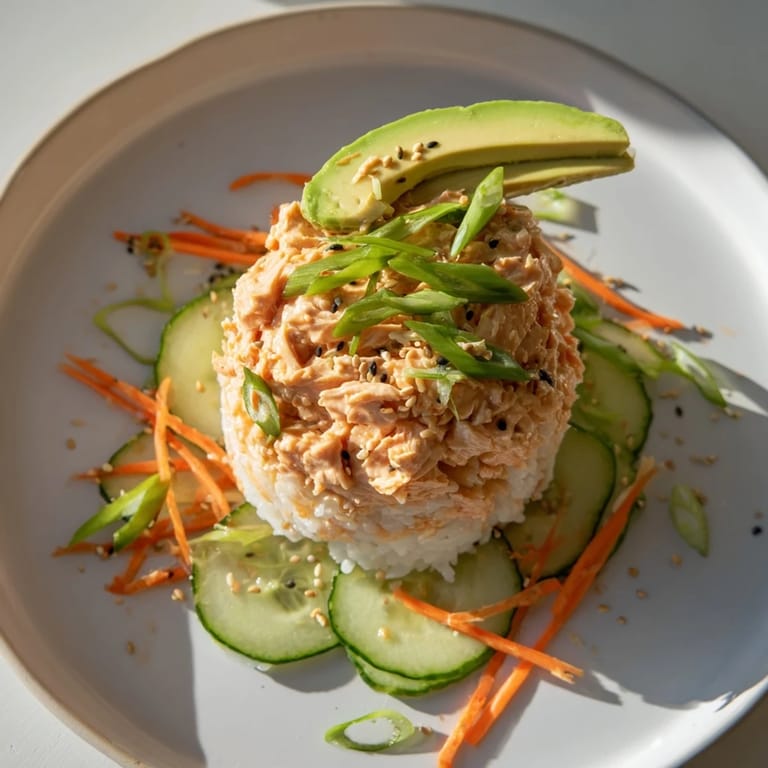
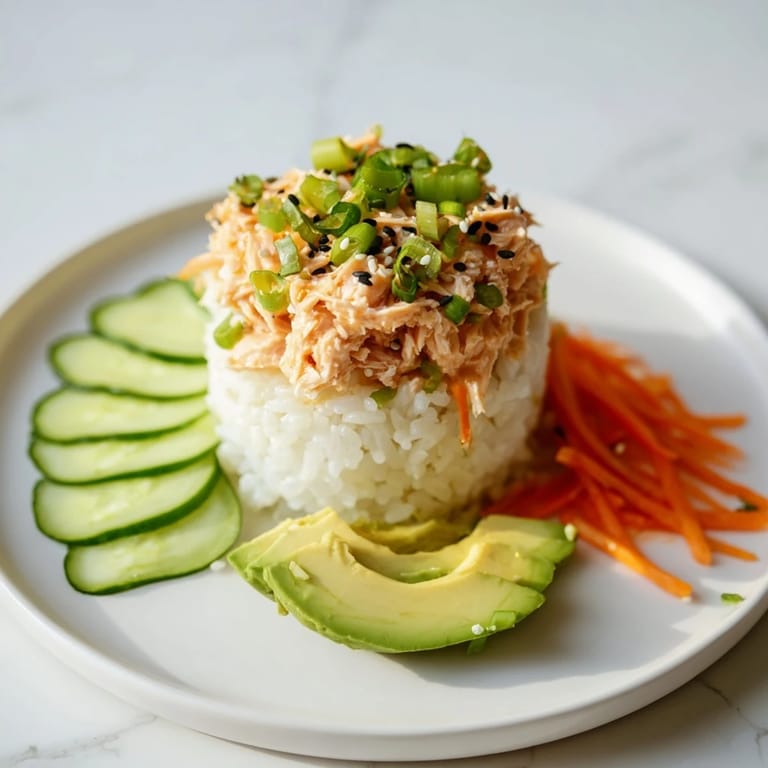
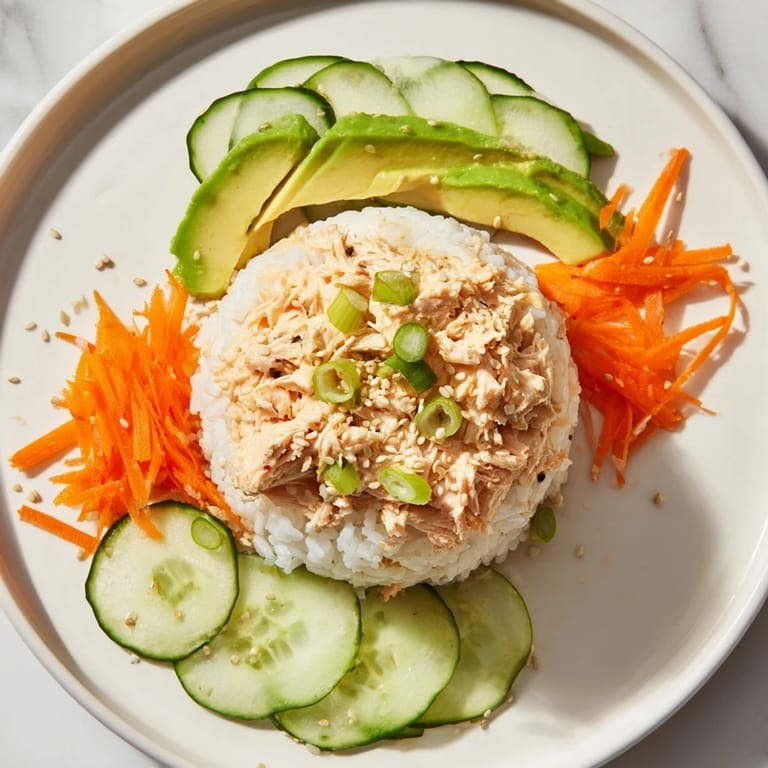
- Divide the hot rice between two bowls, then crown each mound with half the spicy salmon mixture, letting some creamy sauce pool into the rice. Arrange the vegetables in little sections around the salmon so each spoonful has something different.
- Finish and serve:
- Scatter the scallions and sesame seeds over the top, add nori strips if you want that briny note, then set it down while everything is still warm. Drizzle extra sriracha or soy sauce on the side so everyone can adjust the heat to their liking.
 Pin It
 One evening I made this for someone who normally picked at their food, and they asked for seconds. That's when I realized this bowl works because it feels like a choice—every vegetable is visible, every component tastes like itself, and the spice is something you control. It stopped being a quick dinner and became a small moment of care.
Why Canned Salmon Deserves Respect
There's something honest about canned salmon that fresh salmon sometimes lacks. It's always available, it's already cooked, and it holds its texture without flaking into oblivion. When you mix it with sriracha and mayo, it becomes something almost luxurious—creamy, spiced, and elegant enough to serve to anyone without apology. I stopped seeing it as a shortcut and started seeing it as a smart ingredient choice.
The Heat Is Yours to Control
Sriracha isn't just about fire—it's about flavor. That tangy, slightly sweet heat works with the cool cucumber and rich avocado in ways that feel intentional. Some days I use barely a teaspoon and let the bowl taste mild and comforting. Other days I go heavier and let the spice build as I eat. Making the bowl yourself means you're never stuck with someone else's idea of how spicy food should taste.
Building a Bowl That Stays Fresh
The secret to a great rice bowl is contrast—temperature, texture, and flavor all working together. The hot rice melts the avocado just slightly, the cold cucumber stays snappy, and the spicy salmon anchors everything in place. If you're meal-prepping, keep the components separate and assemble just before eating so nothing gets soggy or loses its character.
- Layer the rice first while it's still steaming so it's warm when you dig in.
- Add avocado only at the end to prevent browning and keep it buttery.
- Put the nori strips on the side if you're not eating immediately, since they soften as they sit.
 Pin It
 This bowl proves that simple ingredients don't need complicated technique to feel special. It's fast, it's kind to your wallet, and it tastes like you put thought into dinner.
Recipe FAQs
- → What type of rice works best for this bowl?
Jasmine or sushi rice are ideal due to their aroma and slightly sticky texture, which complements the toppings well.
- → Can I adjust the spiciness?
Yes, adjust the sriracha amount in the mayo mix to suit your preferred heat level.
- → Is canned salmon already cooked?
Yes, canned salmon is pre-cooked and ready to be mixed and served.
- → What are good vegetable toppings to use?
Thin strips of cucumber and shredded carrot provide crunch, while avocado adds creaminess. Edamame and scallions bring extra flavor.
- → Can this bowl be prepared ahead?
Rice can be cooked in advance, but it's best to combine ingredients shortly before serving to maintain freshness.