 Pin It
 There's something about watching cheese melt into liquid gold that makes you forget everything else. The first time I made fondue wasn't for a fancy dinner—it was a Tuesday night when my roommate showed up shivering after a long shift, and I had a wedge of Gruyère and some bread lying around. Thirty minutes later, we were huddled around a small pot, fishing for bread cubes like we'd discovered buried treasure. That night taught me that fondue isn't really about the ingredients; it's about slowing down and sharing.
I remember making this for my partner's family on a snowy January evening, and his grandmother—who grew up near Valais—watched me prep the cheese with what I thought was skepticism. But when she tasted it, she nodded and said the nutmeg was just right. That small approval meant more to me than any recipe review ever could.
Ingredients
- Gruyère cheese, 200 g grated: This is your backbone—nutty, slightly salty, and it melts like silk. Buy it from the block if you can; pre-shredded cheese has cellulose that can make the fondue grainy.
- Emmental cheese, 200 g grated: The sweeter counterpart to Gruyère, it keeps the fondue smooth and prevents it from becoming too sharp or heavy.
- Dry white wine, 1 cup: The acidity matters here; it keeps the cheese from clumping and adds a subtle brightness that makes people wonder what's making it taste so alive.
- Kirsch (cherry brandy), 1 tbsp optional: This is the secret handshake of traditional fondue—it adds a whisper of something floral and complex that guests usually can't quite name.
- Cornstarch, 1 tbsp: This tiny amount prevents the cheese from separating once it hits the wine, turning potential disappointment into smooth perfection.
- Garlic clove, halved: You're just seasoning the pot with its ghost; the garlic itself gets tossed out, leaving behind only its essence.
- Nutmeg, freshly grated 1/4 tsp: Ground nutmeg from a jar tastes like dust compared to what a microplane and a whole nutmeg can do—this small gesture elevates everything.
- White pepper, ground 1/4 tsp: It stays in the background, but it keeps the flavors balanced without the visual speckles of black pepper.
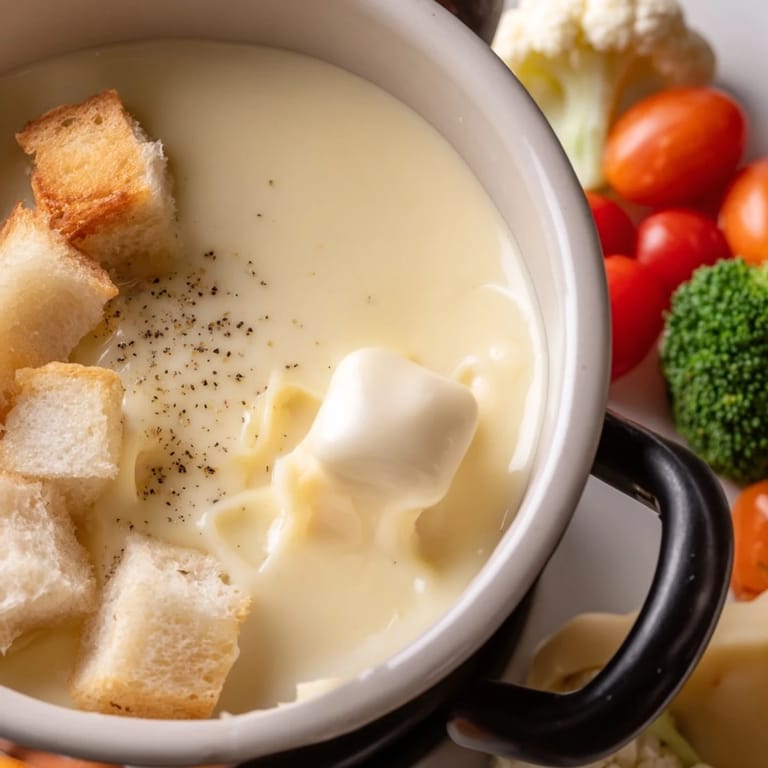
- Bread, cut into cubes: Slightly stale bread holds onto the fork better than fresh bread, which is a lesson I learned the hard way when a cube plummeted into the pot mid-dip.
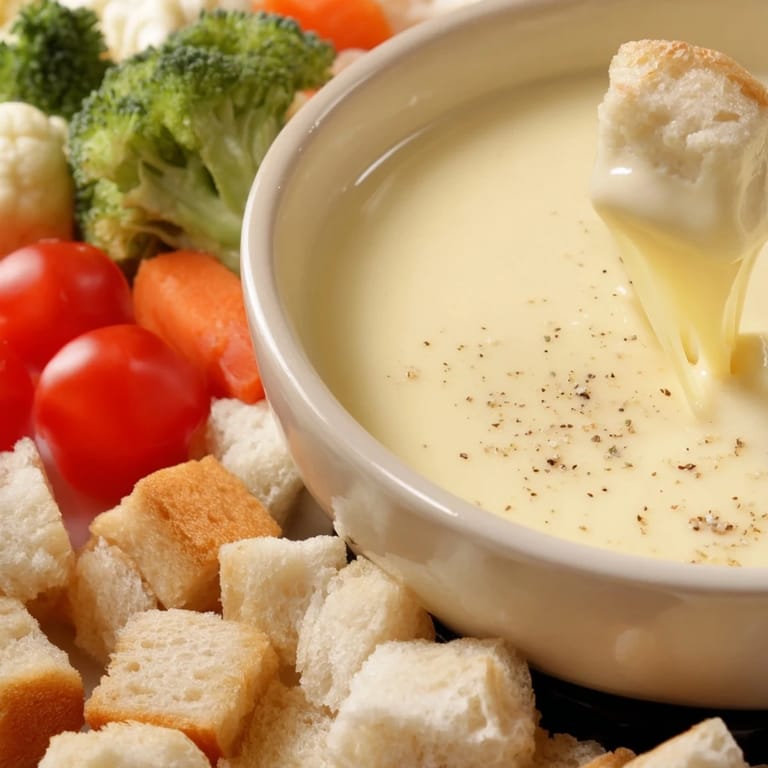
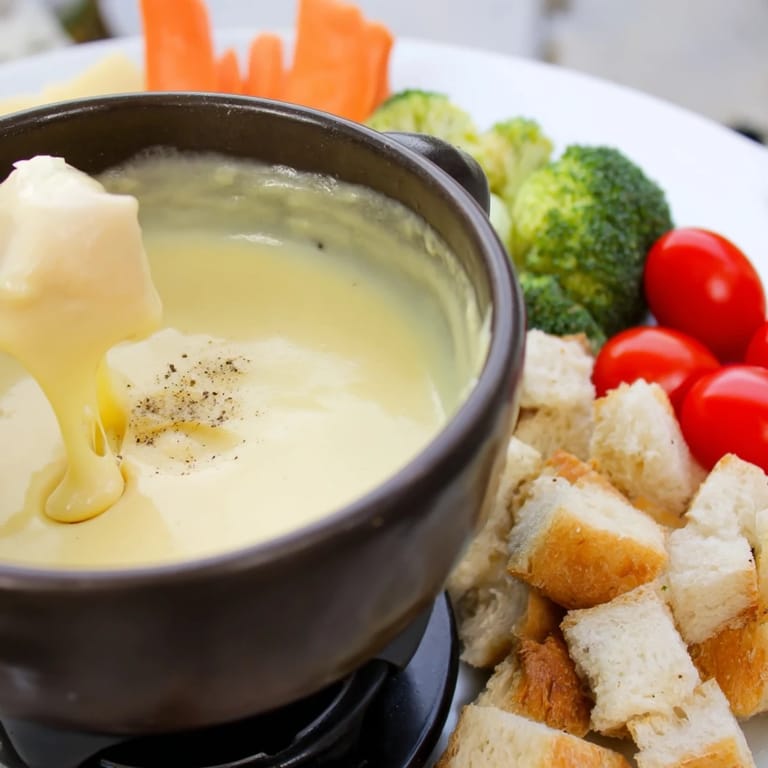
- Vegetables for dipping: Blanched broccoli and cauliflower add texture, cherry tomatoes bring brightness, and baby carrots offer a natural sweetness that pairs surprisingly well with the cheese.
Tired of Takeout? 🥡
Get 10 meals you can make faster than delivery arrives. Seriously.
One email. No spam. Unsubscribe anytime.
Instructions
- Season your pot with garlic:
- Rub the inside of your fondue pot (caquelon) with the cut sides of a halved garlic clove, then discard it. This single gesture transforms the whole experience with a whisper of flavor instead of an aggressive bite.
- Warm the wine gently:
- Pour the white wine into the pot and let it heat over medium-low until just simmering—you'll see small bubbles at the bottom and hear a faint hiss. Never boil it; boiling wine tastes harsh and can cause the cheese to break.
- Toss cheese with cornstarch:
- In a small bowl, coat your grated cheeses evenly with cornstarch. This is the invisible guardian that keeps everything creamy and prevents clumping once you add the cheese to hot liquid.
- Add cheese in stages:
- Add the cheese slowly—about a handful at a time—stirring constantly in a figure-eight motion with a wooden spoon. The figure-eight keeps everything in motion and prevents the bottom from scorching while promoting even melting.
- Season and keep warm:
- Once all the cheese is melted and smooth, stir in the kirsch (if using), nutmeg, and white pepper. Transfer the pot to a tabletop burner set to low heat; this keeps the fondue warm and dippable for the whole meal without cooking it further.
- Serve and share:
- Arrange your bread cubes and blanched vegetables on a board around the fondue pot, hand out the long fondue forks, and let everyone dive in. The whole point is watching faces light up as they fish for pieces and share bites.
 Pin It
 What made this dish click for me was realizing it's less about perfection and more about presence. My favorite fondue night was when everything that could go slightly wrong did—a burner that wasn't working right, bread I had to cube at the last minute, vegetables I forgot to blanch—yet somehow it became the meal everyone still talks about because we were all laughing and reaching across the table together.
Why Cheese Selection Changes Everything
The temptation is to grab whatever cheese is on sale, but fondue exposes every shortcut. Gruyère from a good cheese counter melts differently than the pre-shredded stuff at the big-box store; it has texture and complexity that survives the heat. If you find Appenzeller at your shop, try blending it with half of your Gruyère for a sharper, more nuanced flavor that catches people off guard in the best way. The cellulose coating on pre-shredded cheese is there for good reason—to keep it from clumping in the bag—but that same coating prevents it from melting smoothly in fondue, so always grate from a block.
Building Your Dipping Spread
The vegetables don't have to be fancy, but they do have to be prepared with intention. Blanching broccoli and cauliflower until just barely tender softens them enough that they take the cheese coating without being mushy, and it also mellows their raw, slightly sulfurous edge. Cherry tomatoes add brightness and acidity that cuts through the richness, while baby carrots offer a subtle natural sugar. I once tried adding roasted mushrooms and they were incredible, so don't feel locked into the classic lineup.
The Ritual of Eating Fondue
There's an almost meditative quality to the way fondue slows down a meal. Everyone's on the same timeline, waiting for their turn with the forks, chatting while cheese cools on their bread cubes. It teaches you to pay attention to texture and temperature and the faces of the people sitting next to you. One thing I learned the hard way: if someone drops their bread in the pot, make a joke and move on—it's part of the experience, not a tragedy.
- Keep a small dish of extra wine nearby to thin the fondue if it thickens as it sits, since the cheese will set as it cools.
- If you're nervous about the whole thing, practice the stirring motion once before guests arrive; it's easier than it looks.
- Slightly stale bread really does hold on better to the fork, so don't feel bad using bread that's been sitting out for a day.
 Pin It
 Fondue has taught me that the simplest recipes often hold the most magic. When you pare things down to cheese, wine, and good bread, there's nowhere to hide—so every ingredient matters, and that's exactly the point.
Recipe FAQs
- → What cheeses are best for this dish?
Gruyère and Emmental cheeses provide the perfect balance of flavor and meltability for a smooth, creamy blend.
- → Can I omit the kirsch?
Yes, kirsch is optional and can be left out without compromising the overall taste significantly.
- → How should I prepare the bread and vegetables for dipping?
Cut crusty bread into bite-sized cubes and blanch vegetables like broccoli, cauliflower, and carrots for a crisp, fresh bite.
- → What is the best way to keep the cheese blend smooth?
Gradually melt the cheeses into warm white wine with constant stirring in a figure-eight motion to avoid lumps.
- → Are there any tips for stronger flavor variation?
Substituting part of the cheese with Appenzeller intensifies the flavor and adds complexity to the dish.