 Pin It
 My tía Rosa taught me brazo gitano on a humid afternoon when I was maybe twelve, watching her hands work the warm cake with such confidence that I thought she was performing magic. The way she rolled that golden sponge without it tearing, the guava paste still warm and spreadable, the meringue piled high like clouds—it seemed impossible until she let me try. Years later, I realized it wasn't magic at all, just patience and one crucial trick she whispered to me: never skip the cooling step, and always use a kitchen towel as your safety net.
I made this for my daughter's quinceañera, and watching her face light up when she saw the brazo gitano on the dessert table—that moment made every careful fold and every anxious minute under the oven light worth it. Her friends went back for seconds, and one of them asked if I'd gone to pastry school, which made me laugh because honestly, I'm just someone who learned from watching and a lot of gentle mistakes.
Ingredients
- Eggs, separated (4 large for cake, 3 large for meringue): Room temperature eggs beat more easily and incorporate air better, which is your secret weapon for a sponge cake that's actually springy and tender instead of dense.
- Granulated sugar (150 g for cake, 100 g for meringue): Split the sugar between yolks and whites—this trick helps stabilize both mixtures and gives you better structure in every layer.
- Vanilla extract (1 tsp): Use real vanilla if you can; it makes the cake taste like it came from someone's abuela's kitchen, not a box mix.
- All-purpose flour (120 g or 1 cup): Measure by spooning flour into your cup and leveling it off, or use a scale if you have one—too much flour is the reason brazo gitano cakes turn out dense and disappointing.
- Salt (1/4 tsp): This tiny amount brightens the sweetness and helps stabilize the egg whites, so don't skip it even though it seems insignificant.
- Guava paste (225 g or 8 oz): Choose a good quality paste that's not overly processed; the flavor should be bold and fruity, not artificial-tasting.
- Water (2 tbsp): This loosens the guava paste to a spreadable consistency without making it runny.
- Cream of tartar (1/2 tsp, optional): If you have it, use it—it stabilizes egg whites and helps them hold their peaks longer, which is especially helpful if you're not beating them right before assembly.
Tired of Takeout? 🥡
Get 10 meals you can make faster than delivery arrives. Seriously.
One email. No spam. Unsubscribe anytime.
Instructions
- Prepare your workspace:
- Line your jelly roll pan with parchment paper, grease it lightly so the cake doesn't stick, and have a clean kitchen towel ready nearby dusted with a generous sprinkle of sugar. This is your safety net, so don't skip it.
- Build the egg yolk base:
- Beat your room temperature egg yolks with half the sugar and vanilla until the mixture is pale, thick, and ribbony—this takes about three minutes and means you're incorporating air into every drop. If it still looks thin and yellow, keep going; you'll know it's ready when it falls from the beaters in ribbons.
- Create the meringue for the cake:
- In a completely separate, grease-free bowl, beat the egg whites with the remaining sugar and salt until they form stiff, glossy peaks that stand straight up. This is where that cream of tartar comes in handy if you have it—it helps the whites stay stable and voluminous.
- Marry the two mixtures:
- This is the gentle part: fold the whites into the yolks using a rubber spatula, turning the bowl as you go and using the lightest hand you can manage. You want those whites to stay fluffy, not deflate into thin ribbons.
- Incorporate the flour:
- Sift the flour over the batter and fold it in with the same gentle touch, just until you don't see any white streaks of flour. Stop as soon as it's combined or you'll overdevelop the gluten and end up with a tough cake instead of a tender one.
- Bake the cake:
- Spread the batter evenly into your prepared pan—use an offset spatula if you have one, or the back of a spoon works too—and bake at 180°C (350°F) for 12-15 minutes until it springs back gently when you touch it. You're aiming for a pale golden color, not deep brown.
- The critical moment—rolling warm:
- While the cake is still warm, invert it onto your sugar-dusted towel and peel away the parchment paper carefully. The warm cake is actually easier to work with than you'd think; roll it up from the short end, letting the towel guide you, and let it cool completely in that rolled position.
- Prepare the guava filling:
- Warm the guava paste with water over low heat, stirring gently until it's smooth and spreadable like thick jam. Let it cool to room temperature so it doesn't melt into the cake when you assemble everything.
- Assemble with the guava:
- Unroll your cooled cake gently—it might crack a tiny bit and that's honestly fine, the guava paste hides everything—and spread the filling evenly across the surface. Use an offset spatula or butter knife and work deliberately so you don't tear the delicate cake.
- Roll it up again:
- Roll the cake up tightly without the towel this time, and place it seam side down on your serving platter. You've got this; just move slowly and you'll end up with something that looks beautiful and tastes incredible.
- Make the final meringue:
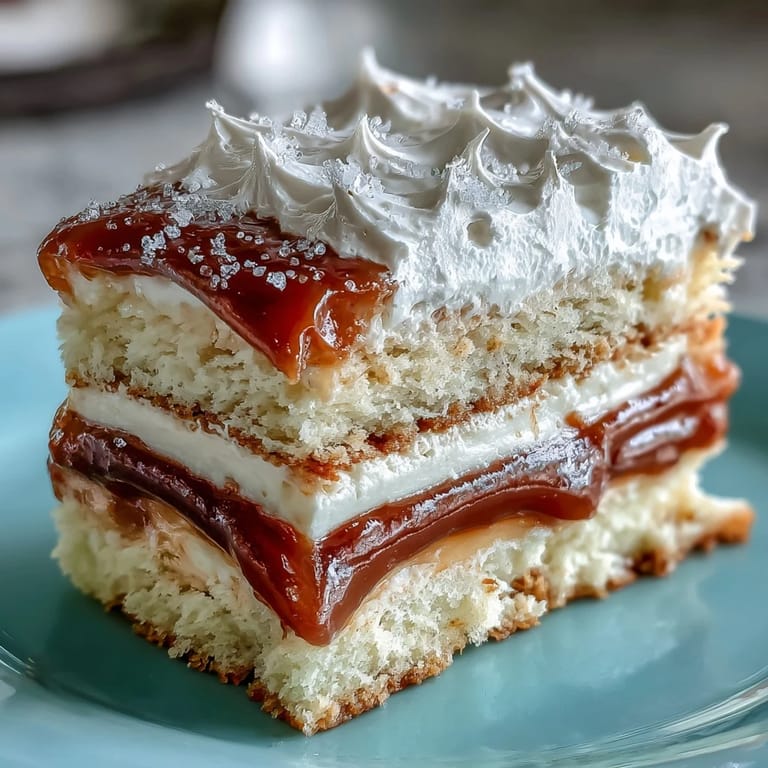
- Beat three egg whites in a clean bowl until soft peaks form, then gradually add the sugar while continuing to beat until you get stiff, glossy peaks. This meringue is thicker and more stable than the one in the cake, so it holds up beautifully on top.
- Top with the clouds:
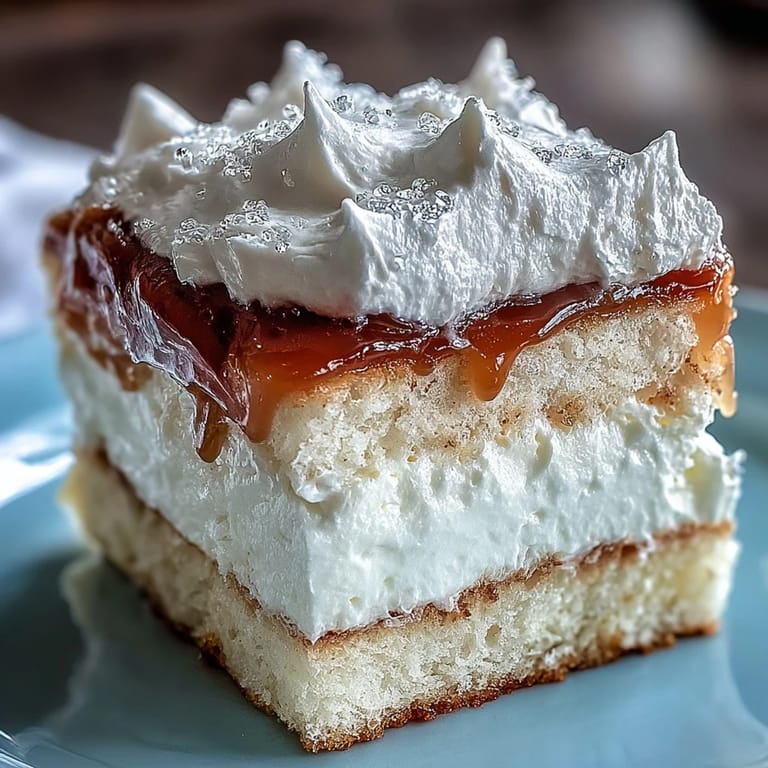
- Spread or pipe the meringue over the top and sides of your rolled cake, creating whatever design makes you happy—swoops, peaks, or smooth waves all work. If you want that fancy golden finish, torch it briefly with a kitchen torch or pop it under a hot broiler for just a few seconds, watching like a hawk so it doesn't burn.
- The final chill:
- Refrigerate for at least 30 minutes before slicing, which helps everything set and makes slicing cleaner. Use a sharp knife dipped in hot water and wiped clean between cuts for the prettiest presentation.
 Pin It
 My neighbor came over one evening and I served her a slice with café con leche, and she got quiet for a moment—the kind of quiet that means something just made her happy. She told me it reminded her of her mother's kitchen in San Juan, and suddenly this dessert wasn't just about technique or ingredients anymore; it was a bridge between memories and moments.
The Soul of the Roll
There's something almost meditative about rolling a sponge cake while it's still warm, the way the kitchen fills with that vanilla-sweet steam and your hands remember what they're doing even if your brain is worried. I've learned that this dessert is one of those recipes where confidence matters as much as accuracy—hesitation is what causes tears, not the cake itself. The guava paste acts as an edible insurance policy, filling in any tiny cracks and reminding you that perfection isn't the point; the memory of making it is.
Variations Worth Trying
Once you master the basic version, the possibilities open up in delicious directions. I've experimented with adding a thin layer of whipped cream between the cake and guava paste, which creates this unexpected lightness, or substituting mango paste for guava if that's what I have on hand. Some people skip the meringue entirely and just dust the whole thing with powdered sugar, which looks elegant and tastes wonderful, or they add a drizzle of dulce de leche on top of the meringue before torching it for something even richer.
Serving and Storage Wisdom
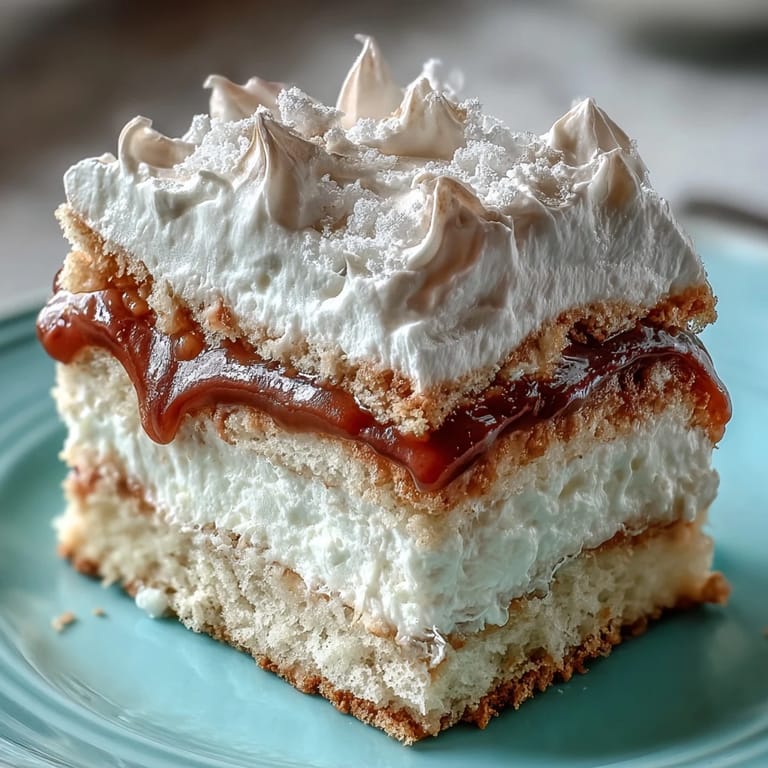
Brazo gitano tastes best served chilled, which brings out the flavor of the guava and makes the meringue even more cloud-like. It keeps well in the refrigerator for three or four days covered loosely with plastic wrap, though honestly it rarely lasts that long once people know you've made it. I've learned to make peace with the fact that it's not a dessert that improves over time, but rather one that hits its peak sweetness and tenderness right after assembly, so timing your preparation for when you want to serve it makes all the difference.
- Use a long serrated knife for the cleanest slices, dipping it in hot water and wiping between cuts.
- If you're making this ahead, assemble everything except the meringue and add the topping just before serving.
- This dessert is a showstopper for celebrations, but it's also perfect for surprising yourself on an ordinary Tuesday afternoon.
 Pin It
 Every time I make brazo gitano now, I think of my tía Rosa and how she made something so elegant seem completely within reach. This dessert is proof that you don't need fancy equipment or years of culinary training to create something that makes people feel celebrated and loved.
Recipe FAQs
- → What is Brazo Gitano?
Brazo Gitano, meaning "gypsy's arm" in Spanish, is a rolled sponge cake dessert popular throughout Latin America. The Puerto Rican version typically features a light vanilla cake filled with guava paste and topped with meringue, creating a beautiful spiral when sliced.
- → Why do I roll the cake while it's warm?
Rolling the sponge cake while warm prevents cracking later. The heat keeps the cake flexible, allowing it to form the rolled shape. Once cooled, it can be unrolled for filling without breaking.
- → Can I make this ahead of time?
Yes, prepare the sponge cake and guava filling a day ahead. Store the rolled cake wrapped in plastic at room temperature. Add the meringue topping the day you plan to serve, then chill briefly before slicing.
- → What can I use instead of guava paste?
Mango paste, membrillo (quince paste), or thick fruit preserves work well. For a classic Puerto Rican flavor, stick with guava. Thawed frozen guava can also be cooked down with sugar to create a homemade filling.
- → How do I prevent the meringue from weeping?
Ensure your egg whites are at room temperature before beating, and add sugar gradually once soft peaks form. The cream of tartar helps stabilize the meringue. Serve chilled within a few hours of topping for best texture.
- → Can I skip the meringue topping?
Absolutely. A simple dusting of powdered sugar or whipped cream makes a lighter finish. The cake also stands alone with just the guava filling if you prefer a simpler presentation.