 Pin It
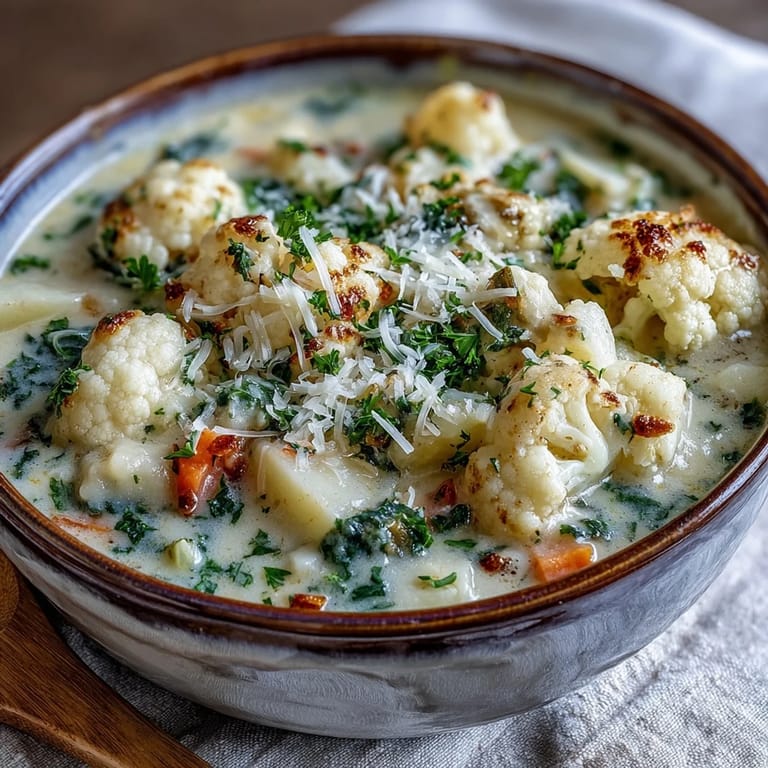
 The first time I made cauliflower chowder was during an unexpected snow day when I was stuck at home with a head of cauliflower threatening to go bad in my refrigerator. The kitchen filled with the cozy aroma of sautéed vegetables while snowflakes danced outside my window. What started as a practical solution to avoid food waste has since become one of my most cherished comfort food recipes. Something about the velvety texture and gentle flavors feels like a warm hug in a bowl.
Last winter, my neighbor was recovering from surgery, and I brought over a container of this chowder with some crusty bread. She called me the next day asking for the recipe, saying it was the first thing that had actually tasted good to her in weeks. We ended up starting a little soup exchange that carried us through the coldest months, but she still requests this cauliflower chowder more than any other.
Ingredients
- Cauliflower: Look for a head with tight, white florets and no brown spots, and cutting it into smaller florets helps it cook more quickly and absorb all those delicious flavors.
- Potatoes: Yukon golds are my go-to because they break down slightly to thicken the soup while still maintaining some texture.
- Smoked paprika: This humble spice adds an unexpected depth that makes people wonder what your secret ingredient is, even a quarter teaspoon transforms the flavor profile.
- Vegetable broth: The foundation of your flavor, so use a brand you actually like the taste of or make your own if you have vegetable scraps saved up.
- Flour: This creates the roux that thickens everything just right, and Ive found gluten-free cup-for-cup blends work perfectly if needed.
Tired of Takeout? 🥡
Get 10 meals you can make faster than delivery arrives. Seriously.
One email. No spam. Unsubscribe anytime.
Instructions
- Start with the aromatics:
- Heat your olive oil or butter until it shimmers, then add your diced onion, carrot, and celery. Youll know theyre ready when the kitchen smells sweet and the onions turn translucent around the edges.
- Build your flavor base:
- Once you add the garlic, keep stirring so it doesnt burn while releasing its aromatic oils. The flour should coat everything evenly, looking somewhat like wet sand before you add any liquid.
- Create the broth base:
- Pour the broth in slowly while whisking to avoid lumps, then watch as the liquid transforms from cloudy to slightly thickened. This is your signal that the flour is properly incorporated.
- Simmer to tenderness:
- The vegetables should be fork-tender but not mushy, so check them at the 15-minute mark. You want the cauliflower to give slight resistance when pierced with a fork.
- Achieve the perfect texture:
- For that ideal consistency, blend just enough to thicken while leaving plenty of chunks. I typically pulse with an immersion blender for about 5-10 seconds in different spots rather than blending continuously.
 Pin It
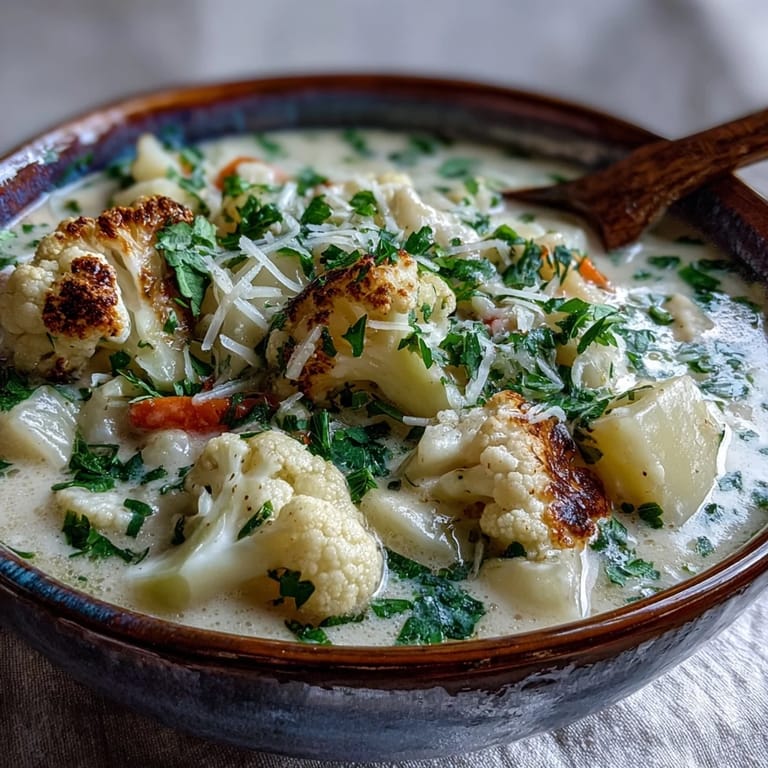
 One evening during a power outage, I served this chowder by candlelight, ladling it into bowls from a pot kept warm on our gas stove. Everyone gathered close around the table, faces glowing in the flickering light, and the conversation flowed so naturally. Sometimes I light candles even when the powers on, hoping to recreate that magical evening when this humble soup somehow turned into an unforgettable memory.
Storing and Reheating Tips
This chowder actually improves overnight as the flavors have time to meld together in the refrigerator. Ive found it keeps beautifully for about 3-4 days, though it rarely lasts that long in my house. When reheating, do it gently over medium-low heat, stirring occasionally to prevent the bottom from scorching. The soup will have thickened considerably in the fridge, so I often add a splash of broth or milk to bring it back to the perfect consistency.
Seasonal Variations
In spring, I love adding fresh peas and a handful of tender herbs like dill and chives right at the end. Summer calls for corn kernels cut straight from the cob and maybe some diced zucchini. Fall feels right with a diced apple and a pinch of nutmeg added to the mix, while winter versions in my kitchen often include a parsnip and extra black pepper. The recipe is wonderfully adaptable to whatever produce you have on hand.
Serving Suggestions
This chowder deserves more than just being ladled into a bowl and called dinner. Ive found that a few thoughtful touches elevate it from a simple soup to a proper meal that feels complete and satisfying. The presentation matters almost as much as the flavor when youre trying to impress someone with something as humble as vegetable soup.
- Serve it in pre-warmed bowls so the chowder stays hot longer while youre enjoying it.
- A swirl of good olive oil and a light dusting of smoked paprika on top creates both visual appeal and an aromatic first impression.
- Accompany with something crunchy like garlic rubbed crostini or homemade croutons to contrast with the creamy texture.
 Pin It
 This cauliflower chowder has taught me that the most nourishing foods are often the simplest ones, made with care and shared with others. Each time I make it, I feel like Im not just feeding bodies but creating small moments of connection that might be remembered long after the meal is finished.
Recipe FAQs
- → Can I make this cauliflower chowder vegan?
Yes, simply substitute whole milk with unsweetened plant-based milk like almond or oat milk, and use olive oil or vegan butter instead of dairy butter. The flavor and creaminess remain excellent.
- → How do I achieve the creamiest texture?
Partially blend about 2 cups of the chowder using an immersion blender after adding the milk. This technique creates a velvety base while leaving tender vegetable chunks for texture and substance.
- → Can I freeze leftover cauliflower chowder?
This chowder freezes well for up to 3 months. Cool completely before transferring to airtight containers. Thaw overnight in the refrigerator, then reheat gently on the stove, adding a splash of milk if needed.
- → What vegetables work best as substitutions?
Feel free to swap potatoes for sweet potatoes, add bell peppers for extra color, or include corn kernels for sweetness. The broth base adapts beautifully to various vegetable combinations while maintaining rich flavor.
- → How can I add more protein to this chowder?
Stir in rinsed white beans like cannellini or Great Northern beans during the last 10 minutes of simmering. Alternatively, top with shredded cheese or serve with crusty bread for a more substantial meal.
- → What's the best way to reheat leftovers?
Reheat gently over medium-low heat, stirring occasionally to prevent separation. Add a small amount of milk or broth if the chowder has thickened. Avoid boiling, as this can cause the dairy to separate.