 Pin It
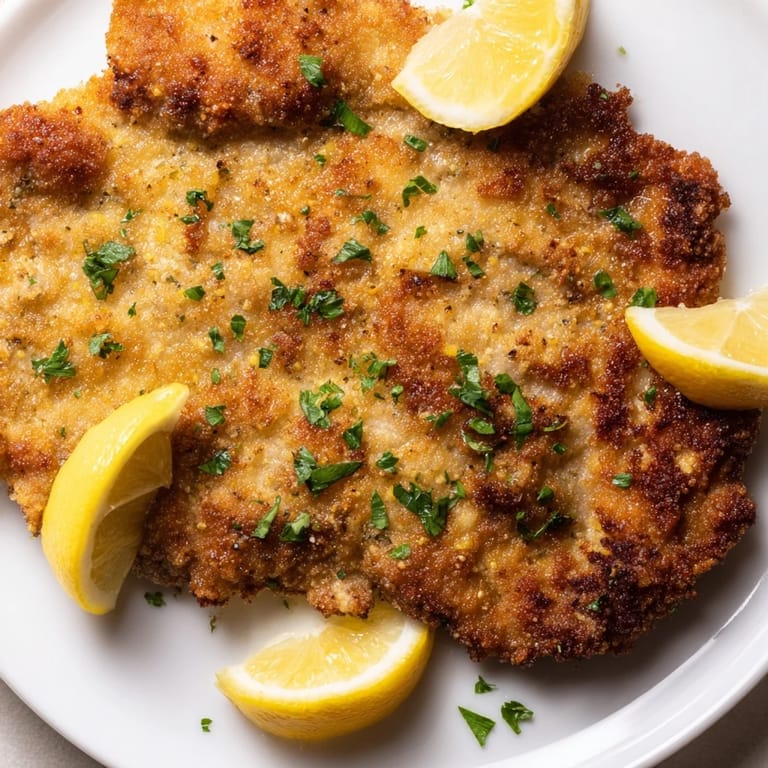
 There's a particular kind of satisfaction that comes from hearing the sizzle of veal hitting hot butter, knowing that within minutes you'll have something golden and impossibly crisp waiting on your plate. I learned to make Wiener Schnitzel on a gray Vienna afternoon, watching my grandmother's hands move with such certainty through the breading station—flour, egg, breadcrumbs—each motion deliberate and practiced. She never fussed or second-guessed herself, just let the meat tell her when it was ready to fry. That confidence stuck with me, and now whenever I prepare this dish, I try to channel that same calm assurance.
I made this for my partner's parents during their first visit to our kitchen, and I'll admit I was nervous. But something about the ritual of pounding the meat, setting up that breading station, and then listening to the crescendo of sizzling butter melted away my worry. When they took that first bite and their eyes widened, I understood why this dish has endured for generations—it's not just delicious, it's a small edible declaration that you care.
Ingredients
- Veal cutlets (4, about 150 g each): Quality veal makes all the difference here; ask your butcher to cut them thin or pound them yourself between plastic wrap to avoid splatter.
- All-purpose flour (100 g): This is your first layer and helps the egg mixture cling to the meat, so don't skip it even though it seems simple.
- Large eggs (2) and milk (4 tbsp): The milk thins the egg slightly, giving you a more delicate binding agent that doesn't clump or get thick as it sits.
- Fine dry breadcrumbs (150 g): Use panko or fine Japanese breadcrumbs for maximum crunch; homemade dried breadcrumbs work too if you don't mind a slightly less consistent crust.
- Clarified butter or neutral oil (250 ml): This is where the magic happens—clarified butter gives the most authentic Viennese flavor, but a high-heat oil like grapeseed or avocado oil is a fine modern substitute.
- Lemon wedges and fresh parsley: These aren't afterthoughts; the acidity of lemon cuts through the richness of the butter, and parsley adds a fresh green note that balances the dish.
Tired of Takeout? 🥡
Get 10 meals you can make faster than delivery arrives. Seriously.
One email. No spam. Unsubscribe anytime.
Instructions
- Pound the veal gently and with purpose:
- Place each cutlet between two sheets of plastic wrap and use steady, even strokes with your meat mallet to thin it to about 1/4 inch. You're creating surface area for maximum crust, not punishing the meat. Pat it dry afterward with paper towels—moisture is the enemy of crispiness—and season lightly with salt and pepper.
- Arrange your breading station like you mean it:
- Three shallow dishes in a row: flour, then the egg and milk mixture beaten together, then breadcrumbs. This assembly-line approach prevents chaos and keeps your hands from getting too sticky too quickly.
- Coat each cutlet with a light, confident touch:
- Dredge the veal in flour and tap off the excess—a thick flour coating will turn into a gluey paste. Dip it into the egg mixture, letting the excess drip away, then place it in the breadcrumbs and press just lightly, turning once to coat both sides. The key here is restraint; a loose, uncompressed coating becomes crispier than a packed one.
- Heat your fat until it's actively shimmering:
- You want to hear that immediate sizzle when the schnitzel hits the pan, which means your butter or oil is hot enough. If it's not hot enough, the breading will soak up fat instead of browning.
- Fry one or two cutlets at a time, depending on your pan:
- Overcrowding lowers the temperature and creates steam instead of a crisp crust. Fry for about 2 to 3 minutes per side until the breadcrumbs are deep golden brown, tilting the pan occasionally and spooning the hot fat over the top for even color.
- Drain and serve immediately:
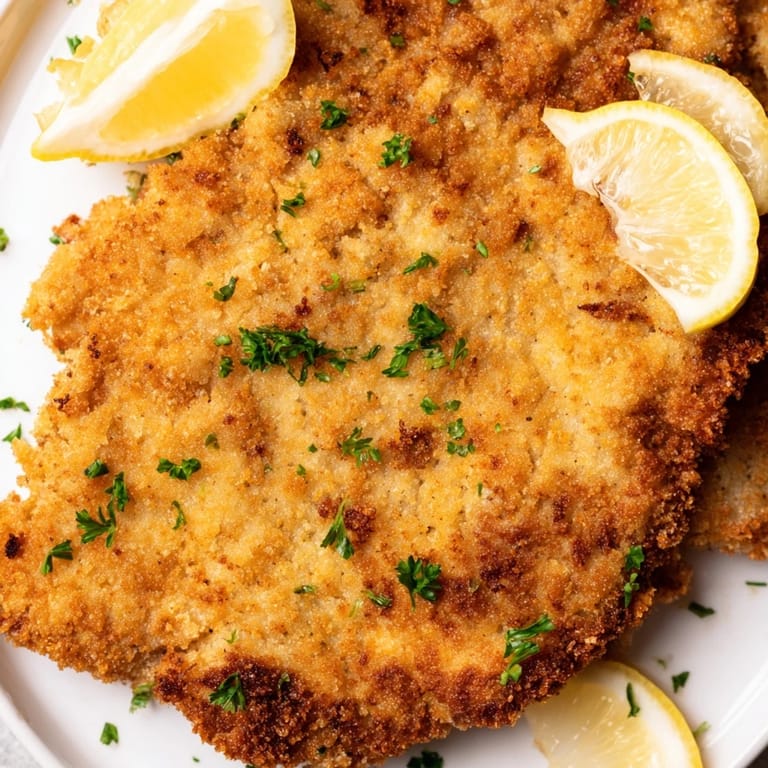
- Remove the schnitzels with a slotted spatula and place them on paper towels for just a moment to absorb excess fat. Serve right away, while the crust is still cracking under your fork, with lemon wedges and a scatter of fresh parsley.
 Pin It
 There was a moment, maybe the third or fourth time I made this, when I realized that schnitzel isn't really about the veal or even the technique—it's about the unmistakable sound of the crust cracking under your knife, followed by that bite of warm, juicy meat. That sound became proof that I'd done something right, and now I chase it every time.
The Breading Station Secret
The moment you separate your breading ingredients into three distinct dishes, you've already set yourself up for success. I used to try to do it with two bowls and a plate, and it always felt chaotic and my hands got sticky. Once I committed to the three-dish method, everything moved faster and cleaner. The flour preps the meat's surface so the egg sticks, the egg carries the breadcrumbs, and the breadcrumbs give you that beautiful golden crust. It's a simple sequence, but it's unforgiving if you skip or combine steps.
Choosing Your Fat Wisely
Clarified butter is traditional for a reason—it has a high smoke point and gives the schnitzel a rich, almost nutty flavor that's hard to replicate. But clarified butter takes time to make or can be expensive to buy, so I've had good success with grapeseed oil, avocado oil, or even a light olive oil in a pinch. What matters most is that your fat is truly hot and that you have enough of it. The veal should almost swim in the heat; this is not the time to scrimp or use shallow frying oil.
Serving and Pairing
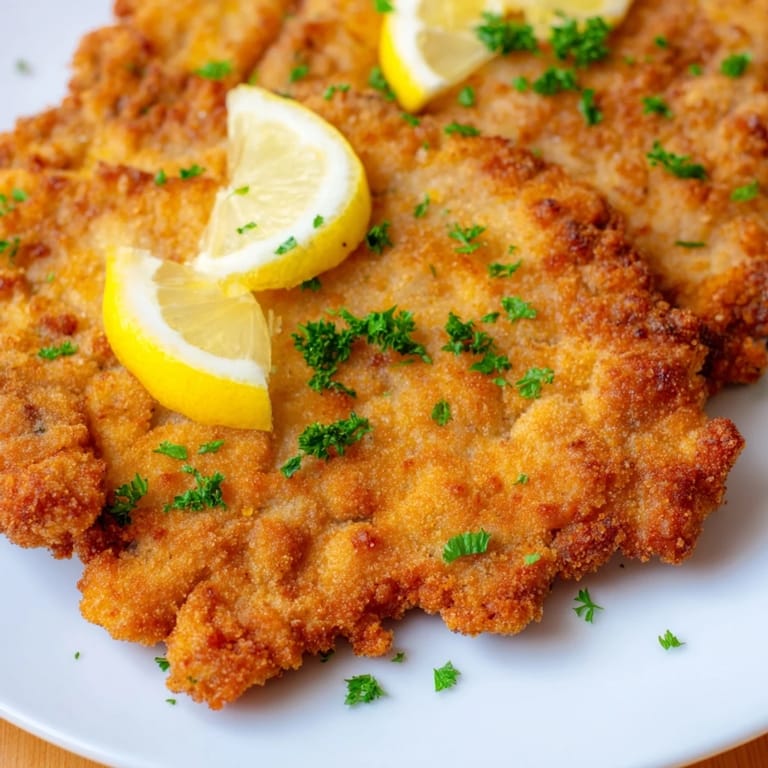
Austrians eat schnitzel with warm potato salad, cucumber salad, or sometimes even lingonberry jam on the side. The lemon wedge is non-negotiable—squeeze it over the top just before eating, and the acidity cuts through the richness in a way that makes the whole plate feel balanced. A cold beer or a crisp white wine is the traditional companion, though I've also served it with simple steamed vegetables for a lighter meal.
- Squeeze fresh lemon over the schnitzel right before eating for maximum brightness and acid balance.
- Serve immediately while the crust is still crackling; a lukewarm schnitzel is a sad schnitzel.
- Fresh parsley isn't just for looks—it adds a subtle herbaceous note that ties the whole dish together.
 Pin It
 Wiener Schnitzel is one of those dishes that feels fancy but is entirely within reach once you understand the fundamentals. Every time you make it, you get a little faster and more confident, until one day you realize you're moving through the breading station with the same quiet assurance my grandmother showed me all those years ago.
Recipe FAQs
- → What cut of meat is used for Wiener Schnitzel?
Veal cutlets, pounded thin to about 1/4 inch, are traditionally used to achieve tenderness and quick cooking.
- → How do you ensure a crispy coating?
Use a light, loose breadcrumb coating and fry in clarified butter or neutral oil at medium-high heat for even browning.
- → Can I substitute the frying fat?
If clarified butter is unavailable, use a neutral oil with a high smoke point to maintain crispiness without burning.
- → What side dishes complement this dish?
Traditionally served with potato salad, cucumber salad, or lingonberry jam to balance flavors and textures.
- → Why pound the veal thin?
Pounding tenderizes the meat and ensures quick, even cooking for a juicy, delicate result.