 Pin It
 There's something magical that happens when you stand over a paella pan and watch the rice begin to toast in the oil, filling the kitchen with that nutty, toasted aroma that signals everything is about to come together. I first made paella on a whim one spring afternoon, armed with a borrowed pan and a vague memory of watching someone cook it years ago. The saffron was the expensive part, those tiny crimson threads that seemed almost too delicate to matter, but they transformed the entire dish into something that tasted like celebration itself. My friends arrived expecting nothing in particular, and instead walked into a kitchen that smelled like the Mediterranean had relocated to my stovetop. That's when I understood—paella wasn't just dinner, it was theater.
I remember making this for my neighbor Sofia on her birthday, and she stood in my kitchen just watching the shellfish open, one by one, like tiny gifts revealing themselves. She told me it reminded her of Barcelona, of summers and salty air, and suddenly the recipe felt less like something I was following and more like a conversation across kitchens and continents. That's the thing about paella—it brings people together without even trying.
Ingredients
- Short-grain paella rice (Bomba or Arborio): This variety absorbs liquid without turning mushy, which is the whole secret—each grain stays distinct and toasted on the bottom.
- Saffron threads: Warm them in the stock before adding it to unlock their deep, earthy flavor; this step changes everything.
- Large shrimp, mussels, and clams: The fresher the better, and don't skip the debearding step—it only takes a minute and prevents that gritty feeling later.
- Fish or seafood stock: This is where the paella's soul lives, so if you can, make it yourself or use the best quality you can find.
- Smoked paprika: It adds a whisper of woodsmoke that makes people wonder what your secret ingredient is.
- Bell peppers, onion, garlic, tomato: These build the flavor foundation, and their sweetness balances the brininess of the seafood beautifully.
- Olive oil: A good one matters here since it's not cooked down into oblivion—it's part of the final taste.
Tired of Takeout? 🥡
Get 10 meals you can make faster than delivery arrives. Seriously.
One email. No spam. Unsubscribe anytime.
Instructions
- Warm the stock and bloom the saffron:
- Heat your fish stock in a saucepan and drop in those saffron threads—they'll start releasing their color and aroma immediately, turning the stock a beautiful golden amber. Keep it warm on low heat so it's ready when you need it.
- Build your aromatics base:
- Heat olive oil in your paella pan over medium heat and sauté the onion for about two minutes until it starts to soften and smell sweet. Add the garlic and let it fill the kitchen with that unmistakable fragrance, then add your bell peppers and cook them down for a few minutes.
- Add tomato and let it break down:
- Stir in your grated tomato and let it cook until most of the liquid evaporates—you'll see the mixture darken and concentrate, which means the flavors are deepening. This takes about three minutes and makes a real difference.
- Toast the rice:
- Toast the rice:
- Add your rice to the pan and stir everything together so the grains get coated with all that oily, garlicky, peppery goodness. Sprinkle in the smoked paprika, salt, and pepper—you'll smell that smoke release immediately.
- Add the saffron-infused stock:
- Pour in your warm, golden saffron stock carefully, spreading the rice out evenly across the pan. This is the moment you stop stirring—from here on, you let the rice cook undisturbed, which is what creates that crispy, caramelized bottom layer (called socarrat) that makes paella special.
- Arrange the seafood and let it cook:
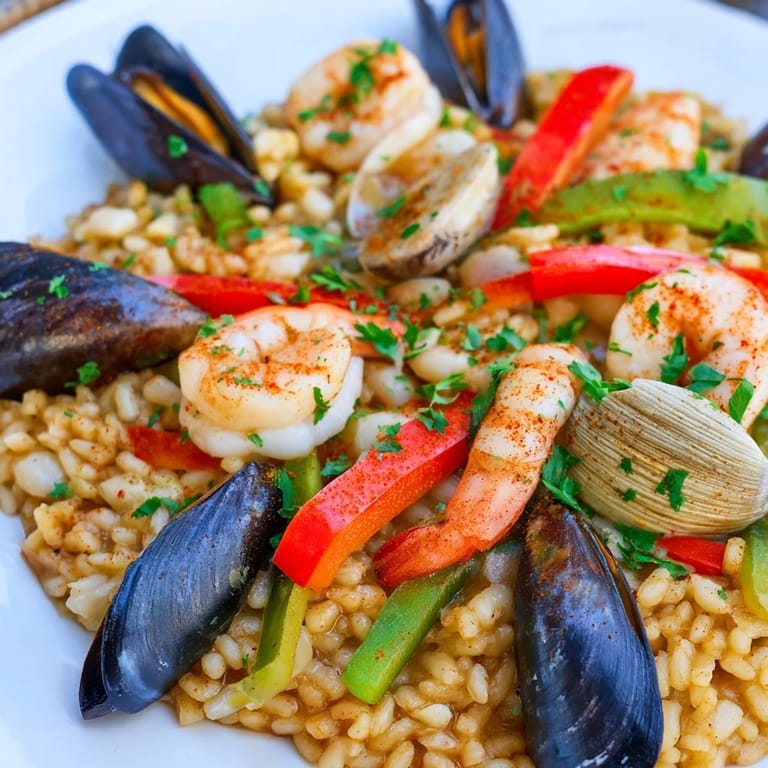
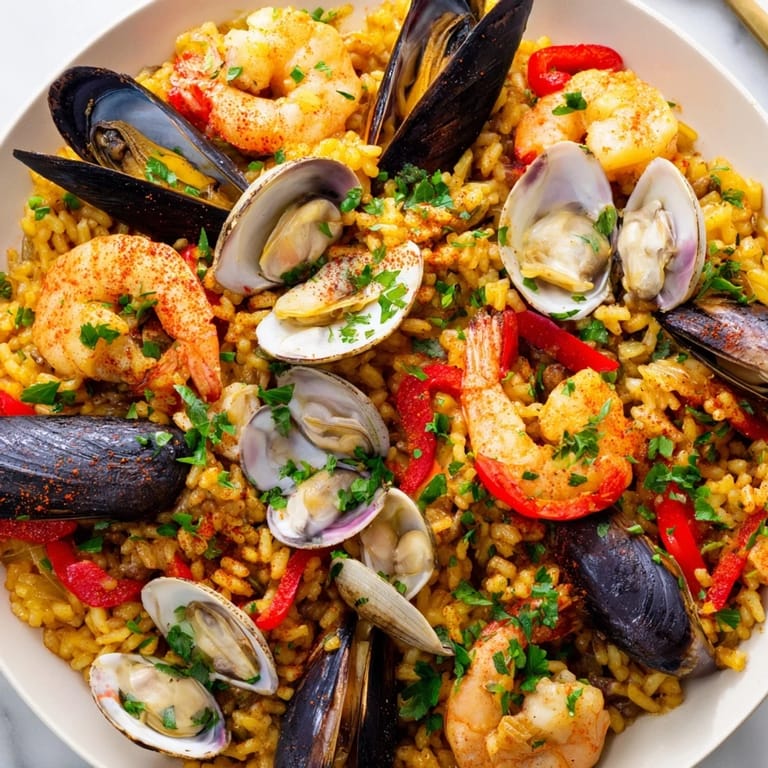
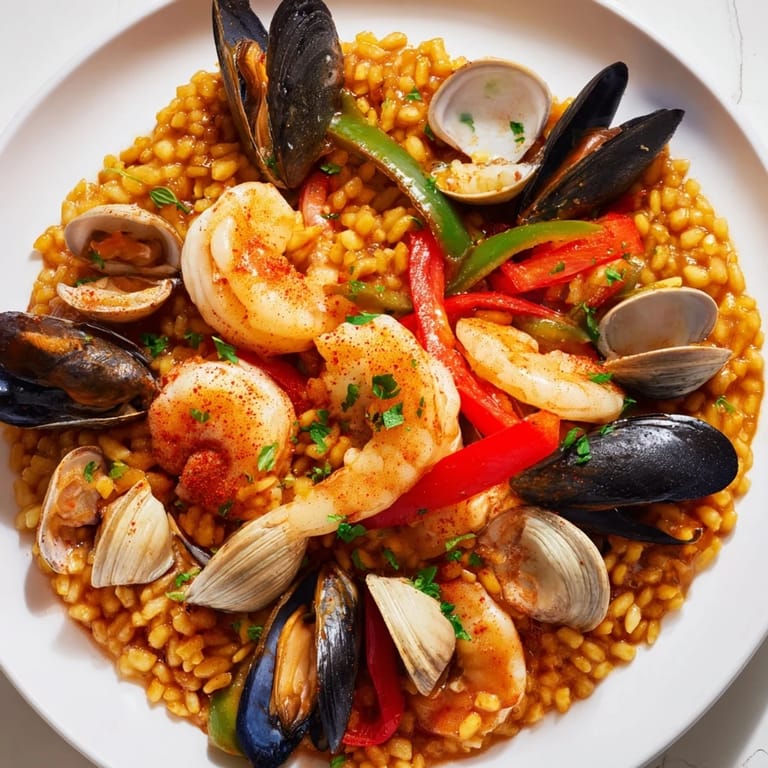
- Scatter your shrimp, mussels, and clams over the rice, nestling them in so they'll cook gently in the steam. Cover loosely with foil or a lid and let everything cook over medium-low heat for about 20-25 minutes—the rice will absorb the stock, the shellfish will open, and your kitchen will smell absolutely extraordinary.
- Rest and finish:
- Remove from heat and let the paella sit covered for five minutes—this lets everything settle and the residual heat finishes cooking any last bit of rice. Scatter fresh parsley over the top and serve with lemon wedges so people can squeeze brightness over their own plates.
 Pin It
 The first time everything worked perfectly, I watched my sister take that first bite and close her eyes, and I realized this wasn't about impressing anyone—it was about feeding people something that tasted like care and time and a little bit of risk. That's when paella stopped being a recipe and became a ritual.
The Soul of the Dish
Paella is really a celebration of listening to the pan—the sizzle that tells you when things are cooking at the right speed, the moment the liquid gets absorbed, the sound of the rice beginning to crisp against the hot bottom. I learned this by making mistakes, by turning up the heat too high and watching rice burn, by not giving the saffron enough time to wake up. Now I trust the sounds and smells more than any timer, and the dish is better for it.
Timing and Temperature
The real trick is keeping your heat at medium-low once the stock goes in—this isn't a dish that rushes. If your kitchen feels too hot or the rice is cooking too fast, you can always slide the pan off the center of the burner. I've cooked paella on different stoves in different kitchens, and the one thing that stays consistent is patience; rushing creates mushy rice, while steady, gentle heat creates magic.
Variations and Flexibility
This recipe is a framework, not a prison—you can add peas, swap in calamari, throw in some diced chorizo if you're not strict about the pescatarian angle, or use whatever seafood looks best at your market that day. The saffron and rice and the not-stirring rule are the non-negotiables; everything else can bend to what you have and what you love.
- Add a handful of frozen peas in the last five minutes if you want that pop of sweetness and color.
- A splash of dry white wine stirred into the aromatics base adds depth, though it's not essential.
- Serve it with crusty bread to soak up the golden oil left at the bottom of the pan—that's the best part.
 Pin It
 Paella is one of those dishes that proves you don't need a complicated recipe to create something memorable—you just need good ingredients, respect for the process, and the willingness to stand beside the pan and watch it happen. Every time you make it, it becomes more yours.
Recipe FAQs
- → What type of rice is best for this paella?
Short-grain rice such as Bomba or Arborio is ideal as it absorbs liquid well and maintains a firm texture.
- → Can other seafood be used besides shrimp, mussels, and clams?
Yes, you can substitute with calamari or firm white fish for variety, maintaining the dish’s rich seafood flavor.
- → How is the saffron flavor infused in the dish?
Saffron threads are steeped in warm fish stock before being added, releasing their unique aroma and color throughout the rice.
- → What is the key to ensuring shellfish cook properly?
Cooking over medium-low heat allows shellfish to open gently without overcooking, ensuring tenderness and safety.
- → Are there any recommended serving suggestions?
Serve with lemon wedges to add brightness, and pair with crisp Spanish white wines like Albariño or Verdejo for a complete meal.