 Pin It
 My best friend Marco called one rainy October evening asking if I could make something special for his birthday dinner, and without hesitation I said risotto. There's something about stirring a pot of rice that feels like meditation, especially when you're cooking for someone you love. I'd learned this recipe years ago in a tiny Milan apartment, where an elderly neighbor named Giovanna walked me through it while we shared a bottle of wine and stories. That first time my wrist ached from constant stirring, but watching the rice transform from separate grains into something creamy and alive felt like witnessing magic. Now whenever I make it, I think of her patient voice guiding my hand.
I'll never forget the silence that fell over the table when everyone took their first spoonful at Marco's party. No one spoke for a good thirty seconds, just the soft clink of spoons and someone closing their eyes in appreciation. That's when I realized risotto isn't just rice and broth—it's about creating a moment where people pause and actually taste what's in front of them.
Ingredients
- Arborio rice: This short-grain rice has a high starch content that naturally creates creaminess without cream, which is the entire soul of risotto.
- Mixed wild mushrooms: Cremini, shiitake, and porcini all contribute different earthy notes; the variety matters more than the quantity.
- Vegetable broth: Keep it warm in a separate pot so each ladleful releases steam and coaxes the rice to release its starches.
- Yellow onion: Finely chopped and cooked until translucent, it becomes almost invisible but adds essential sweetness and depth.
- Garlic: Just two minced cloves prevent the dish from tasting dull without overpowering the delicate mushrooms.
- Dry white wine: The acidity cuts through the richness and adds a subtle sophistication; don't skip this step.
- Parmesan cheese: Freshly grated makes an enormous difference; pre-shredded cheese contains anti-caking agents that ruin the creamy texture.
- Unsalted butter: Used twice—once for sautéing and again at the very end, cold and cubed, to add a luxurious gloss.
- Fresh parsley: A small handful added at the end brightens everything with a fresh, grassy note.
Tired of Takeout? 🥡
Get 10 meals you can make faster than delivery arrives. Seriously.
One email. No spam. Unsubscribe anytime.
Instructions
- Sauté your aromatics:
- Heat the olive oil and butter together over medium heat, then add the chopped onion. Let it soften for 3 to 4 minutes, stirring occasionally, until it turns translucent and fragrant. This is where the foundation of your flavor begins.
- Toast the mushrooms:
- Once the onion is ready, add the minced garlic and let it bloom for just one minute. Then stir in all your sliced mushrooms and let them cook undisturbed for about a minute before stirring; this helps them develop a golden, slightly caramelized surface. Keep cooking and stirring for 5 to 7 minutes total until any liquid they release has evaporated and they smell deeply earthy.
- Toast the rice:
- Add the Arborio rice directly to the mushroom mixture and stir constantly for 1 to 2 minutes. You'll hear the grains clicking slightly against the pan as they toast, which seals them and helps them maintain their structure during cooking.
- Deglaze with wine:
- Pour in the white wine and stir without stopping until it's completely absorbed into the rice. The wine smells sharp and bright at first, then mellow and integrated; that tells you it's done.
- Add broth gradually:
- This is the crucial, meditative part. Using a ladle, add one ladleful of warm broth to the rice and stir frequently. Wait until most of the liquid is absorbed before adding the next ladleful; you should see the rice gradually turning creamy as it releases its starches. This process takes about 18 to 20 minutes, and the constant stirring is what makes risotto truly creamy, not the cream itself.
- Finish with finesse:
- When the rice is tender but still has a slight firmness to the bite (al dente), remove the pan from heat. Immediately add the cold butter cubes, grated Parmesan, and half the fresh parsley, stirring gently to combine. Taste and adjust the seasoning with salt and pepper.
- Rest and serve:
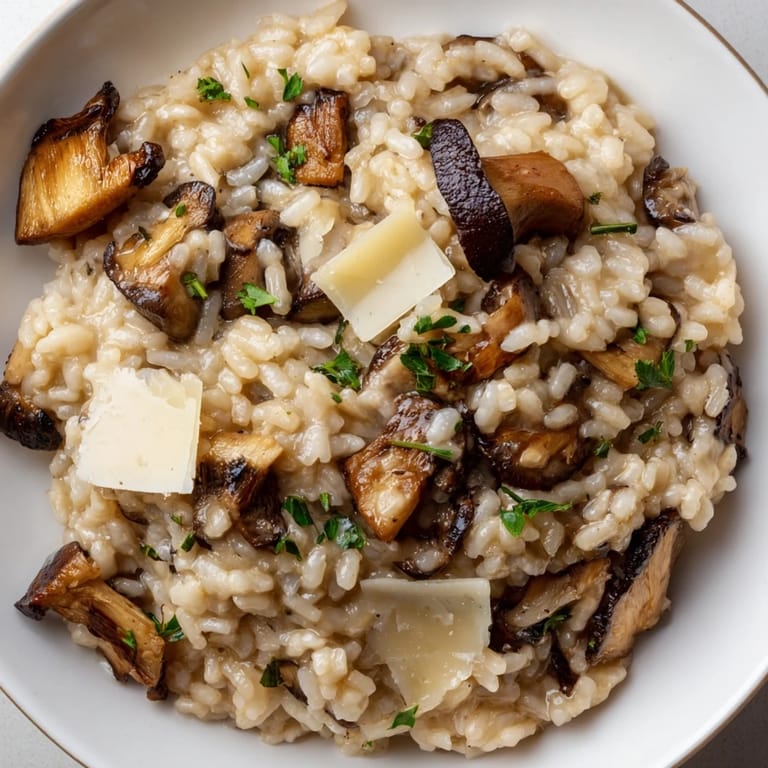
- Let the risotto sit undisturbed for 2 minutes; this resting period allows it to settle into its creamiest consistency. Divide among warm bowls, garnish with the remaining parsley and extra grated Parmesan, and serve immediately.
 Pin It
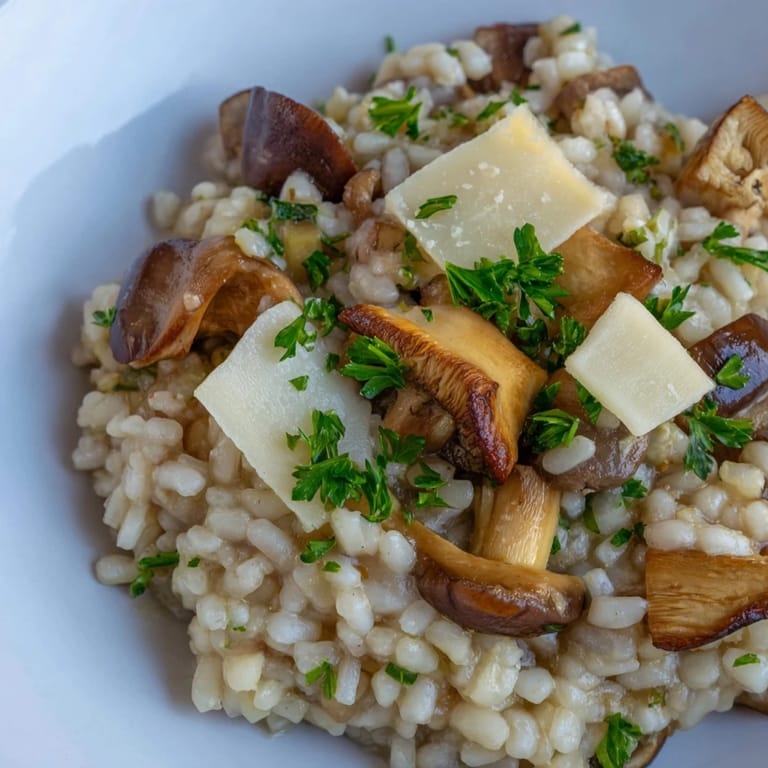
 Years later, I learned that the best risotto is eaten the moment it's finished, steaming and loose, before it has any chance to set up. It's a dish that demands your full attention and rewards you by refusing to be rushed or saved for later.
The Mushroom Question
Not all mushrooms taste the same, and mixing varieties creates complexity. Cremini mushrooms bring earthiness, shiitake add a slightly smoky flavor, and porcini—whether fresh or rehydrated—contribute deep umami that makes you wonder what you're actually tasting. If you have access to dried porcini, rehydrate them in warm water for twenty minutes and use that strained soaking liquid as part of your broth; it's like adding concentrated mushroom intelligence to every spoonful. I've made this risotto dozens of times with different combinations, and the magic is that they all work, as long as you use good mushrooms and cook them until they're golden.
Why the Butter Cube Matters
There's a moment near the end of cooking risotto where most recipes tell you to add butter and cheese, but the way you add them changes everything. If you use warm or room-temperature butter, it melts into the rice immediately and gets lost. Cold butter cubes, added off the heat, stay intact just long enough to emulsify with the starch and create a silky, luxurious finish that feels almost indulgent. Italians call this 'mantecatura,' which is the art of combining butter and cheese into risotto; it's not fancy, it's technique. Your wooden spoon becomes an extension of your hand, and you're essentially creating a sauce within the rice itself.
Serving and Pairing
Risotto is best served in warm, shallow bowls that allow it to spread slightly and cool just enough to eat without burning your mouth. A simple green salad with lemon vinaigrette cuts through the richness beautifully, and a chilled Pinot Grigio or Chardonnay complements the earthiness of the mushrooms without competing.
- Use a ladle to portion risotto so you capture the creamy sauce with each serving.
- Grate fresh Parmesan directly over each bowl at the table for maximum flavor and texture.
- Never cover risotto while waiting to serve; steam trapped inside will make it soggy.
 Pin It
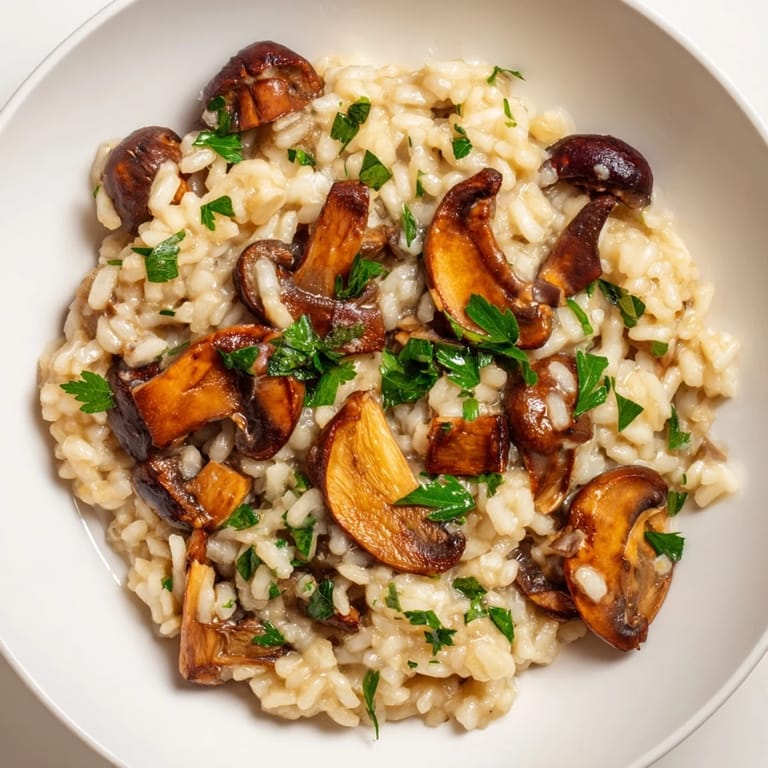
 Every time I make risotto, I'm reminded that the best food comes from patience and attention. This dish asks you to slow down, to be present, and to care about the small details that transform simple ingredients into something memorable.
Recipe FAQs
- → What type of mushrooms work best in this dish?
Mixed wild mushrooms like cremini, shiitake, and porcini add diverse texture and deep earthy flavors, enhancing the dish's complexity.
- → How do you achieve creamy texture in this rice dish?
Slowly adding warm broth and stirring releases the rice's starches, creating a luxuriously creamy consistency without using cream.
- → Can I substitute white wine during cooking?
Yes, if preferred, use extra broth; however, white wine adds subtle acidity and depth that complements the mushrooms.
- → Is it necessary to use Arborio rice?
Arborio rice is preferred for its high starch content and ability to absorb flavors while maintaining a firm texture.
- → What is the best way to finish this dish before serving?
Stir in cold butter and freshly grated Parmesan cheese off heat for richness, then garnish with chopped parsley for freshness.
- → How can I deepen the mushroom flavor?
Adding rehydrated dried porcini mushrooms and their soaking liquid to the broth intensifies the savory mushroom notes.