 Pin It
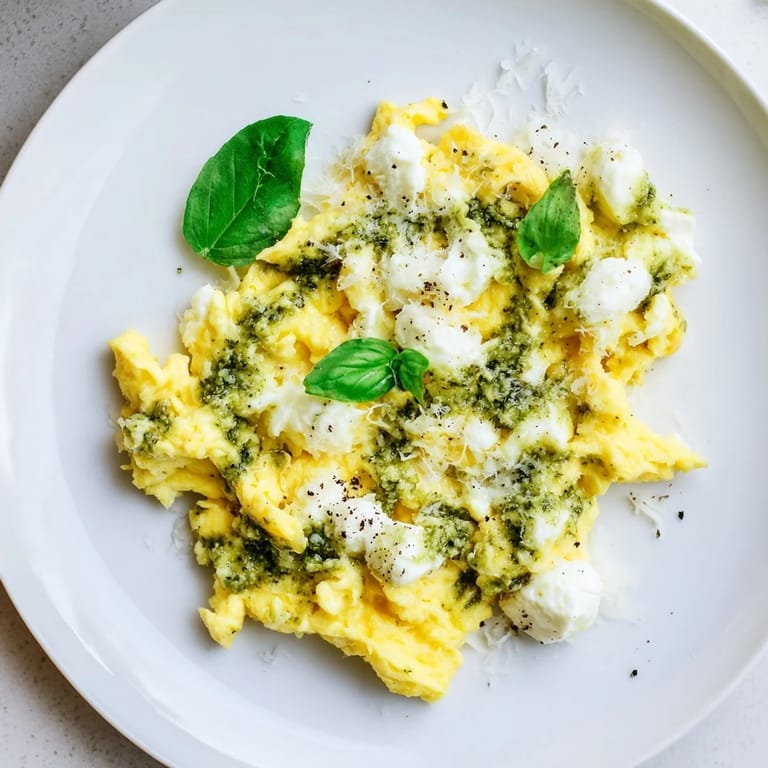
 My roommate once made scrambled eggs so rubbery I could've used them as stress balls, and I realized that morning that texture matters more than I thought. Years later, I stumbled onto the trick of adding cottage cheese to eggs—not to make them healthier, but because something magical happens when creamy curds meet soft, barely-set eggs. The basil pesto came next, a spontaneous decision on a Tuesday when I had leftover homemade pesto and wanted breakfast to taste like more than just breakfast. Now this dish lives in that perfect overlap where it feels indulgent enough for weekend brunch but simple enough to pull off on a rushed weekday.
I remember feeding this to my partner on a Saturday morning when we were both cranky and hungry, and watching his whole face change after the first bite was the kind of small kitchen victory that makes cooking feel worthwhile. He asked if it was restaurant food, and I got to say I made it in five minutes, which felt impossibly good.
Ingredients
- Eggs (4 large): Use the freshest eggs you can find—the yolk color and flavor difference is real, and it shows up immediately in something this simple.
- Milk or cream (2 tbsp, optional): A splash softens everything without making the eggs dense, but honestly it's optional if your cottage cheese is already creamy.
- Cottage cheese (1/2 cup): Full-fat tastes better, but low-fat works fine if that's what you have—the warmth of the pan will bring it to life either way.
- Basil pesto (2 tbsp): Homemade is lovely, but the store-bought stuff does the job beautifully and won't judge you for taking a shortcut.
- Salt (1/4 tsp) and freshly ground black pepper (1/8 tsp): Taste as you go—the pesto already has salt, so you might need less than you think.
- Fresh basil leaves (for garnish): A few leaves right at the end brighten everything up and make it look intentional.
- Grated Parmesan cheese (optional): The salty, umami punch ties all the flavors together if you're in the mood.
- Crusty bread or toast (for serving): Something sturdy to scoop into the creamy eggs, because that's where the real joy happens.
Tired of Takeout? 🥡
Get 10 meals you can make faster than delivery arrives. Seriously.
One email. No spam. Unsubscribe anytime.
Instructions
- Whisk the eggs with gentle intention:
- Crack your eggs into a bowl and whisk them together with the milk (if using), salt, and a grind of pepper until the yolks and whites become one smooth, pale mixture. This is your foundation—don't skip the whisking or you'll end up with streaky, uneven scrambled eggs.
- Warm the pesto slowly:
- Heat your skillet over medium-low, pour in the pesto, and let it sit for about 30 seconds without stirring—you'll smell the basil wake up, and that aroma is exactly what you're after. You're not cooking the pesto, just making it smell alive.
- Pour and pause:
- Add the egg mixture to the pan and let it sit completely undisturbed for 10 to 15 seconds—this gives the bottom a chance to set just slightly. When you start stirring, use a spatula to gently push the cooked edges toward the center, as if you're folding rather than scrambling.
- Fold in the cottage cheese at the last second:
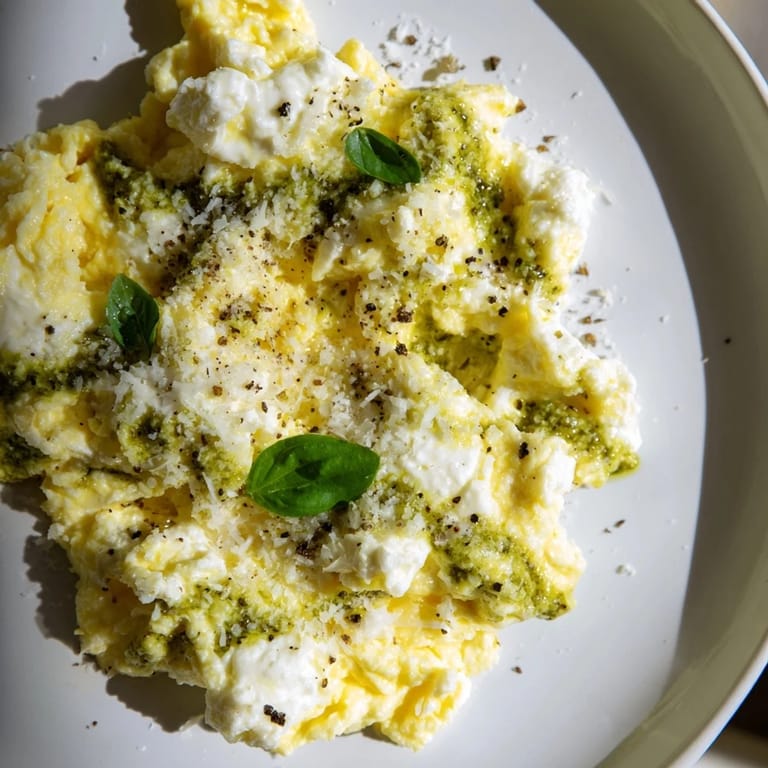
- When the eggs still look a little wet and creamy on top, add the cottage cheese and fold it in gently, moving the spatula through the eggs in slow, deliberate motions. The residual heat will warm the cheese through in seconds, and this is the moment it becomes something special.
- Remove from heat immediately:
- The moment the eggs stop looking shiny and liquid, pull the pan off the heat—they'll keep cooking slightly from the pan's warmth, and that's exactly what you want. Stop too late and you'll have scrambled eggs, stop on time and you'll have scrambled eggs that taste like you know what you're doing.
 Pin It
 There's something about serving this with warm crusty bread that transforms it from breakfast into a moment worth lingering over. The way the bread catches the pesto and creamy eggs, the way people slow down and actually taste their food—that's when I know I've made something worth making.
Why Cottage Cheese Changes Everything
Cottage cheese sounds like a strange addition to scrambled eggs until you taste it and realize it's the answer to a problem you didn't know you had. It adds creaminess and protein without the heaviness of extra cream or butter, and the little curds create these pockets of soft texture that make each bite interesting. It also keeps the eggs from overcooking too quickly, which means you have more of a window to get them just right.
Making It Your Own
Once you understand how this dish works, you can start playing with it in ways that feel personal to you. Sun-dried tomato pesto brings a different kind of brightness, sautéed spinach adds earthiness, and even a small handful of sautéed mushrooms can make it feel like something entirely new. The base of creamy eggs and cottage cheese stays steady while everything else can shift with whatever's in your kitchen or whatever you're in the mood for.
Timing and Temperature Matter More Than You'd Think
This is the kind of dish where five seconds makes the difference between perfect and overdone, so pay attention and trust your instincts over a timer. Keep the heat low enough that you're not standing there watching the eggs transform before your eyes—let them move slowly, gently, at their own pace. Medium-low heat might feel too timid at first, but it's the secret to eggs that taste like someone who cares made them.
- If your pesto is cold from the fridge, warm it gently so the flavors wake up before the eggs hit the pan.
- Cottage cheese straight from the fridge will be cold—folding it in means it takes longer to warm through, so consider that timing.
- Serve immediately while everything is still warm; this isn't a dish that waits well.
 Pin It
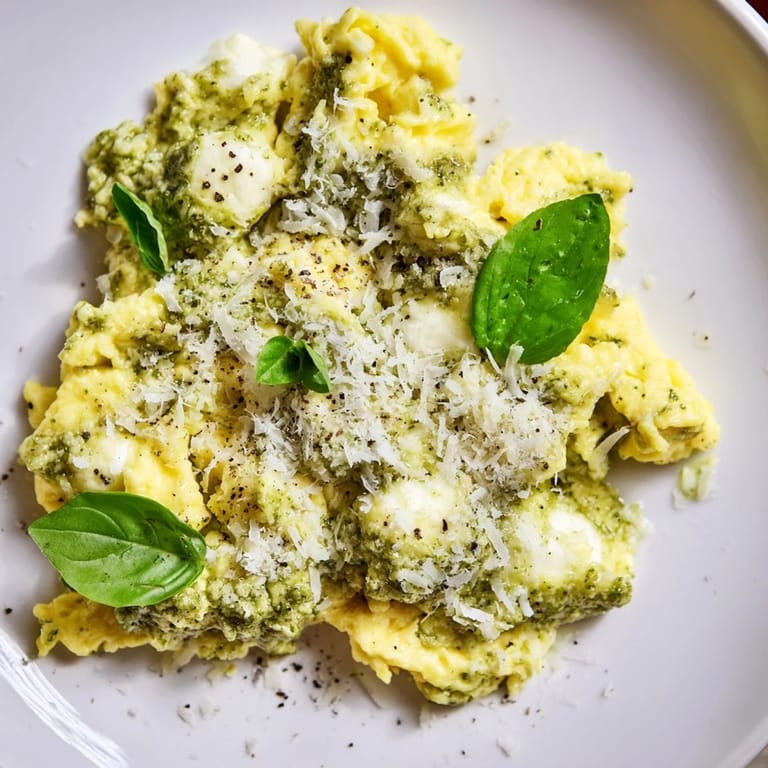
 Breakfast doesn't have to be complicated to feel like you took care of yourself, and this dish proves that point every time. In 10 minutes, you've made something vibrant and nourishing that tastes like intention.
Recipe FAQs
- → Can I use a homemade pesto for this dish?
Absolutely, homemade basil pesto works perfectly and adds a fresh, vibrant flavor that complements the creamy eggs and cottage cheese.
- → What alternatives can I use instead of cottage cheese?
Ricotta is a great substitute, offering a smooth texture. You may also use cream cheese for a richer taste, but it will slightly alter the flavor profile.
- → How do I prevent the eggs from overcooking?
Cook the eggs gently over medium-low heat and remove from heat as soon as they begin to just set but remain creamy. The residual heat will finish cooking them without dryness.
- → Is it okay to add milk or cream to the eggs?
Yes, adding a bit of milk or cream can enhance creaminess, but it's optional depending on your preferred texture.
- → What can I serve alongside this dish?
Crusty bread or toast pairs wonderfully, adding texture to the soft eggs and creamy cheese, while extra basil and Parmesan provide extra aromatic layers.