 Pin It
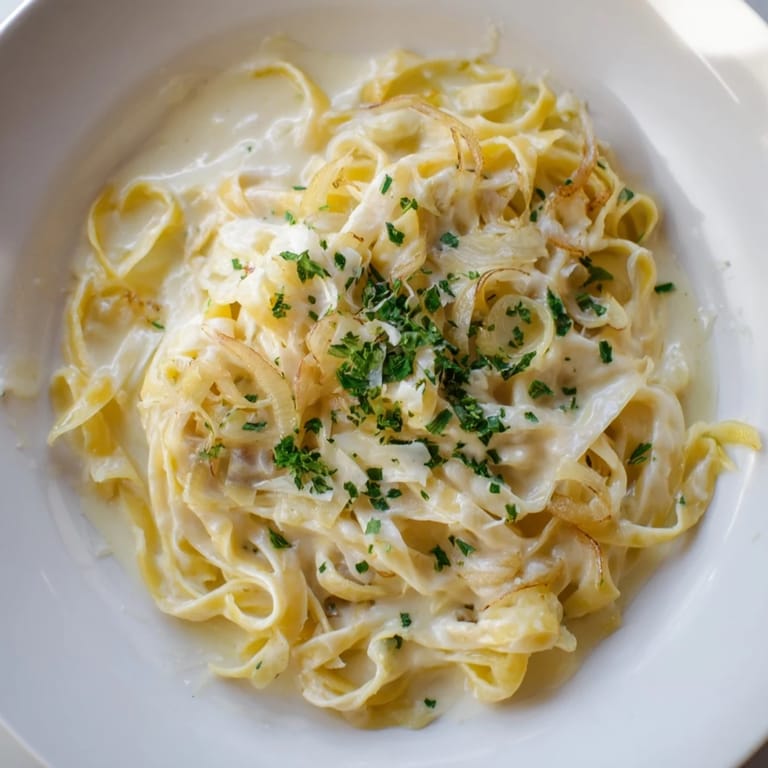
 I discovered this dish on a chilly autumn evening when I was craving the warmth of French onion soup but wanted something that could be a complete meal in one pot. The idea of caramelizing onions until they turned mahogany-dark, then building a creamy pasta around all that deep, sweet umami felt like the perfect solution. What started as an experiment in my kitchen has become the meal I reach for when I need comfort without the fuss of juggling multiple pans.
I made this for my neighbor one winter night when she'd had a rough week at work, and I watched her face light up as she tasted it—that moment when you realize food is doing exactly what it's supposed to do, which is make someone feel seen and cared for. She asked for the recipe before she finished the bowl, and now she makes it at least once a month.
Ingredients
- Large yellow onions: Three of them, sliced thin so they cook evenly and caramelize into sweet, jammy strands that are the whole soul of this dish.
- Garlic: Just two small cloves, minced fine—too much will overpower the delicate onion sweetness you've worked hard to build.
- Dry fettuccine or linguine: 350 grams of it, uncooked and ready to absorb all the broth and cheese into every strand.
- Dry white wine: 60 milliliters that does the heavy lifting when you deglaze, pulling up all those flavorful browned bits stuck to the bottom of your pot.
- Vegetable or beef broth: One liter—beef gives you more richness, but vegetable keeps it lighter and vegetarian-friendly.
- Unsalted butter: Two tablespoons, the foundation of your caramelization and the start of something delicious.
- Gruyère and Parmesan cheese: 120 grams of Gruyère and 60 grams of Parmesan, both grated fresh because pre-shredded cheese won't melt as smoothly into that creamy sauce.
- Olive oil: Two tablespoons to keep your onions from sticking and add a whisper of richness.
- Sugar: One teaspoon that seems like nothing until you realize it's what pushes your onions toward that deep caramelization faster.
- Dried thyme and bay leaf: Subtle herbs that tie everything together without announcing themselves too loudly.
- Salt and pepper: Always to taste, because your broth might be salty already and you're the judge of balance.
Tired of Takeout? 🥡
Get 10 meals you can make faster than delivery arrives. Seriously.
One email. No spam. Unsubscribe anytime.
Instructions
- Get your onions golden:
- Heat butter and olive oil in your large skillet over medium heat until it's shimmering, then add your sliced onions and that tiny pinch of sugar. Stir them occasionally as they cook for 20 to 25 minutes—you'll smell them before they're done, and that deep caramel aroma is when you know you're close.
- Wake up the garlic:
- Add your minced garlic and let it toast for just one minute until it fills the kitchen with that warm, garlicky fragrance—any longer and it turns bitter.
- Deglaze with wine:
- Pour in the white wine and scrape the bottom of the pan with your wooden spoon, gathering up all those caramelized brown bits that taste better than gold. Let it bubble away for about two minutes until most of the wine evaporates and you're left with a glossy base.
- Build the broth foundation:
- Sprinkle in the dried thyme and toss in the bay leaf, then pour in all your broth and bring it to a rolling boil—this is when the kitchen really starts to sing.
- Cook the pasta through:
- Break your dry pasta into shorter pieces if it seems too long, then stir it into the boiling liquid and reduce the heat to medium-low. Simmer uncovered for 10 to 12 minutes, stirring frequently so nothing sticks to the bottom, until the pasta is tender and most of the liquid has been absorbed into every strand.
- Finish with cheese:
- Fish out that bay leaf, then turn off the heat and stir in both your Gruyère and Parmesan until they melt into a creamy, luxurious sauce that coats every piece of pasta. Taste and adjust with salt and pepper until it feels right to you.
- Serve with love:
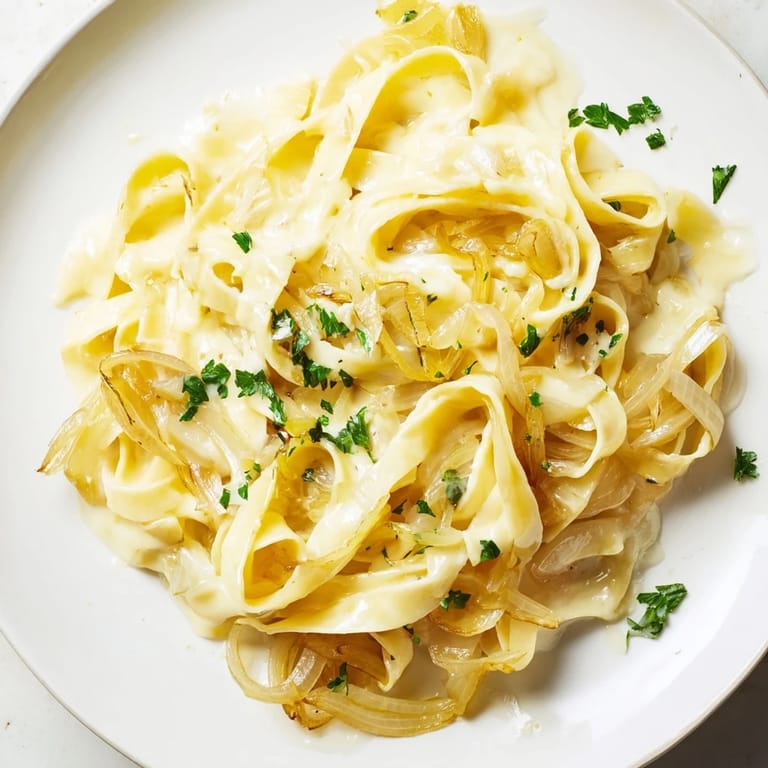
- Ladle it into bowls while it's hot and steaming, garnish with fresh parsley and extra cheese if you're feeling generous, and watch people come back for seconds.
 Pin It
 What strikes me most about this dish is how it bridges two worlds—the elegance of French onion soup and the everyday comfort of a pasta dinner—and somehow feels like both at once. There's something almost meditative about watching those onions slowly darken on the stove, knowing that what seems like a simple ingredient is being transformed into something far richer and more complex.
The Magic of Caramelized Onions
Caramelizing onions is less about cooking and more about coaxing out their natural sugars until they turn sweet and complex and golden-brown. The first few minutes nothing seems to happen, and you might wonder if you're doing it right, but then somewhere around the ten-minute mark something shifts—the onions start to release their water, and by minute twenty they've transformed into something entirely different. That's when you know you've earned the right to call this dish French.
Why This Works as a One-Pot Meal
The genius of cooking everything together is that the pasta absorbs all the broth and the essence of the caramelized onions, so you never get that separated, watery feeling some one-pot pastas have. The cheese melts into the hot pasta water to create a sauce that's silky and natural, and you end up with a dish where every element knows exactly what its job is. It's the kind of meal that tastes like you fussed over it for hours, even though it's really just smart timing and a wooden spoon.
Making It Your Own
This recipe is a canvas more than a strict rulebook, and the best versions I've made have happened when I've listened to what my kitchen had on hand and what I was craving that particular night. Sometimes I've stirred in sautéed mushrooms for earthiness, or added a splash of sherry instead of white wine for deeper complexity, and each version felt like its own small discovery. The only thing I'd never change is the caramelization step and the combination of both Gruyère and Parmesan together, because those two things are the backbone of why this works.
- For a richer, deeper version, use beef broth instead of vegetable broth and add a dash of Worcestershire sauce.
- Sautéed mushrooms, a handful of fresh spinach, or even crispy breadcrumbs on top all feel at home in this dish.
- If you can't find Gruyère, Swiss cheese has a similar melt and warmth, though you'll lose just a little of that distinctive nuttiness.
 Pin It
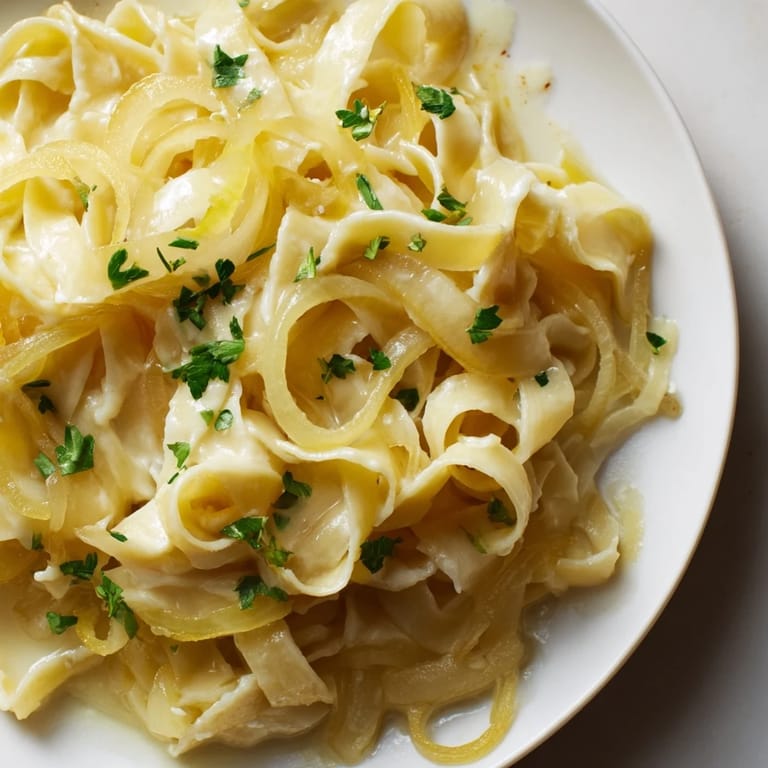
 This is the meal I make when I want to feel like I've created something special without the stress, and somehow it always tastes like home. Share it with people who matter to you, and I promise they'll ask for the recipe.
Recipe FAQs
- → How do I achieve perfectly caramelized onions?
Cook thinly sliced onions over medium heat with butter and olive oil, stirring occasionally. Add a bit of sugar to aid caramelization and continue for 20–25 minutes until they turn deep golden brown.
- → Can I substitute the cheeses used in this dish?
Yes, Gruyère can be replaced with Swiss cheese, and Parmesan can be swapped with Pecorino Romano for a different but still delicious flavor profile.
- → Is it possible to make this dish vegetarian?
Absolutely, using vegetable broth instead of beef broth keeps this dish vegetarian while maintaining savory depth.
- → What pasta types work best for one-pot cooking?
Long noodles like fettuccine or linguine work well, as they absorb liquid evenly during cooking and combine nicely with the creamy broth base.
- → How should I adjust cooking if I use gluten-free pasta?
Use certified gluten-free pasta and watch cooking times closely, as some gluten-free varieties may cook faster or require more liquid.